

The San Francisco Bay Area has three major commercial airports, and the cheapest flight is not always the cheapest arrival. San Francisco International (SFO), Oakland San Francisco Bay Airport (OAK) and San José Mineta International (SJC) serve different parts of the region. Your hotel location, arrival time and onward itinerary should decide which one is most convenient.
For a classic first stay in San Francisco, SFO is usually the simplest because BART serves the airport directly. OAK can be excellent for Oakland, Berkeley and some East Bay trips, while SJC is strongest for Silicon Valley and San Jose. All three can work for San Francisco, but the transfer time and number of steps vary.
SFO: the default choice for central San Francisco
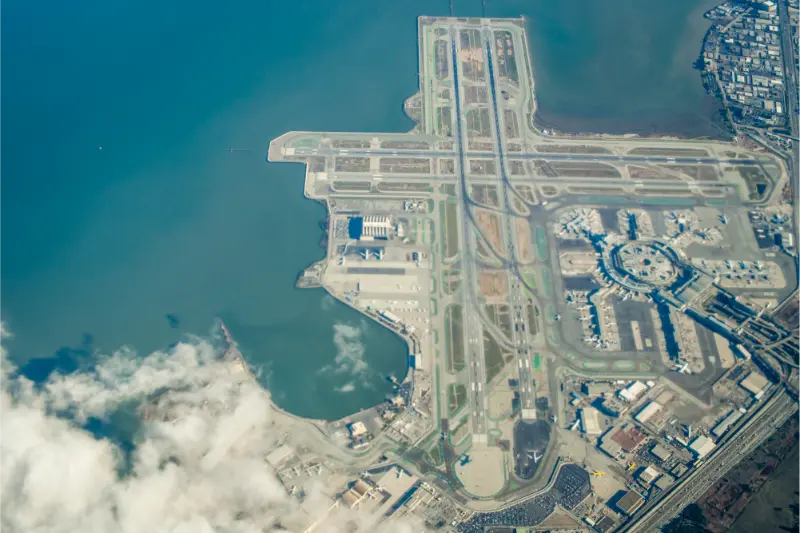
BART trains serve SFO from a station in the International Terminal, with the airport’s free AirTrain connecting other terminals to the station. BART describes the ride to downtown San Francisco as roughly 30 minutes, although your total door-to-door time depends on waiting, your exact stop and the walk to the hotel.

BART fare gates now accept contactless bank cards, Apple Pay, Google Pay and Clipper. Use the same payment method to enter and exit. The official BART SFO airport page has current routing and payment details.
OAK: often better than visitors expect
OAK connects to the BART network through the Oakland Airport connector and Coliseum Station. It can be particularly logical if you are staying in Oakland, Berkeley or elsewhere in the East Bay. For central San Francisco, it still works, but you are crossing the Bay and should compare the total transfer with an SFO itinerary.
One advantage is that the airport-to-BART link makes the journey understandable without a car. The official BART OAK airport page explains payment and the airport connection. Do not compare only airfares; add the ground transfer, arrival time and hotel location.
SJC: excellent for Silicon Valley, less obvious for San Francisco tourists
SJC is close to Downtown San Jose and Silicon Valley. VTA Route 60 serves the airport and connects with Santa Clara Transit Center and Milpitas BART, among other points. That makes regional travel possible, but reaching central San Francisco involves more steps than the direct SFO BART connection.
SJC is attractive when you are beginning a trip in San Jose, Santa Cruz, Monterey or the South Bay, or when the flight schedule is dramatically better. For a three-night first visit centered on Union Square or Fisherman’s Wharf, SFO usually wins on simplicity unless fares differ substantially.
Which airport is best for a California road trip?
It depends on the road-trip direction. SFO works well if you want several car-free days in San Francisco before collecting a rental car. SJC can make sense if you are heading south toward Monterey, Carmel or the Central Coast. OAK can be convenient if your route starts east or north of the Bay.
I often recommend not renting the car immediately when the trip begins with San Francisco. Stay in the city without a vehicle, then collect it on departure day. That avoids hotel parking and city driving. Our San Francisco to Los Angeles road-trip guide helps with the broader route.
Taxi and rideshare from SFO
Taxi and rideshare are practical, especially for groups or late arrivals, but prices depend on traffic and demand. Airport pickup zones and app instructions can change, so follow the terminal signage and your ride app rather than a screenshot from an old guide.
A car is most attractive when the hotel is poorly served by BART, you have several large bags or your arrival is at a time when transit frequency is reduced. If your hotel is a short walk from Powell, Montgomery or Embarcadero, BART often gives a cleaner arrival.
Late-night arrivals
Late flights change the ranking. A transit option that is excellent in the afternoon may not operate frequently enough for a delayed arrival. Check the timetable for the actual day of travel and keep a taxi/rideshare backup. This matters even more at OAK or SJC where your journey may involve an additional connection.
I also tell hotels if I expect a very late arrival. Some smaller properties have limited front-desk procedures, and you do not want to solve check-in instructions while standing at the airport after midnight.
Families and separate contactless cards
On BART, each rider aged five and older needs an individual card or device for payment. A family cannot simply tap the same physical card repeatedly through the gate. If several people share one bank account, they can use different physical cards/devices where supported, or set up individual Clipper cards.
For children or discounted fares, plan ahead because the adult tap-to-pay workflow is not the same as every reduced-fare program. If simplicity matters more than savings after a long flight, a direct car may be worth considering for the arrival and public transport used afterward.
Where airport choice meets hotel choice
Union Square, Downtown and the Embarcadero are relatively straightforward from SFO via BART. Fisherman’s Wharf requires an onward Muni/taxi connection. Neighborhoods farther from BART need more planning. Before buying a non-refundable flight to save $40, compare the entire airport-to-hotel route.
Read our San Francisco neighborhood guide and San Francisco public transport guide together. If you still need accommodation, compare San Francisco hotels.
My decision rule
- Choose SFO for the easiest central San Francisco arrival.
- Choose OAK when East Bay access or the flight schedule is better.
- Choose SJC for San Jose, Silicon Valley or a southbound California itinerary.
- Recheck late-night transit before choosing any airport solely on airfare.
A practical checklist before you book
Before paying for a hotel or airport transfer, put the addresses into a map and test the actual journeys you expect to make. A place that looks centrally located on a booking map can still require a long walk to useful transit, a freeway crossing, a steep hill or an awkward transfer. I also check the first and last realistic transit options for the day, because a route that works beautifully at 2 p.m. may be much less convenient after a late dinner, a show or an early flight.
Save the hotel address, airport terminal, transit map, reservation confirmations and one backup route offline. Keep one payment card separate from the wallet you use during the day, and do not assume every machine or transit agency accepts the same payment method. If a timed attraction, show or theme-park reservation matters, protect that reservation first and build the transport plan around it rather than squeezing it into an unrealistic day.
Finally, re-check the official transit or airport page shortly before travel. Fares, construction, pickup zones, station entrances and service patterns can change. The most useful travel plan is not the one with the most detail months in advance; it is the one that identifies which details are stable and which ones need a final confirmation a few days before arrival.
I also keep the first day deliberately simpler than the middle of the trip. International arrivals can involve immigration, baggage, an unfamiliar airport and jet lag, while domestic travel days can still be disrupted by delays or traffic. Put the most expensive or difficult-to-replace reservation on a day when you are already settled. On departure day, avoid squeezing in a distant attraction unless the transport to the airport is exceptionally predictable. This small amount of buffer is one of the easiest ways to make an ambitious U.S. itinerary feel comfortable rather than fragile.
For families or groups, agree on one meeting point and one backup plan before separating. Large American airports, resorts and transit stations can have multiple exits that look similar on a phone map but are far apart on foot. Share the hotel address and reservation details with every adult, and make sure at least one second person can access tickets and confirmations. That is a small organizational step, but it prevents a dead phone, missed message or wrong pickup zone from turning into a much larger problem.
When comparing two routes, count the hidden effort as well as the minutes. A journey with one direct train and a ten-minute walk may be easier than a slightly faster option with two transfers, elevators, luggage and an uncertain final bus. The same applies to hotels: a room that saves a small amount per night can be poor value if it adds paid rides or repeated cross-city travel. I use transport as part of the accommodation budget, not as a separate afterthought. That produces a more realistic total cost and usually a much more enjoyable trip.
One final habit helps on every city trip: check the next morning before going to bed. Confirm the first route, the opening time of the first attraction and any service alert that could affect it. Ten minutes of preparation at night is usually more useful than an hour of overplanning weeks earlier, because you are working with current conditions and already know how the city feels in practice.
Final advice
For most first-time San Francisco visitors, SFO is the simplest answer, but the Bay Area is larger than San Francisco itself. Match the airport to the first two days of the itinerary. That single decision can remove an unnecessary transfer, a rental-car day or an expensive cross-region ride.