

Washington DC is one of the most rewarding U.S. cities for a first-time visitor because many of its most important museums and monuments can be experienced without admission fees. The challenge is not finding things to do; it is understanding the scale of the National Mall, the time required for major museums and the reservation rules that apply to a few high-demand sites. A focused three- or four-day trip can cover the essentials without rushing from building to building.

How many days do you need?
Three full days is a practical minimum for the National Mall, several Smithsonian museums and a few neighborhoods. Four or five days allows a slower museum pace, Arlington, Georgetown and more time around Capitol Hill. Families often benefit from an extra day because large museums are tiring even when children enjoy them.
DC works well as part of an East Coast itinerary with New York and Philadelphia because rail connections can be easier than flying once airport transfers are considered.
Where to stay
Downtown and Penn Quarter provide convenient access to museums, restaurants and Metro lines. Capitol Hill is useful for the eastern end of the Mall and a more residential feel. Dupont Circle has restaurants and good transport. Foggy Bottom is convenient for the western Mall and Georgetown, though Georgetown itself does not have a Metro station directly in its center.
Compare the hotel not only by distance to the White House but by the nearest Metro line and the attractions you plan to visit most. A few blocks can matter after a full day of museum walking.
The Smithsonian: free does not mean quick
Many Smithsonian museums in Washington have free general admission, which makes DC unusually good value for travelers. The National Air and Space Museum, National Museum of Natural History, National Museum of American History and National Museum of African American History and Culture are among the major choices, but some locations or periods use timed-entry passes.

Check the official Smithsonian visitor page for current hours and pass requirements. I would choose one major museum for the morning and a second smaller or more flexible activity in the afternoon rather than trying to rush through four museums in one day.
Walking the National Mall
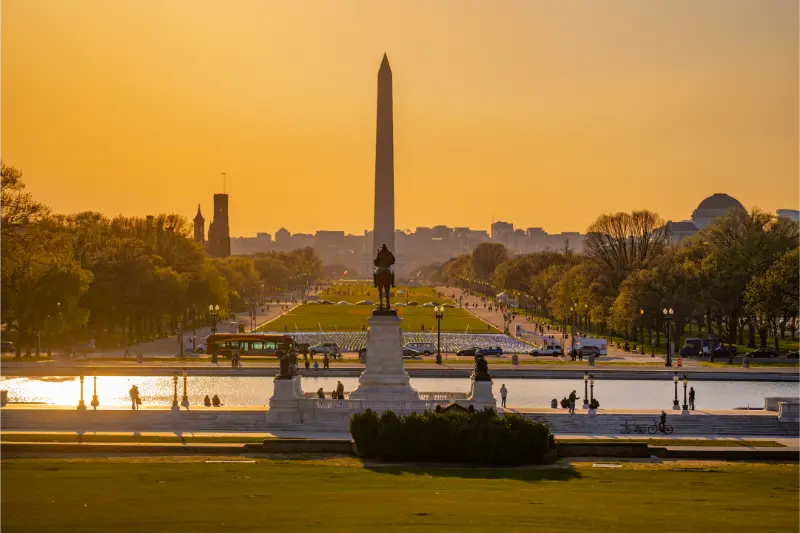
The Mall appears compact on maps because the monuments share one long green axis, but the distances are substantial. The U.S. Capitol, Washington Monument, World War II Memorial and Lincoln Memorial can form a full walking day when museum stops are added. Wear comfortable shoes and carry water in warm weather.
Evening is an excellent time to revisit the monuments. Lighting changes the atmosphere, temperatures may be cooler and the memorials can feel more reflective once daytime tour groups decrease.
White House and Capitol visits
Public access to government buildings follows security procedures and reservation systems that can change. International visitors should not rely on old blog instructions. If an interior tour is important, begin with the official White House and U.S. Capitol visitor information well before the trip.
Even without an interior tour, the exterior areas, Lafayette Square, Capitol grounds and nearby museums provide plenty to see. Avoid building the entire day around a tour until confirmation is secured.
Arlington National Cemetery
Arlington is just across the Potomac and can be reached by Metro. Major sites include the Tomb of the Unknown Soldier, memorial areas and extensive historic sections. The distances and hills are significant, so allow more time than a simple stop on a map suggests.
Visitors should treat the site with the respect appropriate to an active national cemetery. Check current access and ceremony information on the official Arlington National Cemetery website before visiting.
Georgetown and neighborhoods beyond the Mall
After a day of monuments, Washington becomes more interesting when you see ordinary neighborhoods. Georgetown has historic streets, the waterfront and shopping. Dupont Circle and Adams Morgan offer dining and nightlife. The Wharf has modern waterfront development, while Capitol Hill includes markets and residential blocks beyond government buildings.
One neighborhood evening can prevent the trip from feeling like a continuous school history lesson. Choose where to eat based on the area you are already exploring rather than crossing the city for one restaurant.
Getting around without a car
A car is unnecessary for most central Washington trips. Metro, walking and buses cover the main visitor areas, while taxis and rideshares fill occasional gaps. Parking and traffic can make a rental car less convenient than it appears.
If Washington is the end of a larger road trip, return the car before the city stay when practical. The USA transportation guide explains how urban transport differs from road-trip regions.
Washington DC with children
DC can be outstanding for families because museums, monuments, aircraft, animals, science and history can be mixed without expensive admission at every stop. The problem is museum fatigue. Give children a say in which collections matter and plan outdoor breaks between indoor visits.
The National Mall has open space but very long distances. A stroller can help younger children, and a mid-afternoon hotel break may be more useful than forcing one extra museum. See the USA with kids guide for broader planning.
Best time to visit
Spring is famous for cherry blossoms, but exact bloom timing varies and crowds can be intense. Fall often provides comfortable walking weather. Summer is hot and humid, while winter can be cold but less crowded outside holidays.
If cherry blossoms are the main objective, book refundable accommodation because bloom forecasts become meaningful only closer to the season. If museums are the priority, almost any month can work.
A practical 3-day Washington DC itinerary
- Day 1: Capitol area, one Smithsonian museum and eastern National Mall
- Day 2: major monuments from Washington Monument to Lincoln Memorial, plus one museum
- Day 3: Arlington, Georgetown or a second Smithsonian focus
With a fourth day, add the National Zoo, more neighborhoods, the Library of Congress, additional museums or a slower second visit to the Mall. The goal is not to enter every institution; it is to have enough time inside the ones you choose.
Budget advantages and hidden costs
Free museums can make Washington less expensive than New York for attraction-heavy travelers, but central hotels, restaurant tips and parking can still be costly. Staying near Metro rather than directly on the Mall may offer better value without sacrificing convenience.
Use the USA travel costs guide to budget taxes and tips. Reserve the money you save on museums for a good hotel location or one special meal rather than spending it on unnecessary transport.
Related USA travel guides
Before your Washington trip
Check which museums need timed passes on your exact dates and do not assume “free” means “walk in anytime.” Save reservation confirmations and review bag policies for government buildings or special sites. Security lines are easier when you travel light.
For the National Mall, carry water and plan where to eat because the most convenient options are not always beside the monument you are visiting. A morning museum plus an outdoor afternoon, or the reverse in hot weather, creates a much better rhythm than spending eight consecutive hours indoors.
How I would keep the itinerary realistic
For a Washington DC for first-time visitors trip, I would protect at least one flexible block of several hours rather than scheduling every meal and attraction. Travel days take longer than expected once parking, luggage, security, weather and simple fatigue are included. That flexible time can absorb a delay without forcing you to cancel the part of the itinerary you care about most.
I also keep the most important reservation details, addresses and official information pages available offline. The United States is easy to travel once the basic logistics are understood, but distances and local systems vary enough that a little preparation saves a great deal of time. Recheck weather and official alerts before each major driving or outdoor day, then allow the trip to breathe.
Finally, avoid choosing a destination only because it is famous. A better route connects places that make sense together geographically and gives each one enough time. The strongest USA itineraries usually contain fewer stops, shorter transfer days and more opportunities to experience a place beyond its single best-known viewpoint or attraction.
A few final practical details
Before the trip, I would also review the small practical details that become important only after arrival: where the first night is located, what time check-in begins, how the first transfer works, whether parking is included and which reservations can be changed if weather interferes. Saving these details in one offline note prevents repeated searches while traveling.
For driving or outdoor days, start earlier than the minimum schedule requires. Early starts usually mean easier parking, cooler temperatures and more room for unexpected stops. For city days, the opposite can also be useful: one late morning after several busy days can restore energy and make the rest of the itinerary more enjoyable. A good vacation schedule should support the experience rather than constantly compete with it.
I would also keep one financial buffer that is not assigned to a specific attraction. Parking, baggage, tolls, tips, weather changes and last-minute transport can all add cost. Having that margin makes it easier to solve a problem without feeling that one unexpected expense has damaged the entire trip budget.