

Las Vegas looks walkable until you actually try to walk it. The Strip is long, resort entrances are set far back from the road, pedestrian bridges can force indirect crossings and summer heat changes what “ten minutes” feels like. The best transport strategy combines walking with the Monorail, RTC buses, rideshare/taxi and free resort-area connections where they genuinely save time.
I do not rent a car for a normal Strip-focused stay. A car becomes useful for day trips, suburban destinations or a larger road trip, but parking and traffic can erase the advantage inside the resort corridor.
From Harry Reid International Airport to the Strip
Harry Reid International Airport (LAS) is close to the Strip, but proximity does not mean every hotel is a five-minute trip. Taxi and rideshare are the simplest door-to-door choices. Public bus is available from Terminal 1; the airport currently lists RTC Route 108 and the Red Line (formerly Route 109 Maryland Parkway) at Level Zero.
Passengers arriving at Terminal 3 who want the public bus should use the inter-terminal shuttle to Terminal 1. Verify the current details on the official Harry Reid Airport public-bus page because route names and construction arrangements can change.
The Las Vegas Monorail: when it is excellent
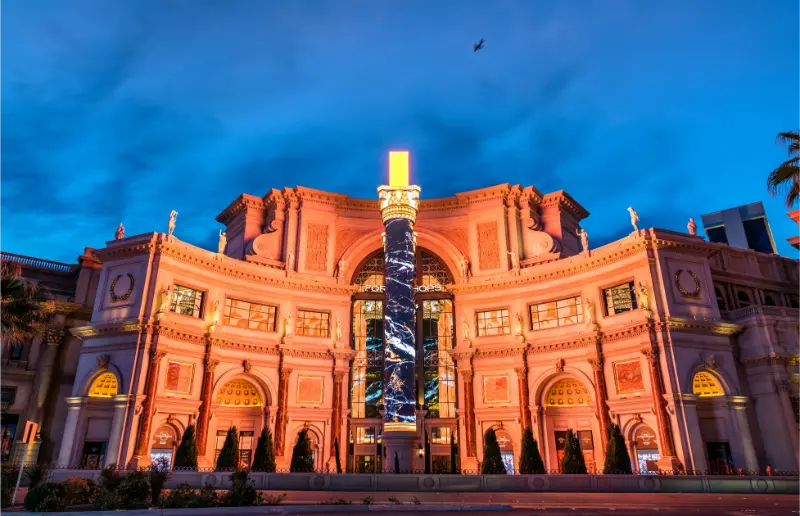
The Monorail runs along the east side of the Strip with seven stations from MGM Grand to SAHARA, serving major resorts and the Las Vegas Convention Center. Trains normally arrive every few minutes, making it particularly useful when your origin and destination are both close to stations.
Current online pricing lists a one-ride eTicket at $5.50 and a 24-hour eTicket pass at $13.45, with longer multi-day options available. The official Monorail ticket page has current prices and operating hours. Do the math: for two people making one short ride, rideshare can sometimes compete; for repeated station-to-station travel, a pass can be valuable.
The limitation of the Monorail
Stations sit on the east side of the Strip and are often behind enormous resort complexes. A station that appears beside a hotel on the map may still require a substantial indoor walk. The Monorail also does not serve Downtown Las Vegas or the airport.
This is why I use it as a corridor tool rather than a universal answer. It is fantastic for convention travel and certain hotel combinations, but not necessarily for a traveler staying on the west side who wants Fremont Street.
RTC buses and the Strip
RTC buses serve the tourist corridor and the wider valley. The Deuce is the service most visitors associate with the Strip and Downtown. Bus travel can be inexpensive and useful, but traffic affects it, especially at peak times and during large events.
If you have a dinner reservation or show with a strict start time, leave more margin than the schedule suggests. A bus that is perfect at 11 a.m. can be much slower on a congested evening.
Walking: use resorts as destinations, not as blocks
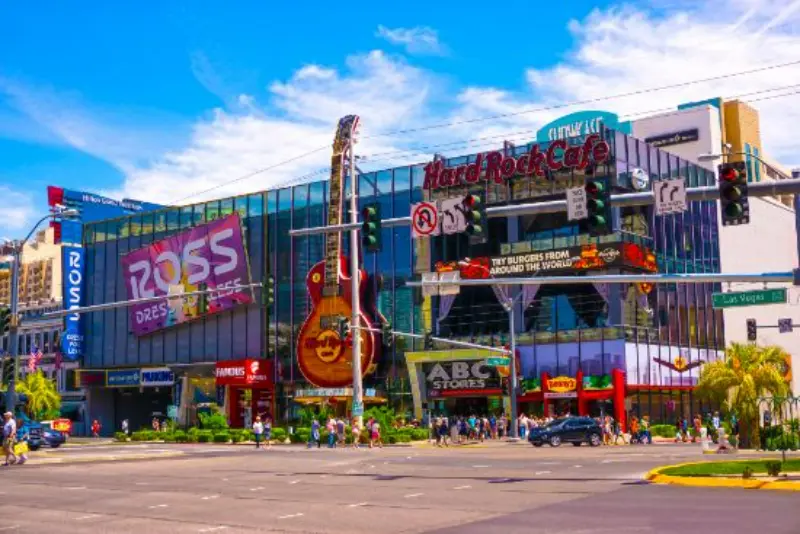
Two neighboring resort names can hide a surprising amount of walking. You may walk through a casino floor, shopping area, pedestrian bridge and long frontage before reaching the next property. Comfortable shoes are not optional.
In hot weather, plan the day around indoor connections and shorter outdoor sections. Hydration and sun protection matter even when you think you are “just walking the Strip.” Summer heat can make a route that is pleasant at night uncomfortable or unsafe at midday.
Taxis versus rideshare
Both are useful in Las Vegas. Taxi queues at major hotels can be extremely convenient because you do not need to locate a ride-app pickup zone. Rideshare lets you see a price before confirming, but resort pickup locations can be in garages or designated areas rather than at the main entrance.
I compare both when demand is high. After a major show, concert or sporting event, rideshare surge pricing and pickup congestion can change the normal equation. Sometimes walking ten minutes away from the event crowd—or waiting for the surge to fall—is smarter than ordering immediately.
Free trams and resort connections
Some Strip resorts operate free tram systems between related properties. These can be useful, but they are not one continuous public-transit network. Hours, stations and operating conditions can change. Treat them as a bonus connection within a specific part of the Strip, not a substitute for the Monorail or RTC.
A good itinerary uses them when they naturally fit rather than detouring across a resort just to save one short walk.
Downtown Las Vegas and Fremont Street
Downtown is several miles from the central Strip. The Monorail does not reach it. Bus, taxi and rideshare are the main visitor options. If you want a full Fremont Street evening, plan it as a distinct outing rather than trying to bounce repeatedly between Downtown and the Strip.
Our Las Vegas first-time visitor guide helps decide how much time to give the Strip versus Downtown and day trips.
Do you need a car for Red Rock Canyon or Hoover Dam?
A car can be useful for independent desert day trips, but you can also use organized tours for major attractions. If you rent only for one or two days, check hotel parking and rental-office hours. A short rental can be more logical than paying for a vehicle during an entire resort stay.
If Las Vegas is part of a Southwest road trip, collect the car when you are ready to leave the urban core. Read our USA road trip guide before driving long desert distances.
Where to stay if you want easy transport
Hotel location is more important than the number of transport options. A central Strip hotel lets you walk to more sights; a property beside a Monorail station can simplify repeated convention trips; Downtown makes sense if Fremont Street is the priority. Our Las Vegas hotel-area guide compares the choices.
You can also compare Las Vegas accommodation, but check resort fees, parking and the actual entrance location before comparing final prices. Our guide to resort fees and hotel deposits is especially relevant in Las Vegas.
A practical checklist before you book
Before paying for a hotel or airport transfer, put the addresses into a map and test the actual journeys you expect to make. A place that looks centrally located on a booking map can still require a long walk to useful transit, a freeway crossing, a steep hill or an awkward transfer. I also check the first and last realistic transit options for the day, because a route that works beautifully at 2 p.m. may be much less convenient after a late dinner, a show or an early flight.
Save the hotel address, airport terminal, transit map, reservation confirmations and one backup route offline. Keep one payment card separate from the wallet you use during the day, and do not assume every machine or transit agency accepts the same payment method. If a timed attraction, show or theme-park reservation matters, protect that reservation first and build the transport plan around it rather than squeezing it into an unrealistic day.
Finally, re-check the official transit or airport page shortly before travel. Fares, construction, pickup zones, station entrances and service patterns can change. The most useful travel plan is not the one with the most detail months in advance; it is the one that identifies which details are stable and which ones need a final confirmation a few days before arrival.
I also keep the first day deliberately simpler than the middle of the trip. International arrivals can involve immigration, baggage, an unfamiliar airport and jet lag, while domestic travel days can still be disrupted by delays or traffic. Put the most expensive or difficult-to-replace reservation on a day when you are already settled. On departure day, avoid squeezing in a distant attraction unless the transport to the airport is exceptionally predictable. This small amount of buffer is one of the easiest ways to make an ambitious U.S. itinerary feel comfortable rather than fragile.
For families or groups, agree on one meeting point and one backup plan before separating. Large American airports, resorts and transit stations can have multiple exits that look similar on a phone map but are far apart on foot. Share the hotel address and reservation details with every adult, and make sure at least one second person can access tickets and confirmations. That is a small organizational step, but it prevents a dead phone, missed message or wrong pickup zone from turning into a much larger problem.
When comparing two routes, count the hidden effort as well as the minutes. A journey with one direct train and a ten-minute walk may be easier than a slightly faster option with two transfers, elevators, luggage and an uncertain final bus. The same applies to hotels: a room that saves a small amount per night can be poor value if it adds paid rides or repeated cross-city travel. I use transport as part of the accommodation budget, not as a separate afterthought. That produces a more realistic total cost and usually a much more enjoyable trip.
One final habit helps on every city trip: check the next morning before going to bed. Confirm the first route, the opening time of the first attraction and any service alert that could affect it. Ten minutes of preparation at night is usually more useful than an hour of overplanning weeks earlier, because you are working with current conditions and already know how the city feels in practice.
Final advice
Las Vegas transport is easiest when you stop searching for one perfect mode. Walk short logical sections, use the Monorail where stations align, use buses when time is flexible, and take a taxi/rideshare when door-to-door convenience matters. That mix keeps the city fun instead of turning every transfer into a project.