

Richmond is one of the easier mid-sized U.S. cities to try without paying a transit fare. GRTC currently operates its fixed-route buses and Pulse bus rapid transit as Zero Fare service. For visitors, that removes the ticket question completely: the planning challenge is route geography, frequency and the final walk, not how to buy a pass.
The strongest transit corridor is Broad Street, where the Pulse connects Willow Lawn, Scott’s Addition, the Science Museum area, VCU, Downtown, Main Street Station, Shockoe Bottom and Rocketts Landing. The airport is also unusually useful by bus: Routes 7A and 7B link Richmond International Airport with the Downtown Transfer Station, and GRTC currently advertises combined departures from the airport every 15 minutes.
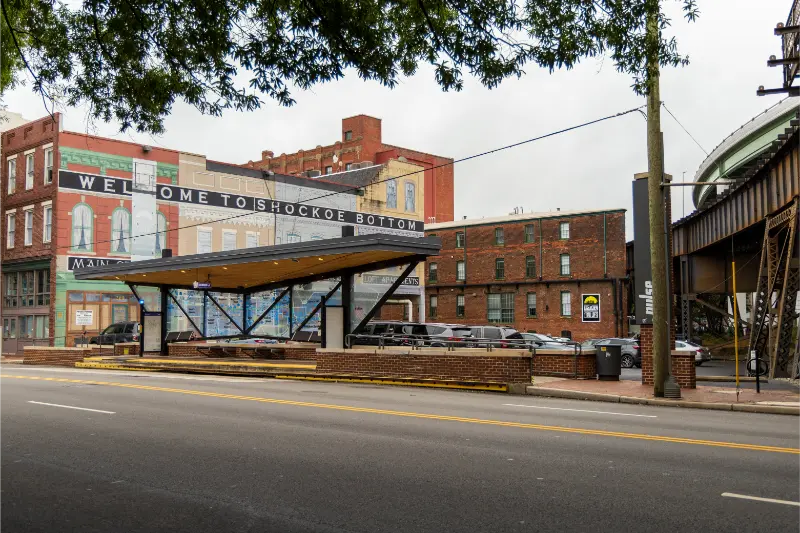
GRTC is currently Zero Fare
GRTC states that all buses are Zero Fare, so riders can board without paying. That includes the Pulse and airport service. The agency is actively working on long-term support for open-access transit, so visitors planning far in the future should still verify the policy on the official GRTC rider guide before travel.
Pulse BRT: the most useful line for visitors
The Pulse runs between Willow Lawn and Rocketts Landing and serves many of the places a visitor is likely to use: Scott’s Addition, Science Museum of Virginia, VCU, Downtown, Main Street Station, the Capitol area and Shockoe Bottom. GRTC currently lists service every 10 minutes during weekday peak periods, with 15- to 30-minute service at other times. See the official Pulse page for the current schedule.

If I were planning a car-light Richmond trip, I would choose a hotel within a comfortable walk of a Pulse station. That one decision makes restaurants, museums, the riverfront and several neighborhoods much easier to connect without thinking about parking every time.
Routes 7A and 7B to Richmond International Airport
GRTC’s airport connection uses Routes 7A and 7B between RIC and the Downtown Transfer Station. The airport page says the combined service departs the airport every 15 minutes from the upper departures deck. The routes take different local paths but both connect the airport with Downtown. GRTC also offers LINK microtransit within the Sandston zone and an early-morning Uber voucher program for eligible trips between 4 a.m. and 6 a.m. Check the current airport connection page for details.
Downtown Transfer Station
The Downtown Transfer Station is the central hub for many GRTC routes. For a visitor, it is useful as a connection point but not necessarily the final destination. If your hotel is farther west in the Arts District, near VCU or east in Shockoe, the Pulse or another route may be more direct than transferring Downtown.
Local buses beyond the Pulse
GRTC’s network reaches Henrico County and parts of Chesterfield, Hanover and Goochland, with local and express services. The value for a tourist depends on the exact itinerary. A route that operates every 15 or 30 minutes is easy to use spontaneously; an outer route with longer gaps should be treated more like a scheduled appointment.
Can you visit Richmond without a car?
Yes, especially for a long weekend focused on Downtown, the Capitol, the riverfront, VCU, museums, Scott’s Addition and Shockoe. The harder trips are the places beyond the central corridors or a regional itinerary that adds plantations, Civil War battlefields, wineries, Charlottesville or Shenandoah. I would use GRTC for the city days and rent a car only when the trip becomes regional.
Best neighborhoods for a transit-first stay
- Downtown: best for the Capitol, museums, events and multiple bus connections.
- Arts District / VCU: excellent access to the Pulse and restaurants.
- Scott’s Addition: very convenient to Pulse stations and popular for breweries and nightlife.
- Shockoe Bottom / Shockoe Slip: useful for Main Street Station, history, restaurants and river access.
- Carytown / The Fan: strong neighborhood atmosphere, but check the walk or local route to the Pulse.
After choosing the area, compare hotels in Richmond, Virginia on Booking.com.
A simple car-free weekend plan
- Use the airport bus into Downtown if its schedule fits your flight.
- Base near the Pulse corridor and use BRT for the longest east-west movements.
- Walk within Downtown, Shockoe and individual neighborhoods instead of waiting for very short rides.
- Keep a rideshare backup for late-night or off-corridor destinations.
- Collect a rental car only if the trip continues to Charlottesville, Shenandoah or rural Virginia.
How I would use this information on a real trip
For a short stay in Richmond, I would decide first which days can genuinely be handled by transit and which days need a car or rideshare. The useful question is not whether a route appears on a map, but whether the route is frequent at the time you need it and leaves you within a comfortable walk of the actual entrance you are using.
Richmond rewards a corridor-based approach. I would group a museum or Scott’s Addition day around the western Pulse stations, a Capitol and Downtown day around the center, and a Shockoe/riverfront day farther east. That avoids zigzagging across the city and makes the zero-fare network genuinely convenient rather than simply free.
Families, luggage and accessibility
Families and travelers carrying large luggage should compare the complete door-to-door journey rather than only the fare. A direct bus can be excellent; two transfers, a long uncovered walk and an uncertain late-evening connection may not be. Travelers who need step-free access should check the current operator accessibility page and the exact stop environment, because construction or temporary stop relocations can change the practical journey even when the vehicle itself is accessible.
I also save the hotel address, airport terminal, nearest useful transit stop and one backup ride option offline. This takes only a few minutes and prevents a small mobile-data or battery problem from turning into a larger travel problem.
Weather and seasonal planning
Weather can change what feels practical in Richmond. Heat, heavy rain, winter conditions or a humid summer afternoon can make a ten- or fifteen-minute walk with luggage much less attractive than it looked on a map. I treat the weather forecast as part of the transportation decision, not as a separate packing detail.
Events, road works and service changes
Transit routes, curb locations and travel times can change for festivals, sports events, university move-in periods, construction and emergency detours. I recheck the official operator or airport page the evening before any time-sensitive journey and again before leaving the hotel. That matters particularly in 2026, because several U.S. systems are introducing new fare media, network changes or construction detours.
How to compare the true cost
I compare a full day rather than a single fare. For a rental car, include the rental rate, taxes, fuel, hotel parking, attraction parking and the time spent collecting and returning the vehicle. For public transit, include waiting time and the last walk. For a taxi or rideshare, compare the price per group rather than per person. This often changes the result: a central hotel can save enough daily transportation to justify a slightly higher nightly rate.
Phone setup that saves time
Before departure I download an offline map, save the official transit page and take screenshots of the airport transfer and the final useful evening departure. Live information is better when it is available, but screenshots are useful when signal is weak. If the system uses a payment app or smart card, I set it up on Wi-Fi rather than doing it at a stop while carrying bags.
Common mistakes to avoid
- Choosing the hotel before checking the daily map: location affects every morning and evening.
- Assuming the daytime frequency continues late at night: always check the last useful trip.
- Trusting an old screenshot: use the operator’s current schedule and alerts.
- Ignoring the final walk: the route can be good while the stop-to-hotel walk is not.
- Having no backup: keep one realistic alternative for a missed connection, bad weather or a late arrival.
Related MyUSAExperience guides
Continue planning with our Richmond Airport guide, our Where to Stay in Richmond guide, our Richmond and Charlottesville road-trip guide. I use these pages together so that the airport, hotel area and day-to-day transportation choices support the same itinerary instead of being planned separately.
Final planning advice
Richmond is easier when transportation is treated as part of the itinerary from the beginning. Verify the current schedule, choose the hotel for the trips you will actually make, and use the most practical mode for each day rather than forcing one transport option to solve every part of the vacation.
Planning the first and last mile
The first and last mile often decides whether a transit itinerary feels easy. I look at the actual sidewalk route between the stop and hotel, not only the straight-line distance. Wide roads, freeway ramps, steep hills, construction fences and missing crossings can turn a short map distance into an awkward walk. At night I also check whether the route stays on active streets. If the last segment is inconvenient, I compare a different stop, another route or a short rideshare instead of rejecting public transportation completely.
What to verify the night before
The evening before a time-sensitive trip, I check the official service alert, the weather and the first or last useful departure. For airports I also confirm the airline terminal information and work backward from the recommended arrival time. If there is a transfer, I inspect both legs rather than trusting a single total journey time. This short check catches the changes that matter more than an itinerary saved weeks earlier.