

El Paso is easier with children than many travelers expect because the city mixes short outdoor adventures with museums, parks, historic stops and viewpoints that do not require all-day hiking. The key is to plan around heat and distances. A family itinerary that looks compact on a map can become tiring if every stop is placed outdoors in the afternoon.
I use my first-time El Paso guide for the big picture, then simplify the schedule for children: one major activity in the morning, a comfortable lunch, an indoor or low-effort afternoon option and an early evening viewpoint.
Best El Paso family experiences at a glance
| Experience | Best for | Planning note |
| Franklin Mountains State Park | Active families | Choose short trails and reserve day entry |
| Mission Trail | History and culture | Keep visits respectful and unhurried |
| Downtown streetcar | Transit-loving kids | Useful as an experience and transport |
| Museums | Hot or windy afternoons | Check current opening days |
| Scenic Drive | All ages | Minimal walking, big views |
| Parks and plazas | Downtime | Useful between scheduled attractions |
Franklin Mountains: choose the trail for the youngest hiker
At Franklin Mountains State Park, families should plan from the ability of the least experienced hiker. The park has routes ranging from short walks to demanding summit hikes. TPWD also provides a Junior Ranger activity booklet, which can turn a simple visit into a more engaging nature lesson.
I avoid setting a mileage target for children in desert terrain. Instead, choose a turnaround time, carry water for everyone and stop while the outing is still enjoyable. Exposed rock, cactus, loose gravel and intense sun matter more than the raw distance printed on a trail description.
Use the city for midday recovery
El Paso gives families an advantage that remote desert parks do not: you can return to air-conditioning, food, restrooms and hotels without ending the day. During warmer months, this makes the city a much easier base for introducing children to desert landscapes.
Schedule museums, lunch, hotel pool time or a slow Downtown walk during the hottest period. Young travelers often enjoy the trip more when every hour is not treated as sightseeing time.
Ride the streetcar for a change of pace
The El Paso Streetcar can be a useful family activity because riding transit itself becomes part of the day. Review current routing in my public transportation guide, and check Sun Metro information before departure because service patterns and event adjustments can change.

For small children, a short ride can be enough. Do not build the entire day around staying on the vehicle for a full loop if everyone is hungry or restless; pair it with a Downtown meal, plaza stop or museum.
Mission Trail with children
The Historic Mission Trail connects Ysleta, Socorro and San Elizario. Visit El Paso notes that Ysleta and Socorro are among the oldest working mission churches in the region, while San Elizario adds another layer of borderland history.
With kids, I make the route about stories rather than dates. Talk about how communities moved, farmed, worshiped and traveled through the Mission Valley. Keep voices low inside active churches and take breaks in the surrounding community instead of turning the stops into a checklist.
Scenic Drive for sunset without a long hike
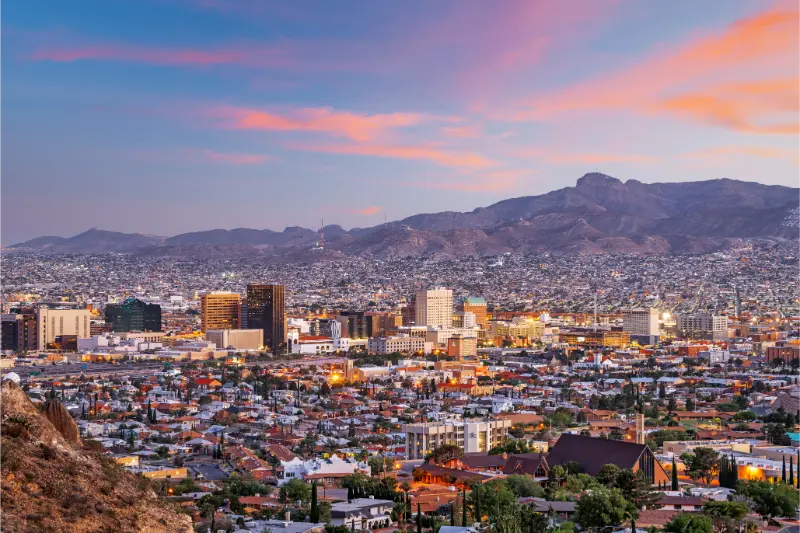
Scenic Drive is one of the easiest high-impact family stops. The road reaches an overlook with broad views across the city and toward Mexico, so children can experience the scale of the borderland without a steep trail. Arrive before sunset congestion and supervise carefully around parking and overlook edges.
Bring a jacket in cooler months. Desert temperature swings can surprise families who dressed only for the warm afternoon.
Food strategy with children
A family food plan does not need to avoid local cuisine. Order a few shareable dishes, ask about spice levels and let children try regional flavors without making every meal an experiment. El Paso also has enough variety that a cautious eater can find simple options while adults still explore local specialties.
Carry snacks in the car for mountain and Mission Valley excursions. Long gaps between meals create more family stress than almost any attraction choice.
Where families should stay
Downtown is convenient for a walkable cluster of sights; the airport area is practical for short trips; the West Side can work well for Franklin Mountains access. My El Paso lodging-area comparison explains each base in detail.

When booking, prioritize parking, breakfast, refrigerator access and a pool if those features matter to your family. A slightly less fashionable hotel can be the better choice if it eliminates repeated loading and unloading across town. Compare current El Paso family-friendly accommodation on a map before paying.
Heat, wildlife and desert safety
Children dehydrate faster than adults may realize, and dry air can mask how much fluid is being lost. I offer water frequently rather than waiting for a child to ask. Hats, sunscreen and closed footwear are basic equipment for outdoor stops.
Teach children not to touch cactus, insects, reptiles or unfamiliar plants. Wildlife encounters are usually a matter of giving animals space. On trails, keep the group together and do not let children run ahead around blind corners.
A simple 2-day family plan
- Day 1 morning: short Franklin Mountains outing.
- Day 1 midday: lunch and hotel or museum break.
- Day 1 evening: Downtown and Scenic Drive.
- Day 2 morning: Mission Trail.
- Day 2 midday: relaxed meal in the Mission Valley or Downtown.
- Day 2 afternoon: streetcar, museum, park or departure.
When to add a third day
Add a third day if your children enjoy hiking, museums or slow travel. It gives you a weather backup and prevents the common family mistake of placing a big outdoor day immediately before a long drive. El Paso is at its best when everyone still has energy to notice the scenery rather than simply moving between attractions.
For an onward national-park trip, I would sleep well in El Paso, shop for water and supplies, then start early the next morning. That is more comfortable than forcing children through a late-night drive after a full sightseeing day.
Planning around El Paso weather
El Paso is sunny for much of the year, but “sunny” does not mean identical conditions. Summer afternoons can be very hot, winter mornings can be cold, spring can be windy and monsoon-season storms can create sudden heavy rain. I check the National Weather Service forecast rather than relying on a generic monthly climate chart. For outdoor attractions, the practical question is not only the high temperature but the temperature during the hours you will actually be walking.
If the forecast is uncomfortable, reverse the itinerary instead of cancelling the trip: museums and meals can move to the middle of the day, while viewpoints and trails shift to early morning or evening. This flexibility is one of the advantages of visiting a real city beside a mountain range.
Driving in El Paso
El Paso is spread out, and a car can save significant time when combining the Franklin Mountains, Mission Valley and airport area. Downtown itself is more compact, so I park once when possible and walk or use the streetcar rather than moving the car every few blocks.
Allow extra time around commuter periods and major events. The borderland road network can look simple on a map but mountain geography channels traffic into a limited number of corridors.
A note on the border
Visitors often arrive curious about the international border because Ciudad Juárez is visible from several viewpoints. Treat the border as part of the region’s real human geography, not as a novelty. If you intend to cross into Mexico, research current passport, customs, transportation and safety information separately before the trip; do not make an unplanned crossing simply because the cities appear close.
For an ordinary El Paso weekend, there is more than enough to do on the U.S. side. The best way to understand the city is through its neighborhoods, food, museums, missions and landscape rather than reducing it to the presence of the boundary.
Accessibility and pacing
Accessibility varies widely between urban museums, historic buildings and mountain trails. Travelers with mobility limitations should check each attraction directly for parking, ramps, restroom access and surface conditions. Scenic Drive and central-city attractions can provide strong experiences without a long hike.
Build rest into the schedule. El Paso’s elevation, dry air and sun can make an apparently easy day more tiring than a similar itinerary at sea level.
Planning around El Paso weather
El Paso is sunny for much of the year, but “sunny” does not mean identical conditions. Summer afternoons can be very hot, winter mornings can be cold, spring can be windy and monsoon-season storms can create sudden heavy rain. I check the National Weather Service forecast rather than relying on a generic monthly climate chart. For outdoor attractions, the practical question is not only the high temperature but the temperature during the hours you will actually be walking.
If the forecast is uncomfortable, reverse the itinerary instead of cancelling the trip: museums and meals can move to the middle of the day, while viewpoints and trails shift to early morning or evening. This flexibility is one of the advantages of visiting a real city beside a mountain range.