

An airboat ride can be a memorable part of a South Florida trip, but the phrase “Everglades airboat tour” causes more confusion than almost any other Everglades activity. Some commercial attractions are outside national-park boundaries, while a small group of authorized operators uses designated airboat areas inside Everglades National Park. The ride itself is also not a substitute for Shark Valley, Royal Palm or Flamingo; it shows one type of wetland from a very different perspective.

In 2026, NPS lists three authorized businesses offering professional airboat tours inside the park: Coopertown, Everglades Safari Park and Gator Park. All are located along US 41/Tamiami Trail between Miami and Shark Valley. If national-park authorization matters to you, start with that official list rather than choosing the first roadside billboard.
| Authorized NPS operators | Coopertown, Everglades Safari Park, Gator Park |
| Location | US 41/Tamiami Trail between Miami and Shark Valley |
| Best pairing | Shark Valley on the same day |
| Does it replace the park? | No; Royal Palm, Flamingo and Gulf Coast offer different habitats |
| Reservation | Recommended in busy periods; confirm directly with operator |
Are airboats actually allowed in Everglades National Park?
Yes, but not everywhere. NPS restricts airboat operation to designated areas and requires permits for airboat use. Commercial operations inside the park require authorization. The image of airboats freely racing across all 1.5 million acres is inaccurate; large sections of the park are managed for other types of access, including hiking, paddling and conventional boating.
What an airboat tour feels like
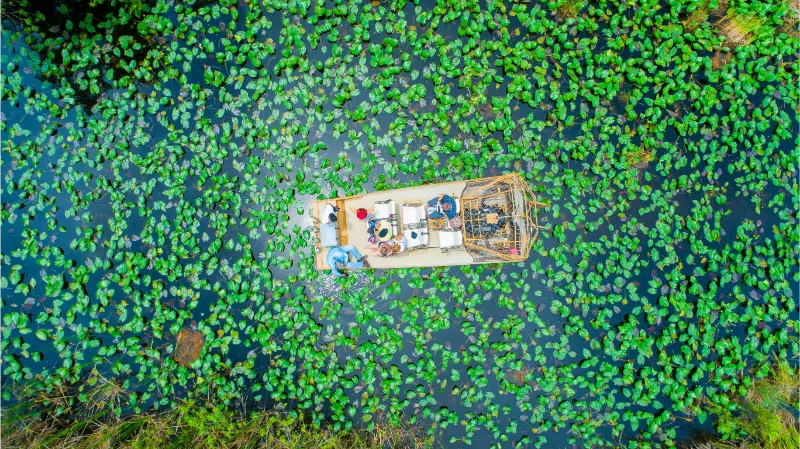
Airboats are shallow-draft vessels driven by a large rear propeller rather than an underwater prop. That design allows travel through very shallow marsh. Expect engine noise, wind and periods of faster movement mixed with slower wildlife observation. Hearing protection is normally part of the operator’s setup, but travelers sensitive to noise should ask specific questions before booking.
Wildlife expectations
Alligators are a major attraction, but they are wild animals and sightings vary. Birds, turtles and the wetland landscape are equally important parts of the experience. Be cautious of any marketing that implies handlers can guarantee a particular wild encounter. Inside a national park, the goal is observation without changing animal behavior.
Authorized national-park tour versus other South Florida operators
There are many airboat businesses in the broader Everglades ecosystem. Some operate on tribal lands, private property or state-managed wetlands rather than inside Everglades National Park. Those tours are not automatically inferior; they are simply different. Ask exactly where the boat travels and who manages the land if this distinction matters to your trip.
If your goal is to say you visited Everglades National Park, make sure you also enter the park itself. A roadside attraction with “Everglades” in the name does not necessarily mean you crossed the national-park boundary.
How to pair an airboat ride with Shark Valley
The most efficient combination is an early Shark Valley visit followed by an afternoon airboat reservation, or the reverse if your tour time is fixed. I prefer Shark Valley first because parking is most difficult later in the day. The airboat operators are along the same US 41 corridor, so this pairing avoids a cross-region drive.
How much time to allow
Do not schedule two reservations back-to-back based only on Google Maps. Allow time for Shark Valley parking queues, operator check-in, restrooms and traffic on US 41. A half-day for Shark Valley plus an airboat ride is possible, but a relaxed full day is better if you also want lunch, photography and stops along the Tamiami Trail.
Airboats and children
Age policies, hearing protection, seating and life-jacket requirements vary by operator. Confirm them before purchasing. Some children love the speed and noise; others find it overwhelming. Families with toddlers may prefer the slower Shark Valley tram for the main wildlife experience and treat an airboat as optional.
Accessibility questions to ask
Boat boarding can involve steps, narrow platforms or transfers. Do not assume an attraction described as “family friendly” is fully accessible. Contact the operator with specific mobility needs and ask about boarding assistance, wheelchair storage, restroom access and whether a companion can remain nearby if a traveler chooses not to ride.
What to wear
Use sun protection even if the weather feels comfortable at departure. Secure loose hats and lightweight items before the boat accelerates. A strap for glasses can be useful. In summer, combine sun protection with insect repellent and a rain plan; South Florida storms can develop quickly.
Photography on an airboat
Protect your phone or camera from spray and sudden movement. A neck or wrist strap is more important than carrying multiple lenses. When the boat slows for wildlife, avoid standing or leaning outside the designated seating position. Respect the guide’s instructions rather than shifting the boat for a photograph.
Airboat ride or Shark Valley tram?
If you must choose one, select based on travel style. The tram is slower, interpretive and centered on a 15-mile paved loop with an observation tower. The airboat offers movement through shallow marsh and the distinctive experience of the vessel itself. Travelers who want ecology and photography may prefer the tram; travelers excited by the classic airboat experience may prioritize the boat. Doing both provides the clearest contrast.
Airboat ride or Flamingo boat tour?
These are even more different. Flamingo tours explore Florida Bay or backcountry waterways with conventional boats and introduce mangroves, estuarine habitats and coastal wildlife. If your itinerary includes multiple days, an airboat near Shark Valley and one Flamingo or Ten Thousand Islands boat trip are not redundant.
Dry season versus wet season
The dry season, roughly December through mid-May, is the classic first-visit period. Humidity is lower, mosquitoes are usually less intense, water levels concentrate wildlife and ranger programs are more frequent. It is also the busiest season, so Shark Valley parking, tram tours, Flamingo lodging and popular guided activities benefit from advance planning.
The wet season brings greener landscapes, dramatic clouds and fewer winter crowds, but it also means heat, frequent afternoon storms, higher mosquito activity and changing water conditions. A wet-season itinerary should emphasize early starts, short walks, air-conditioned breaks and flexible outdoor plans. The park remains open, yet visitor-center hours, concession schedules and trail conditions can vary by season, so check the official NPS conditions page shortly before travel rather than relying on an old screenshot.
Entrance fees and reservations in 2026
Everglades National Park does not use a timed-entry reservation system for ordinary sightseeing. The standard private-vehicle entrance pass is $35 and is valid for seven consecutive days, and the park’s fee stations operate cashless. Separate charges apply to tram tours, boat tours, rentals, camping and other concession services. Visitor-specific federal pass rules can change, so international travelers and anyone planning several national parks should check the current NPS fees page before buying a pass.
Safety that changes how you plan the day
The Everglades is flat, but that does not make it risk-free. Heat, humidity, lightning, mosquitoes and long distances between services can turn an easy-looking outing into a tiring one. Carry water even for boardwalks, use sunscreen and insect repellent, and keep a lightweight rain layer in the car during the wet season. NPS safety guidance advises visitors to keep at least 15 feet from alligators and crocodiles and to move farther away if an animal hisses, changes direction or reacts to your presence. Never feed wildlife, never stand between an animal and the water, and keep small children close around shorelines.
Cell coverage is inconsistent away from gateway communities. Download the NPS map, save reservation confirmations and take screenshots of any directions you need before entering remote sections. If you are paddling or taking a longer trail, tell someone your route and expected return time. Summer and early fall require special respect for thunderstorms and oppressive heat; winter is usually easier for active sightseeing but also busier.
Food, fuel and what to keep in the car
Services inside the Everglades are limited compared with a city or theme park. Start with a full fuel tank, carry more drinking water than you expect to need, and bring lunch or substantial snacks even if you plan to buy food later. Flamingo has the strongest cluster of visitor services in the southern park, while Shark Valley is much more limited. A small cooler is useful because the driving distances make spontaneous meal detours inefficient.
I also keep binoculars, a hat, insect repellent, a power bank, a dry bag for electronics, a paper or offline map and an extra change of light clothing in the car. Binoculars are especially valuable here because ethical wildlife viewing often means enjoying an animal from well beyond phone-camera distance.
Where to stay
Miami is convenient for the US 41 corridor and gives the widest hotel choice; compare rates on Booking.com. If the next day is Royal Palm and Flamingo, move south to Homestead after the airboat ride rather than fighting Miami traffic again the following morning.
A responsible airboat checklist
Use an authorized operator when you specifically want a tour inside national-park boundaries, ask where the route goes, follow hearing and seating instructions, never encourage feeding or handling of wild animals, and treat any captive-animal component as separate from wild Everglades viewing. Most importantly, use the ride as one perspective on the ecosystem, not as your entire definition of the Everglades.
More planning
See our Everglades first-time guide and Everglades from Miami guide for complete day-trip logistics.
Questions to ask before paying
Ask how long you are actually on the water, whether the route is inside national-park boundaries, what hearing protection is provided, how wildlife is approached, and what happens during thunderstorms. Also ask whether the quoted price includes taxes, parking or admission to any attached attraction. Clear answers make it easier to compare operators beyond headline price.
What an airboat cannot show you
An airboat does not take you through every major Everglades habitat. It will not replace the hardwood hammock at Gumbo Limbo, the coastal ecology of Flamingo, the long view from Shark Valley’s tower or the mangrove maze of Ten Thousand Islands. The strongest trip uses the airboat as one chapter rather than the whole story.