

Fargo, North Dakota deserves more than a quick stop if you want to understand what makes it different from other U.S. destinations. For a first visit, I would plan about 3 days: enough time to see the defining places without turning every day into a race between parking lots.
This guide is built around practical decisions: where to stay, how to move, which experiences need advance planning, what changes by season and how to connect the destination with a longer USA trip. If this is part of your first U.S. vacation, also read the first USA trip planning guide and USA travel costs guide before locking in hotels and transport.
Quick planning summary
- Recommended stay: 3 days
- Best time: June through early October is the easiest period for patios, parks and riverfront activity. Winter can be rewarding for indoor culture and a very different Great Plains atmosphere, but severe cold and snow require a more flexible schedule.
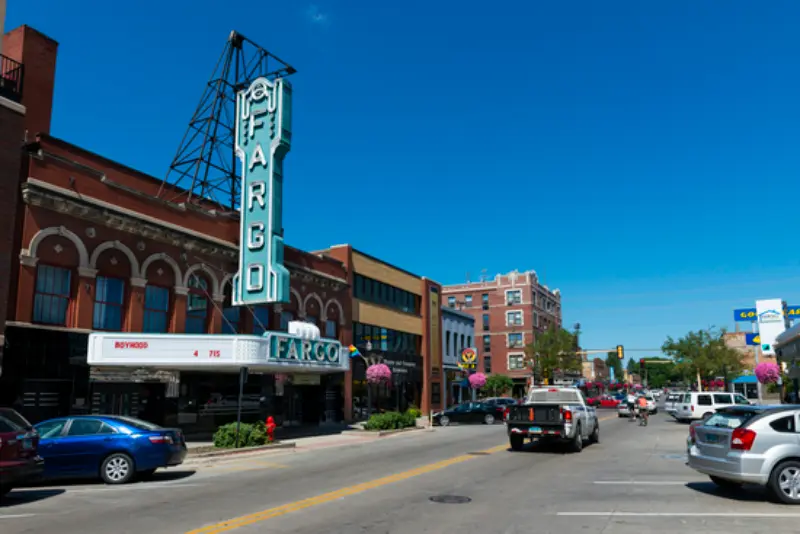
- Best base: Downtown Fargo is the best first-time base for walkability, restaurants and evening atmosphere. If you are driving across the region, hotels near I-94 are practical but less useful for experiencing the city on foot.
- Official information: official visitor information
- Accommodation: compare accommodation options
Why Fargo, North Dakota is worth the trip
Fargo works best when you stop thinking of it as a single city. The travel experience is really Fargo, West Fargo and Moorhead across the Red River in Minnesota, so some of the most interesting cultural stops sit outside the downtown core even though the metro feels compact.
A three-day visit can mix public art, local food, Scandinavian heritage and Great Plains history without a heavy attraction schedule. It is also a useful base between Theodore Roosevelt National Park and Minnesota, especially if you want a city break that does not feel like a smaller copy of a major U.S. metropolis.
The point is not to complete a giant list. A strong first trip should give you enough time to understand the geography, spend part of each day outside a vehicle and keep at least one block flexible for weather, traffic or a place you simply want to enjoy longer.
Best time to visit
June through early October is the easiest period for patios, parks and riverfront activity. Winter can be rewarding for indoor culture and a very different Great Plains atmosphere, but severe cold and snow require a more flexible schedule.
Season matters in the United States because heat, thunderstorms, snow, school holidays and local events can change both the experience and the final cost. Check the forecast again a few days before arrival and move your most weather-sensitive activity to the best day rather than following the original order blindly.
Where to stay
Downtown Fargo is the best first-time base for walkability, restaurants and evening atmosphere. If you are driving across the region, hotels near I-94 are practical but less useful for experiencing the city on foot.
For a first visit, location usually matters more than a long amenities list. A hotel that lets you walk to dinner, leave the car parked or reach the first attraction without crossing the city can be better value than a cheaper room farther away. Use this link to compare accommodation options, then compare the total after taxes, parking and destination fees.
Getting there and getting around
Hector International Airport is close to central Fargo. Downtown is walkable, but a car is useful for Moorhead, West Fargo and attractions farther from Broadway. MATBUS provides local public transport across Fargo and Moorhead; check current route information before relying on a specific downtown connection.
If this stop belongs to a larger self-drive vacation, the USA road trip guide explains U.S.-specific issues such as rental-car conditions, tolls, parking and long-distance driving. Never judge a transfer only by mileage: weather, construction, scenic stops and meal breaks can make an apparently short route much longer.
Best things to do on a first visit
- Walk Broadway and downtown first so you understand the city’s scale before driving to outlying attractions.
- Cross the Red River into Moorhead for Scandinavian and regional history rather than treating the state line as the end of the itinerary.
- Visit the official Fargo-Moorhead visitor center if you enjoy local-pop-culture stops; it also has practical information for the wider metro.
- Use a museum or cultural center as a weather anchor, especially outside summer when wind and temperature can change quickly.
- Explore public art and newer food halls or brewery districts without assuming all nightlife is concentrated on one block.
- Leave time for a slow meal and neighborhood walk; Fargo is more enjoyable as a lived-in regional center than as a checklist of landmarks.
Pick the experiences that explain the place best. If two stops provide almost the same experience, choose one and use the saved time for a neighborhood walk, local meal or unplanned viewpoint. That is usually more memorable than completing a checklist.
A practical 3 days itinerary
- Day 1: Settle downtown, walk Broadway and nearby streets, and keep the evening focused on local food or a performance.
- Day 2: Cross into Moorhead for cultural history, then return for a museum, public art and an easy evening in Fargo.
- Day 3: Explore West Fargo or another local attraction, then use the afternoon as a weather backup or departure buffer.
Keep the order flexible. Outdoor activities should move to the best weather day, while museums, markets and neighborhoods are useful backups. If you have one day less, remove a complete area rather than cutting every stop so short that none of them becomes meaningful.
What most first-time guides miss
A useful 2026 detail is that MATBUS temporarily relocated its downtown Fargo hub in August because of structural concerns at the former Ground Transportation Center. Timetables were not changed, but visitors using transit should verify the current boarding location rather than relying on an older map or screenshot.
This is the kind of detail that often determines whether the trip feels easy or frustrating. Save operating information offline, confirm the address of the exact entrance or terminal you need and do not assume that a map pin tells you where parking or check-in actually happens.
How to pace each day
Plan one major experience before lunch and one easier block afterward. This leaves room for a museum that takes longer than expected, a parking delay or a meal you actually want to enjoy. Whenever possible, finish sightseeing in the same area where you plan to eat.
On road-trip days, avoid combining the longest drive with the most physically demanding hike or museum marathon. A little buffer is not wasted time; it is what keeps one delay from ruining the rest of the day.
Food and evening strategy
Downtown has enough restaurants, coffee shops and breweries to avoid driving after dinner. The broader metro adds Scandinavian-influenced food, bakeries and modern Midwestern dining. Do not over-plan meals around one famous dish; choose places that fit the neighborhood you are already visiting.
Remember that U.S. menu prices generally do not show the final amount after tax and tip. If budget matters, compare the whole day—parking, coffee, snacks, dinner and transportation—not only the main attraction ticket. The USA travel costs guide covers the expenses that surprise first-time visitors most often.
Visiting with children
Families can build the trip around hands-on museums, parks and short downtown walks. In winter, keep outdoor blocks short and prioritize attractions with easy parking. If Fargo is part of a long road trip, this is a good place to schedule laundry, a pool hotel or a slower afternoon before returning to national-park driving.
For family travel, alternate structured attractions with a place where children can move freely. One museum plus a beach, park or short trail is usually more sustainable than three admission-based attractions in a row. The USA with kids guide covers additional issues such as car seats, room layout and long driving days.
Budget and booking priorities
Book genuinely capacity-limited experiences first: ferries, guided tours, timed museum entries, special launch viewing, popular weekend hotels or anything that would be difficult to replace. Ordinary parks, neighborhoods and flexible beach time should stay movable whenever possible.
Before paying for a cheaper hotel outside the center, add parking and transportation to the comparison. In several U.S. destinations, a slightly more expensive central room can reduce both daily cost and travel fatigue.
What to pack
Comfortable walking shoes, a refillable water bottle, sun protection, a light rain layer and a portable battery belong in almost every version of this trip. Add warmer layers for prairie wind, coastal evenings or heavily air-conditioned museums. Download important maps before rural or wildlife-focused days.
Safety and responsible travel
Keep valuables out of sight in parked vehicles, follow official closures, respect wildlife distances and use marked parking rather than creating a roadside stop because a photograph looks tempting. On beaches and exposed trails, weather and water conditions matter more than an itinerary.
Culturally important neighborhoods, historic sites and small towns are living communities. Use official interpretation, photograph people only appropriately and spend locally when you can. Responsible travel usually produces a better trip as well as a more respectful one.
2026 information to check before you go
Visit Fargo-Moorhead published a first-timer itinerary in June 2026 and continues to treat Downtown Fargo, Broadway and the Brewhalla area as among the most walkable visitor zones. MATBUS service information should be checked close to travel because the downtown hub location changed in August 2026.
Use the official 2026 planning source shortly before departure. Seasonal transit, restoration work, road construction, weather and special events can change after publication, and those details often affect the trip more than the attraction list itself.
How to connect this trip with other USA itineraries
These existing MyUSAExperience guides are the most natural extensions:
If you are building a longer vacation, the USA itinerary ideas can help decide whether another hotel change is really worthwhile. Fewer bases often create more usable travel time in the United States.
Common mistakes to avoid
- Choosing accommodation by nightly price alone without checking parking, taxes or resort fees.
- Moving the car for every stop when a district can be explored on foot, by bike or by local transit.
- Scheduling every meal and attraction before you know the weather and local event calendar.
- Assuming seasonal trolleys, ferries, tours or visitor centers operate every day of the year.
- Trusting an old blog post for current parking, construction or reservation rules.
- Trying to combine a full city day with a major day trip and enjoying neither properly.
Final thoughts
Fargo, North Dakota works best when you plan for its actual scale and rhythm. Choose a practical base, secure only the reservations that truly need advance booking and allow the strongest neighborhood, landscape or museum more time than a checklist originally suggested.
If this is your first trip to the United States, combine this guide with the first USA trip planning guide and getting around the USA guide. The goal is not to see everything. It is to make the days coherent enough that you remember the destination rather than the logistics.