

Memphis is easy to underestimate if you reduce it to Elvis and barbecue. The city’s musical legacy runs through blues, soul and rock ’n’ roll, while its civil rights history gives a first visit a much deeper emotional center. The Mississippi River, neighborhood restaurants and compact downtown make it possible to build a focused three-day trip without constantly driving across a huge metropolitan area.
I would plan Memphis around three themes: music, American history and food. That creates a much richer trip than spending all your time on Beale Street. It also pairs naturally with Nashville if you want to compare two Tennessee music cities rather than choose only one.
Planning this trip at a glance
- Ideal first stay: 3 full days
- Best for: music, history, food and road trips through the South
- Car needed?: helpful for Graceland and some neighborhoods; less necessary downtown
- Best base: Downtown or South Main
- Airport: Memphis International Airport (MEM)
Memphis is not difficult to navigate, but the important places are not all in one cluster. Plan Graceland as a separate half-day and keep downtown attractions together.
How many days do you need in Memphis?
Two days is enough for a highlights trip if you prioritize Graceland, the National Civil Rights Museum and one evening on Beale Street. Three days is much better because you can add Sun Studio, Stax, the riverfront and unhurried meals. A fourth day makes sense if Memphis is a base for regional excursions or if music history is a major interest.
The city rewards slower visits because museums here contain substantial stories rather than quick exhibits. If you schedule three major museums back to back, the day can become emotionally and physically exhausting.
Best time to visit Memphis
Spring and autumn are the most comfortable seasons for walking, riverfront time and outdoor music. May can be lively around major music events, while October often brings easier temperatures. Summer is hot and humid, so museums and long lunches are useful during the middle of the day.
Winter is quieter and can be good value, but some outdoor activities have reduced schedules. Whatever the season, check live-music calendars close to the trip; the city experience changes dramatically depending on what is happening at small venues and theaters.
Where to stay in Memphis
Downtown is the simplest choice for a first trip because Beale Street, the riverfront, museums and restaurants are concentrated nearby. South Main has a more relaxed atmosphere and is especially convenient for the National Civil Rights Museum.
If Graceland is the main purpose of the trip, staying near the complex can reduce transfer time, but most first-time visitors gain more by basing themselves downtown and making Graceland a dedicated excursion. Compare parking and breakfast costs before choosing a cheaper suburban room.
Getting around
Much of downtown can be covered on foot, and trolley service can be useful depending on current operations. Graceland is south of downtown and is best treated as a separate journey. Rideshare works well for travelers who do not want a rental car.
If Memphis is part of a Southern road trip, a car becomes more useful. Read our USA driving guide before collecting the vehicle, especially if you are unfamiliar with American parking, fuel and highway conventions.
Best things to do in Memphis
Visit the National Civil Rights Museum
Built around the Lorraine Motel, the National Civil Rights Museum is one of the most important visits in Memphis and deserves enough time. Do not schedule it as a quick stop between food and music attractions. The exhibits trace a much broader American story, and many visitors need a quieter activity afterward.
Tour Graceland
Graceland is still the city’s biggest single-name attraction. The experience extends beyond the mansion to museum and entertainment spaces, so choose the ticket level based on your real interest rather than automatically buying the most expensive package. The official visitor guide lists current hours and ticket options; advance reservations are recommended even when not strictly required.
Walk Beale Street in the evening
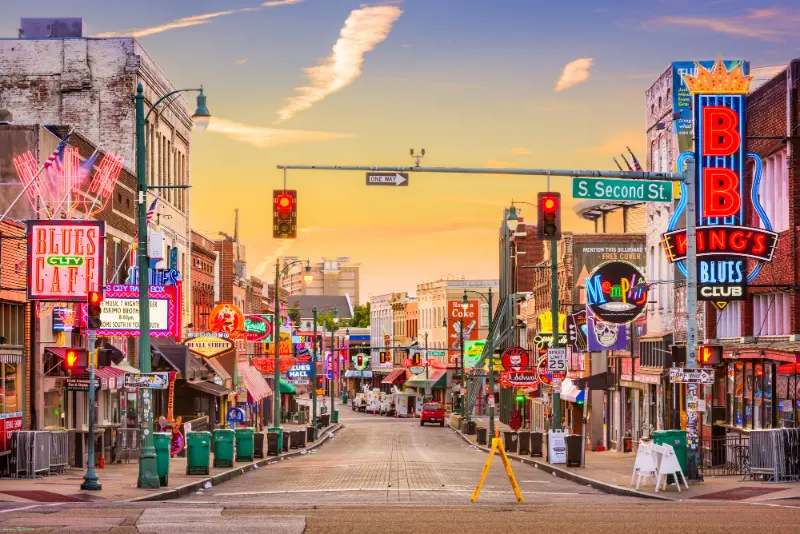
Beale Street is commercial and tourist-oriented, but live music is still central to the experience. Go after dinner, listen before choosing a venue and remember that age restrictions vary. The official Memphis Travel guide describes the three-block entertainment district and nearby music museums.
Take a Sun Studio tour
Sun Studio is small, which is part of its power. A guided visit connects stories of early rock ’n’ roll with a physical space that still feels intimate. Booking ahead is wise on busy weekends because tour capacity is limited.
Visit Stax Museum of American Soul Music
Stax adds a different musical story from Graceland and Sun Studio. The museum gives essential context for Memphis soul, recording history and artists whose influence extends far beyond Tennessee. If you can visit only two music attractions, pair Stax with the one that best matches your taste.

Spend time on the Mississippi riverfront
The river helps explain why Memphis developed where it did. Walk the riverfront, visit Tom Lee Park and watch the light change near sunset. This is also a useful free activity after several ticketed museums.
Eat barbecue with an open mind
Memphis barbecue is strongly associated with pork, ribs and dry rubs, but every restaurant has its own style. Try more than one place if food is important to you, and do not assume the most famous address will necessarily be your favorite.
Explore beyond the famous music blocks
Neighborhoods and local restaurants make the city feel less like a museum of musical history. Choose one area beyond Beale Street for coffee, dinner or an evening drink so that your trip includes present-day Memphis as well as its legends.
Where to eat and what to try
Barbecue is the obvious anchor, but Memphis food is broader than ribs. Soul food, fried chicken, breakfast, bakeries and contemporary Southern restaurants deserve space in the itinerary. If you are traveling as a couple or group, sharing plates lets you compare more places without turning every meal into a challenge.
Plan meals around museum opening hours instead of the other way around. Some famous barbecue spots sell out or have unusual closing days, so verify hours on the day you intend to visit.
A realistic 3-day Memphis itinerary
- Day 1 – Downtown and civil rights history: Explore South Main, give the National Civil Rights Museum several hours, walk the riverfront and spend the evening on Beale Street.
- Day 2 – Graceland and music: Reserve the morning or early afternoon for Graceland, then choose Sun Studio or another music stop before a relaxed dinner.
- Day 3 – Stax and neighborhoods: Visit Stax Museum, explore a different part of the city, fit in a second barbecue experience and finish with live music or sunset by the Mississippi.
If you have only two days, do not try to visit every music museum. Keep the Civil Rights Museum, choose one major music-history experience beyond Beale Street, and preserve enough time to enjoy the city rather than move continuously between ticket counters.
Budget, reservations and practical planning
Memphis publishes a current 2026 visitor guide through Memphis Travel. Use it for event calendars and attraction changes, then verify any high-priority ticket directly with the attraction.
For budgeting, remember that a Memphis trip can mix expensive ticketed attractions with free riverfront time and low-cost live music. This makes the city easier to control financially than destinations where almost every activity requires a reservation.
Mistakes I would avoid
- Reducing Memphis to Beale Street: the city’s strongest historical experiences are elsewhere.
- Rushing the Civil Rights Museum: leave enough time and emotional space.
- Booking too many music museums in one day: stories blur when the schedule is overloaded.
- Assuming every famous barbecue restaurant works the same way: check opening days and ordering systems.
- Staying far outside downtown only to save a small amount: transport time can erase the savings.
How to fit this into a bigger USA trip
The classic pairing is Memphis plus Nashville. The drive is manageable, and the contrast between the two music cities is part of the appeal. Our Nashville guide provides the other half of that itinerary.
Memphis can also fit into a longer Southern route toward New Orleans. If you continue south, read our New Orleans guide and keep enough days between cities to avoid turning the journey into a sequence of long drives.
Extra planning advice for international visitors
If you are visiting from outside the United States, remember that driving distances, restaurant tipping, sales tax and hotel parking can work differently from what you are used to at home. Keep a small daily buffer in both time and budget. Do not schedule a long drive immediately after an overnight international flight, and make sure the name on rental-car and accommodation bookings matches your travel documents.
Mobile coverage can also become unreliable outside the city or in mountain and desert areas. Download offline maps, save reservation confirmations and keep the address of your accommodation available without internet access. For the broader logistics, read our essential USA travel tips before departure.
Final thoughts
Memphis is most memorable when the trip balances celebration with context. Hear the music, eat the barbecue and enjoy Beale Street, but also spend serious time with civil rights history and the city’s recording legacy. Three well-paced days are enough to understand why Memphis matters far beyond Tennessee.