

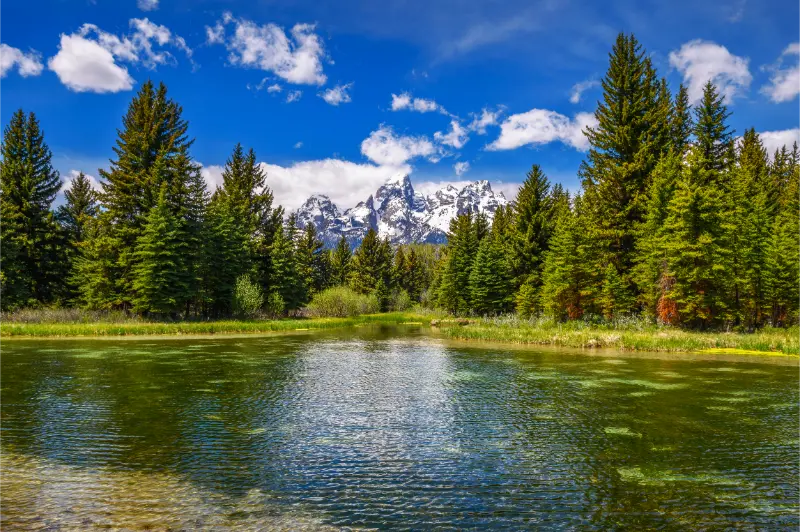
Oxbow Bend is one of Grand Teton’s simplest stops and one of its easiest places to underestimate. You can see the broad Snake River oxbow from the roadside in minutes, yet the scene changes constantly with wind, light, waterfowl and wildlife. Mount Moran fills the background when weather is clear, while mist or autumn color can make the river itself the main subject. I would treat Oxbow Bend as a repeatable stop rather than a box to check once.
| Best for | Mount Moran, reflections, birds and wildlife |
| Best time | Early morning for calm water; evening also works |
| Typical visit | 20 minutes to 1.5 hours |
| Parking | Use established turnouts only |
| Wildlife distance | 100 yards from bears/wolves; 25 yards from other wildlife |
Why Oxbow Bend is different from a normal overlook
The Snake River spreads into slower channels here, creating wetland habitat instead of a single fast channel. That makes the area useful for birds and other wildlife and gives photographers water reflections when the surface is calm. The view faces toward Mount Moran rather than the highest Teton summits, which is why the mountain shape looks different from Jenny Lake or Mormon Row.
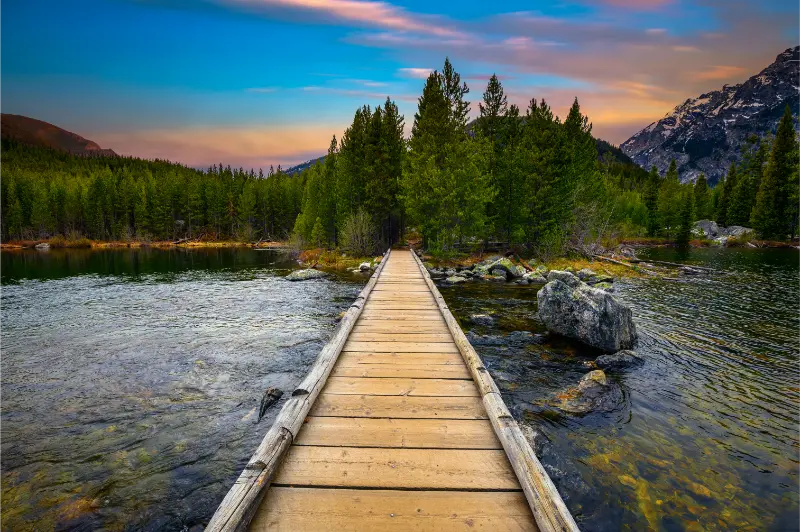
Because it is roadside, Oxbow Bend works well for travelers who cannot hike far, families between longer activities and photographers carrying heavy gear. Accessibility of the view, however, does not make the shoreline an open walking area. Stay on durable surfaces and respect closures designed to protect habitat.
Sunrise and early-morning planning
Early morning is popular because wind can be light and wildlife is active, but “sunrise” is not one fixed experience. Depending on season, the first useful light on Mount Moran can arrive after the official sunrise time, and low clouds may hide the peak. I arrive with enough margin to park legally and watch the scene develop rather than pulling in at the last minute and stopping wherever there is space.
Cold air can settle in the valley even during summer. Bring gloves or a warm layer if you plan to stand beside a tripod before sunrise. Fog can be a bonus rather than a problem: it may obscure the mountain but create layered river scenes that are impossible on a clear afternoon.
Wildlife viewing without creating a wildlife jam
Oxbow Bend and nearby Willow Flats can produce sightings of moose, elk, waterfowl, otters and sometimes bears. The correct reaction is not to crowd the animal. Grand Teton requires at least 100 yards from bears and wolves and 25 yards from other wildlife. Use binoculars or a long lens, remain behind barriers and move on when parking is saturated.
Roadside wildlife jams are dangerous because drivers look at animals instead of traffic. Never stop in the travel lane and do not copy an illegally parked vehicle just because several others have done the same thing. If a ranger directs traffic or closes a turnout, follow the instruction immediately.
Photography: lenses and compositions
A moderate telephoto lens is useful for compressing Mount Moran behind river bends and autumn cottonwoods, while a wider lens works when the sky is dramatic. A polarizer can reduce glare but may also weaken reflections, so rotate it while watching the water rather than automatically maximizing the effect. A tripod helps in low light but should never block the turnout.
Do not focus only on the mountain. Reeds, ducks, ripples and side channels provide foreground structure. On a windy day when reflections disappear, try shorter exposures that show texture instead of forcing a mirror-water image that conditions do not support.
Best seasons
Summer provides the easiest access and longest daylight, but it is also the busiest. Autumn is famous for yellow foliage and wildlife activity, though cold mornings become more common. Spring can bring high water, lingering snow in the mountains and active wildlife. Winter transforms the park completely and reduces road access, so a winter Oxbow plan needs to start with the current road map rather than a summer itinerary.
No season guarantees a specific animal. Social-media reports can create unrealistic expectations, especially for moose or bears. Build the stop around landscape first, then treat wildlife as a bonus.
How to pair Oxbow Bend with Jackson Lake
From Oxbow Bend, Jackson Lake Lodge and Colter Bay are natural continuations. The lodge terrace offers a broad view across Willow Flats, while Colter Bay has easy lakeshore walking and visitor services. Signal Mountain is another possible extension when its summit road is open. This makes Oxbow Bend ideal in the middle of a northern-park day rather than as a separate excursion from Jackson.
If you are heading south, combine it with Cunningham Cabin, Elk Ranch Flats and Mormon Row. That creates a logical scenic corridor and minimizes backtracking. Our Grand Teton three-day itinerary uses exactly this pattern.

2026 road and construction context
Oxbow Bend itself is not the center of the major 2026 construction projects, but roads north and south can still affect your timing. North Park Road work between the Colter Bay area and the Yellowstone direction has created delays, while projects near Moose affect travel on the southern side of the park. Check current conditions before assuming a transfer time based only on mileage.
This is especially important if Oxbow Bend is a sunrise stop before a fixed Jenny Lake boat plan. A wildlife jam, construction delay or road closure can break a schedule that looked comfortable on a map. Keep timed activities later in the day whenever possible.
A short stop for non-photographers
If you are not carrying a camera, Oxbow Bend is still worth 15 to 30 minutes. Scan the water, look at Mount Moran, and use binoculars to check the edges of the wetlands. Children often enjoy the stop more when given a simple wildlife-search challenge rather than being asked to admire a static landscape.
If everyone is tired, do not feel obliged to wait for perfect light. The park contains dozens of strong viewpoints. Oxbow Bend works because it is easy to revisit on the way north or south, not because you must extract an hour from every visit.
Frequently asked questions
Is Oxbow Bend open year-round?
Grand Teton is open year-round, but road access changes seasonally. Always check the current park road-status map before a winter or shoulder-season visit.
Is sunrise or sunset better?
Sunrise is popular for calmer water and mountain light, but evening can be excellent for wildlife and atmosphere. Weather matters more than a rigid rule.
Can I walk down to the water?
Use designated and durable areas only and obey any wildlife or habitat closures. Do not trample vegetation for a reflection shot.
How long should I stay?
Most visitors need 20 to 45 minutes. Photographers or wildlife watchers may stay much longer when conditions are productive.
My practical planning strategy
I keep Oxbow Bend flexible. If the water is calm and Mount Moran is clear, I stay. If wind or clouds flatten the scene, I continue and try again later.
That repeatable approach is the key advantage of the overlook. It sits on a route you are likely to drive several times, so let conditions decide when it becomes a major stop.
Birding at the bend
Waterfowl and other birds are an important part of the Oxbow Bend experience, especially when mammal sightings are quiet. Bring binoculars and scan the edges of open water, mudflats and vegetation before walking around. Avoid approaching nests or flushing birds for a photograph. Seasonal migration can change the species mix significantly.
Birding also slows the pace of the stop. Instead of waiting only for a moose or bear, you begin noticing movement across the entire wetland. That makes Oxbow Bend rewarding on ordinary days rather than only on rare-sighting days.
Cold, fog and autumn mornings
Autumn photographers should prepare for frost and temperatures far below what the afternoon forecast suggests. Keep spare batteries warm because cold drains them faster, and pack gloves thin enough to operate camera controls. Fog can form over the water and sometimes clears after sunrise, revealing Mount Moran gradually.
Do not walk onto frozen-looking edges in winter or shoulder season. River ice can be unstable, and safe viewing is available from established roadside areas.
Extra planning notes for Oxbow Bend
For Oxbow Bend, I keep a simple backup plan that does not depend on perfect weather, empty parking or mobile service. Save the official Grand Teton map offline, note the closest visitor center, carry enough water and food for an unexpected delay, and check the current-conditions page before leaving your lodging. In 2026 this matters more than usual because construction can change access even when the destination itself remains open.
I also separate driving time from sightseeing time. A route that appears to take twenty minutes can take much longer when bison cross the road, a ranger manages a wildlife jam or construction reduces traffic to one lane. Avoid putting a nonrefundable activity immediately after a scenic drive, and keep at least one low-commitment alternative nearby.
Finally, use durable surfaces and designated pullouts. Grand Teton’s open valley can make it feel as if there is room to park or walk almost anywhere, but roadside vegetation, wildlife habitat and historic resources are easily damaged. The legal turnout or marked trail is part of the experience, not an obstacle to it.