

Route 66 is not simply a road you enter in Chicago and follow continuously to Los Angeles. The historic highway was removed from the U.S. Highway System decades ago, and today the journey uses a mix of preserved alignments, frontage roads, state roads, city streets and modern interstates. That is exactly what makes the trip interesting. A successful Route 66 road trip is less about driving the fastest line west and more about understanding where the old road survives, which historic businesses are still open and how much time you want to spend in small towns along the way.

How long does Route 66 take?
Two weeks is a common minimum for a one-way trip between Chicago and Los Angeles, but it still requires regular driving days. Three weeks creates a much better balance, especially if you want museums, diners, national-park detours and evenings in larger cities. A seven-day Route 66 trip is possible only as a highly selective route, not as a deep exploration.
The historic route is roughly 2,400 miles, and the real trip will be longer once detours and sightseeing are included. Treat driving as part of the experience rather than dead time between attractions.
The eight Route 66 states
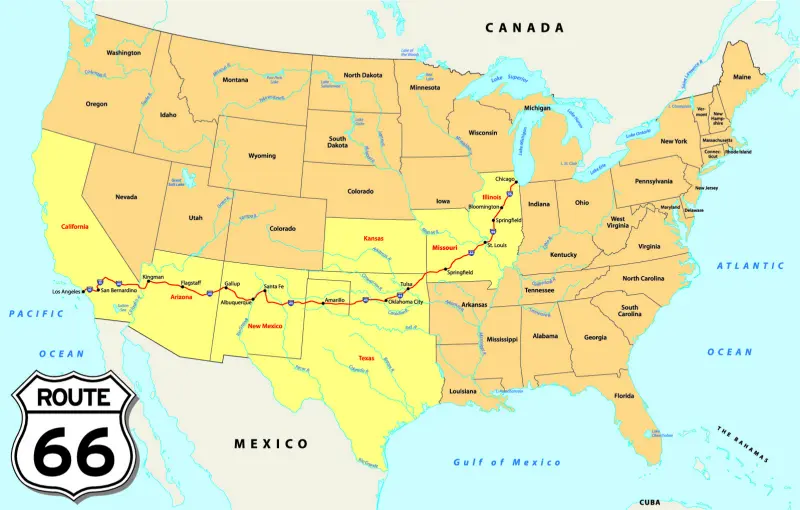
The classic route crosses Illinois, Missouri, Kansas, Oklahoma, Texas, New Mexico, Arizona and California. Each section has a different character: Midwestern towns and early highway history, Ozark landscapes, Plains communities, desert trading posts and finally Southern California urban sprawl.
Kansas has only a short section, while Oklahoma contains a large concentration of Route 66 history. Arizona is especially strong for preserved roadside atmosphere and landscapes, and California provides the final transition from desert to the Pacific.
Historic Route 66 is not always well signed
Navigation requires more preparation than an ordinary interstate road trip. Some states sign historic alignments clearly; others do not. Road segments can be abandoned, privately owned or unsuitable for normal cars. Use a current specialist map or guidebook rather than relying on a single generic navigation app.
Download offline maps and cross-check difficult sections. When a historic alignment looks unsafe or unclear, staying on the modern highway is the sensible choice. The purpose is to enjoy the journey, not to prove you drove every surviving mile.
Chicago: the symbolic start
Chicago deserves at least one or two nights before departure if you have not visited before. Architecture, the lakefront, museums and food make it a destination in its own right. Pick up the rental car only when you are ready to leave if central parking is expensive.
The traditional eastern terminus has changed over Route 66 history, so travelers often take symbolic photographs near the downtown markers before heading southwest through Illinois.
Illinois and Missouri
Illinois has strong Route 66 interpretation, restored gas stations, diners and small towns that make the early part of the trip easy to understand. Springfield connects the route with Abraham Lincoln history. In Missouri, St. Louis provides a major urban stop before the road continues through the Ozarks.
Do not rush these states just because the desert imagery of Arizona and New Mexico looks more iconic online. The Route 66 story begins in the Midwest, and many of the best-preserved community projects are found there.
Oklahoma and Texas Panhandle
Oklahoma is central to Route 66 history and contains museums, roadside architecture and a large number of drivable historic segments. Tulsa and Oklahoma City provide urban breaks. The Texas Panhandle brings huge skies, ranch landscapes and famous roadside art near Amarillo.
This is also where weather can be a serious factor. Severe thunderstorms and high winds are possible in certain seasons, so monitor forecasts rather than treating every day as a guaranteed drive.
New Mexico and Arizona
Santa Fe was part of an earlier alignment and can be included if you have enough time, while Albuquerque and Gallup sit along later routing. Arizona adds Petrified Forest National Park, Winslow, Flagstaff, Seligman, Kingman and long desert sections that feel closest to the romantic road-trip image many travelers expect.
The Grand Canyon is a major detour rather than part of Route 66, but it fits naturally into an Arizona section if you add at least one night. Use the Grand Canyon guide for a realistic plan.
California and the end of the road
After the Mojave Desert, Route 66 enters the vast Los Angeles region. Historic segments and roadside businesses survive, but traffic changes the pace completely. Many modern travelers finish at Santa Monica Pier as a symbolic Pacific endpoint, even though historical endpoints varied over time.
Give Los Angeles at least two nights after arrival if possible. Finishing a 2,400-mile drive and immediately flying home removes the reward of reaching the coast.
What kind of car do you need?
A normal reliable car is sufficient for the standard paved Route 66 experience. A convertible can be fun but is not necessary, and luggage security or extreme heat may make it less practical. Focus on comfort, fuel economy and enough space for bags.
One-way rental fees and cross-state policies should be checked before booking. Use the USA road trip guide for rental, insurance, fuel and toll basics.
Motels are part of the Route 66 experience
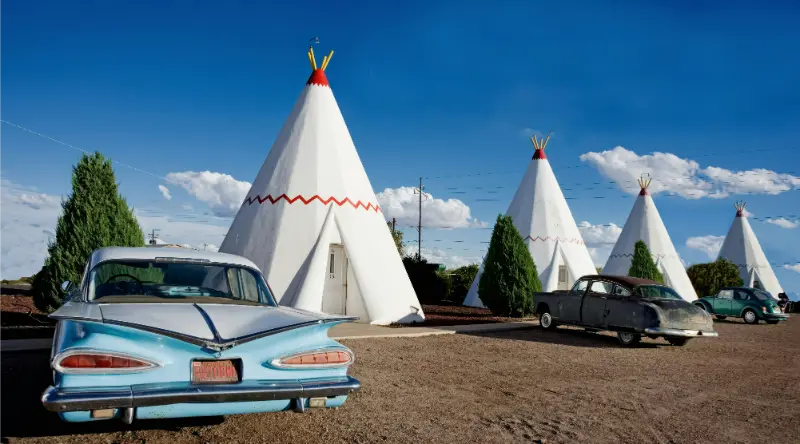
Historic motels can be one of the most memorable parts of the journey, but quality and availability vary. Mix restored independent properties with modern hotels when you need reliable facilities, laundry or a better night’s sleep. Book famous small motels ahead during peak road-trip season.
Try not to change accommodation every single night for three weeks. Occasional two-night bases in cities or scenic areas make the trip more sustainable.
Budgeting the trip
Fuel, one-way rental costs, accommodation and food are the main expenses. Small museums and roadside attractions are often inexpensive, but the accumulated cost of 14–21 hotel nights is significant. Traveling as a couple can reduce per-person lodging costs, while solo travelers should budget more.
Use the USA travel costs guide and add a road-trip contingency for tire problems, weather changes or an extra night.
A 14-day framework
- Days 1–2: Chicago and Illinois
- Days 3–4: Missouri and eastern Oklahoma
- Days 5–6: Oklahoma and Texas
- Days 7–8: New Mexico
- Days 9–11: Arizona, with optional Grand Canyon night
- Days 12–13: California desert and Los Angeles
- Day 14: Los Angeles or Santa Monica finish
This is still fast. With 18–21 days, add more two-night stops and explore the communities instead of photographing only the signs. Route 66 becomes meaningful when you have time to talk to people, visit local museums and understand how the highway changed the towns it crossed.
Related USA travel guides
Before setting off on Route 66
Create a short list of must-see historic businesses and verify their opening days. Many small museums, diners and shops close one or two days a week, and some operate seasonal hours. A road trip built around independent businesses needs more current checking than one built around national chains.
Keep a modern interstate route as the safety backbone of the journey. Historic alignments can be followed when practical, but the interstate provides fuel, repairs and a reliable alternative if weather, construction or navigation becomes difficult.
How I would keep the itinerary realistic
For a Route 66 road trip trip, I would protect at least one flexible block of several hours rather than scheduling every meal and attraction. Travel days take longer than expected once parking, luggage, security, weather and simple fatigue are included. That flexible time can absorb a delay without forcing you to cancel the part of the itinerary you care about most.
I also keep the most important reservation details, addresses and official information pages available offline. The United States is easy to travel once the basic logistics are understood, but distances and local systems vary enough that a little preparation saves a great deal of time. Recheck weather and official alerts before each major driving or outdoor day, then allow the trip to breathe.
Finally, avoid choosing a destination only because it is famous. A better route connects places that make sense together geographically and gives each one enough time. The strongest USA itineraries usually contain fewer stops, shorter transfer days and more opportunities to experience a place beyond its single best-known viewpoint or attraction.
A few final practical details
Before the trip, I would also review the small practical details that become important only after arrival: where the first night is located, what time check-in begins, how the first transfer works, whether parking is included and which reservations can be changed if weather interferes. Saving these details in one offline note prevents repeated searches while traveling.
For driving or outdoor days, start earlier than the minimum schedule requires. Early starts usually mean easier parking, cooler temperatures and more room for unexpected stops. For city days, the opposite can also be useful: one late morning after several busy days can restore energy and make the rest of the itinerary more enjoyable. A good vacation schedule should support the experience rather than constantly compete with it.
I would also keep one financial buffer that is not assigned to a specific attraction. Parking, baggage, tolls, tips, weather changes and last-minute transport can all add cost. Having that margin makes it easier to solve a problem without feeling that one unexpected expense has damaged the entire trip budget.