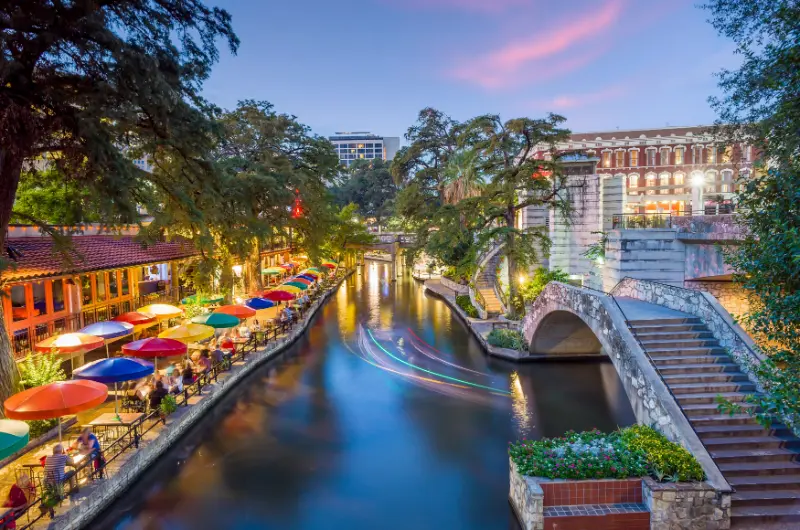

San Antonio is one of the easiest Texas cities to enjoy on a first visit because its best-known sights are connected by history, water and walkable central districts. The River Walk gives the city an immediate visual identity, while the Alamo and the San Antonio Missions add layers that make the trip much more than restaurants beside a canal.

I would give San Antonio several days instead of treating it as a quick stop between Austin and another Texas city. The historic center, Mission Reach, Pearl and the museums north of downtown each feel different. It also combines perfectly with Austin and the broader Texas road-trip route.
Planning this trip at a glance
- Ideal first stay: 3 to 4 days
- Best for: history, food, families, couples and culture
- Car needed?: not for the downtown core; useful for outer neighborhoods and side trips
- Best base: Downtown/River Walk or Pearl area
- Airport: San Antonio International Airport (SAT)
The biggest planning mistake is assuming “the River Walk” is one short tourist strip. Downtown, Museum Reach and Mission Reach have different characters, and using them as separate zones makes the city easier to understand.
How many days do you need in San Antonio?
A two-night stay can cover the Alamo, central River Walk and one good dinner, but it leaves little time for the missions or neighborhoods. Three full days is the sweet spot for many first-time visitors. Four days lets you move slowly, visit the UNESCO-listed missions and enjoy Pearl without turning every hour into a transfer.
If you are traveling with children, add breathing room. Museums, river cruises and hot-weather breaks can take longer than expected, and a flexible afternoon is often more valuable than another attraction reservation.
Best time to visit San Antonio
Spring and late autumn usually offer the easiest combination of temperatures and outdoor time. Fiesta season brings extraordinary energy but also crowds and higher demand. October is especially atmospheric because Día de los Muertos events and cultural programming become part of the city experience.
Summer heat is serious. Plan the Alamo and missions early, use museums and long lunches during the hottest hours, and return to the River Walk in the evening. Winter can be pleasant and quieter, though short cold spells are possible.
Where to stay
Downtown and the central River Walk are best for first-time convenience. You can walk to the Alamo, river cruises, restaurants and many attractions without a car. Rooms directly on the river may command a premium, so compare the value of the view with a hotel one or two blocks away.
Pearl and Museum Reach suit travelers who prefer restaurants, design and a more neighborhood-oriented atmosphere. Families or road trippers may also consider hotels with easier parking outside the central core, but calculate rideshare costs before assuming the suburban rate is cheaper.
Getting around San Antonio
The central city is unusually manageable on foot for Texas, and the River Walk itself creates a pleasant pedestrian route. River boats are a sightseeing experience rather than a complete transit system, so do not build the whole itinerary around them.
A car is helpful for the mission chain if you want maximum flexibility, though cycling and other options can work along Mission Reach. If you rent a vehicle, read our USA road-trip and rental-car guide before booking, especially if San Antonio is part of a longer Texas loop.
Best things to do in San Antonio
Visit the Alamo with context
The Alamo is small compared with the scale of its reputation, so the visit is better when you understand the larger site and story. In 2026, the surrounding visitor experience continues to evolve, including new educational spaces and Paseo del Alamo. Admission to the church is free, but the official Alamo site says reservations are required for church entry. Reserve in advance rather than arriving with only a photo stop in mind.
Walk the River Walk at different times of day
The central River Walk can be busy and commercial, yet it is still worth experiencing. Go early for architecture and photos, then return after dark when the water, bridges and restaurant terraces create a completely different atmosphere. Walk beyond the busiest blocks to see how quickly the river changes character.
Explore Mission San José and the mission corridor
The San Antonio Missions are essential if you want to understand the city beyond the Alamo. Mission San José is often the strongest starting point because the scale and preserved structures make the story easier to visualize. Combine two or three missions rather than rushing all five in a single hour.

Spend time at Pearl
Pearl is a former brewery complex transformed into a food, hotel and public-space district. It is easy to combine with Museum Reach and works especially well for breakfast, lunch or an early evening. The appeal is not one single attraction but the concentration of places to eat, browse and sit outside.
See Museum Reach
The northern River Walk extension connects public art, museums and Pearl in a calmer setting than the central tourist section. It is a good place for a longer walk when temperatures are comfortable and a smart way to connect attractions without constantly returning to downtown streets.
Visit Market Square and the historic center
Market Square adds another layer of Mexican and Mexican American culture to the central itinerary. Go for food, shops and atmosphere, but keep expectations realistic: it is both a visitor destination and a commercial district. Pair it with nearby historic streets instead of treating it as an isolated stop.
Take a river cruise once
A narrated cruise is useful early in the trip because it helps orient you to the downtown bends, bridges and architecture. Afterward, walk the same area independently. The cruise works best as context, not as a substitute for exploring on foot.
Choose one museum or family attraction
Depending on your interests, the San Antonio Museum of Art, Witte Museum, botanical garden or family attractions can fill the hottest part of the day. Rather than adding several, pick one that fits your group and preserve time for the city itself.
Where to eat and what to try
San Antonio’s food culture is one of its strongest reasons to stay longer. Tex-Mex is the obvious starting point, but the city also rewards travelers who explore breakfast tacos, bakeries, barbecue and contemporary Mexican cooking. A meal at Pearl can feel very different from a family-run place farther from downtown.
Do not eat every dinner on the busiest River Walk section simply because it is convenient. One riverside meal is fun; after that, use neighborhoods and local recommendations to widen the experience. Reservations become important on weekends and during major festivals.
A realistic 4-day San Antonio itinerary
- Day 1 – Alamo and central River Walk: Reserve the Alamo, explore the historic core, take a short river cruise and walk the River Walk after sunset.
- Day 2 – San Antonio Missions: Spend the morning along the mission corridor, then return for Market Square or a museum during the hotter afternoon hours.
- Day 3 – Pearl and Museum Reach: Start with breakfast at or near Pearl, walk Museum Reach, visit one museum and enjoy dinner away from the central tourist strip.
- Day 4 – Flexible city day: Choose a botanical garden, family attraction, shopping, another mission or a slower neighborhood day before continuing your Texas trip.
With three days, combine the flexible fourth-day choices into shorter stops. Do not remove the missions just because they require more movement; they are what turns a pleasant city break into a more complete San Antonio experience.
Budget, reservations and practical planning
The official Visit San Antonio site is useful for current events, and the Alamo should always be checked directly because reservation procedures can change. In 2026 the city is also introducing new cultural and visitor projects, so older guidebooks may not reflect the current layout around Alamo Plaza.
Hotel parking, resort-style destination fees and event-weekend rates can add significantly to a cheap-looking room. Compare total nightly cost, not only the headline price. For a broader estimate, use our USA travel budget guide.
Mistakes I would avoid
- Seeing only the Alamo and central River Walk: that misses the mission corridor and Pearl.
- Ignoring reservations: even free attractions can require timed entry.
- Underestimating summer heat: move exposed historic sites to the morning.
- Eating every meal in the same tourist zone: San Antonio’s food identity is broader than the central river.
- Driving downtown for every stop: once parked, many central sights are easier on foot.
How to fit this into a bigger USA trip
Austin and San Antonio make one of the easiest two-city combinations in Texas. Spend three or four days in each and travel between them without trying to add Houston and Dallas unless you have substantially more time.
If Texas is only one chapter of a longer U.S. holiday, compare it with the pacing in our USA itinerary ideas. A Texas-centered trip often feels more coherent than jumping repeatedly between distant regions.
Final thoughts
San Antonio succeeds because the famous sights are only the beginning. Start with the Alamo and River Walk, then follow the river outward to the missions, Pearl and Museum Reach. When you give the city three or four days, history, food and public space begin to connect in a way a one-night stop cannot reproduce.