
Santa Monica Pier 2026 is worth planning as part of the wider trip rather than treating it as a pin to collect on a map. Santa Monica Pier is one of the easiest Los Angeles landmarks to recognize, but it is also one of the places where a little planning improves the visit. The pier itself is free to enter, while rides, games, food and attractions are paid separately. That makes it flexible: you can spend an hour walking to the end of the pier at sunset or build a half-day around Pacific Park, the historic carousel, the beach and nearby Downtown Santa Monica.
Quick answer: is Santa Monica Pier worth visiting?
For most first-time visitors, yes—provided the atmosphere matches the kind of trip you want. The strongest reason to come is the combination of waterfront setting and easy, flexible entertainment. You do not need to spend all day here, and you do not need to buy every paid attraction. A focused visit normally feels better than trying to turn the destination into a checklist.
The pier works because several different versions of Southern California meet in one compact place. There is the old-fashioned amusement-pier atmosphere, the wide Santa Monica beach, the end-of-the-road Route 66 symbolism and the more contemporary restaurants and shops of Santa Monica. It is busy and commercial, but it is also genuinely scenic. Walking toward the end of the pier puts the city behind you and the Pacific in front of you, while the Ferris wheel gives a completely different perspective over the coastline.

Santa Monica Pier: 2026 quick facts
| Admission | Free to enter the pier; rides and attractions cost extra |
|---|---|
| Official pier hours | Daily, 6 AM–10 PM |
| Historic carousel | Monday and Thursday–Sunday, 11 AM–7 PM on the current official listing |
| Main amusement area | Pacific Park, an admission-free park with paid rides |
| Parking | Pier deck has limited hours; Lot 1 North and downtown structures are alternatives |
| Best for | Beach views, Route 66 atmosphere, families, sunset and first-time Los Angeles trips |
Hours, attraction availability, parking rules and prices can change for weather, maintenance, events or seasonal operations. Recheck the official links near the end of this guide shortly before your visit.
Admission, tickets and what is actually free
You do not need a ticket simply to walk onto Santa Monica Pier. Pacific Park is also admission-free, which means you can enter the amusement area without buying a ride package. Rides are purchased separately through the park, and operating hours can differ from the pier’s general hours. This distinction is useful for mixed groups: one person can ride while another watches, photographs the beach or takes a break without paying an entrance fee.
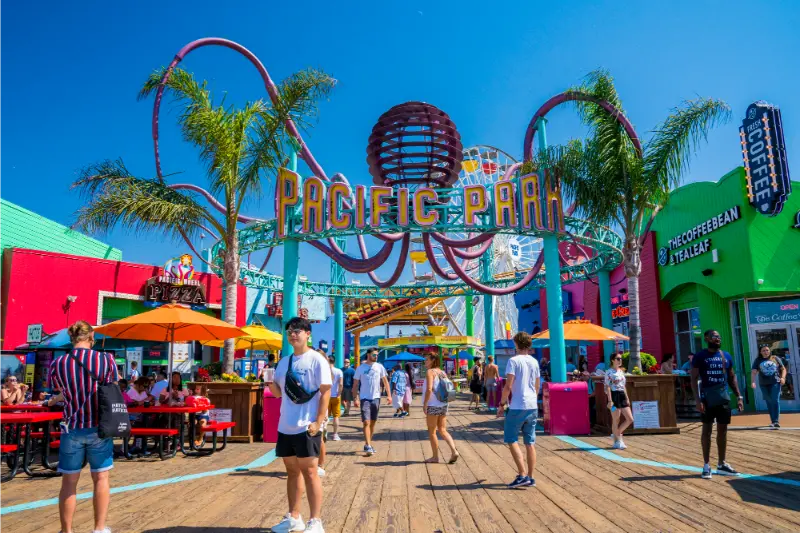
Before paying, separate the free public experience from the optional paid entertainment. This is especially important at boardwalks and piers because the words “admission,” “ride pass,” “walk-on pass” and “wristband” can mean very different things from one destination to another. I would decide first how many rides or ticketed attractions you genuinely want, then choose the product that fits that plan.
Best things to do
Walk the full pier
Start at the iconic entrance, continue past the carousel and amusement area, then walk toward the fishing end for a sense of how far the pier projects into Santa Monica Bay.
Pacific Park
The amusement park has 12 rides on its current official description, including the solar-powered Pacific Wheel. Ride availability can change with weather and maintenance.
Historic carousel
The Looff Hippodrome and carousel add a quieter historic layer to a visit that can otherwise feel dominated by modern rides and food stands.
Beach and bike path
The Marvin Braude coastal bike trail runs past Santa Monica, so the pier can fit naturally into a beach walk or bike day rather than being a stand-alone stop.
Sunset
The combination of ocean, mountains, amusement lights and a west-facing horizon makes late afternoon one of the most atmospheric times to visit.
A practical first-time itinerary
For a first visit, I would arrive two to three hours before sunset. Walk the pier first while you still have good light, decide whether anyone wants rides, then leave time for the beach or a short stroll toward Ocean Avenue and Third Street Promenade. Return to the pier for golden hour and stay until the amusement lights come on. If you are traveling with children, reverse the order: do the rides first while energy is high and save the simple beach walk for later.
Do not schedule the day down to the minute. Waterfront attractions are unusually sensitive to wind, heat, fog, storms and crowds. A flexible block of time lets you swap the order of rides, beach time, food and walking without feeling that one delay has ruined the itinerary.
How long should you spend?
A simple walk-and-photos visit can work in about 60–90 minutes, but most travelers should allow two to four hours. Add more time when the beach, multiple rides, a museum, a cruise or a full meal is part of the plan. If the location is one of the main reasons for the trip, staying nearby and seeing it at two different times of day is often more rewarding than spending one very long continuous block there.
The most common timing mistake is underestimating transitions. Parking, restroom stops, ticket lines, food queues and walking back to the car are all part of the visit. If you have a timed reservation elsewhere, leave a generous buffer after the boardwalk rather than planning an exact departure minute.
Best time of year and best time of day
Santa Monica is usable year-round, but the experience changes with marine-layer mornings, summer crowds and winter sunsets that arrive much earlier. Summer has the liveliest beach atmosphere and longer evenings, yet parking and traffic are more demanding. Spring and fall often provide a better balance for sightseeing. Whatever the season, coastal temperatures can feel cooler than inland Los Angeles after sunset, so a light layer is useful even on a warm day.
Within a single day, early morning and late afternoon usually give the most comfortable light and temperature. Midday is useful for beach time, indoor attractions or lunch, while evening gives the most classic amusement lights. The “best” time depends on whether your priority is quiet photography, rides, swimming or atmosphere.
Getting there, parking and transportation
If you are already staying in Santa Monica, walking is usually easier than moving a car. From central Los Angeles, Metro’s E Line reaches Downtown Santa Monica, from where the pier is a short walk. Drivers should not assume the small pier deck is the only choice: the official pier guidance also points visitors to Lot 1 North at 1550 Appian Way and downtown public parking structures. On busy weekends, parking a few blocks away can be less stressful than circling close to the beach.
For any popular waterfront district, I would check three things on the morning of the visit: live traffic, the official parking page and the attraction operating calendar. Event closures can make an old parking recommendation useless. If public transportation is practical, it can also remove the stress of returning to the same parking garage after a long waterfront walk.
Visiting with children
Santa Monica Pier is easy to adapt to different ages because admission is not bundled. Families can choose only the rides that matter, break for the beach and leave when children are tired. The biggest practical issue is stimulation: music, games, gulls, crowds and rides create a very active environment. A quieter walk on the sand or toward Palisades Park can reset the day without requiring another ticket.
With younger children, one anchor activity works better than an open-ended promise to “do the boardwalk.” Pick the main ride, playground, beach block or food stop in advance. That gives the day a clear success point even if weather or tiredness causes you to leave earlier than expected.
Accessibility and comfort
The pier has accessible routes and accessible parking options, but construction and temporary routing can affect how visitors reach specific areas. The official FAQ currently notes that the pier remains fully open while the bridge replacement project continues. Travelers with mobility needs should check the latest construction and parking notes before arrival rather than relying on an older map.
Waterfront accessibility is more than ramps. Sun exposure, wind, distances between restrooms, crowd density and the availability of shaded seating can matter just as much. Anyone who requires a specific ride transfer, beach wheelchair or reserved accessible parking space should confirm the current procedure directly with the operator or municipality.
Food and drink strategy
Food on the pier is part of the experience, but you are paying for location as well as the meal. If the goal is simply a snack, budgeting for one classic pier treat and eating a fuller meal in Downtown Santa Monica can give you more choice. If ocean views matter more than price, build extra time into the meal because sunset seating is naturally popular.
Boardwalk food can be memorable, but it is rarely the cheapest way to eat. A practical budget plan is to choose one food experience you actually care about, carry water and avoid buying something at every stop simply because it is visible. If you are visiting with children, a planned snack can also prevent a long ride line from colliding with hunger.
What should you budget?
A low-cost visit can genuinely be inexpensive: walk the pier, watch the rides, enjoy the beach and spend only on parking or transit and food. A family that adds several rides, games, snacks and beach parking can spend far more. The useful approach is to decide in advance whether the pier is a scenic stop or an amusement-park day, because those are very different budgets.
Think in four categories: transportation/parking, paid attractions, food and lodging. The public waterfront itself may cost nothing while the optional extras turn the same visit into a premium day. Setting a rough entertainment limit before arrival is more useful than trying to calculate every possible purchase afterward.
Where to stay
Santa Monica is one of the most convenient Los Angeles bases if beach time and walkability matter more than being central to every inland attraction. Hotels near Ocean Avenue and Downtown Santa Monica make it possible to visit the pier early or late without moving the car, while properties farther inland often trade ocean proximity for lower rates.
Check hotels in and around Santa Monica, California on Booking.com
When comparing hotels, look beyond the headline room rate. Parking charges, resort fees, breakfast, walking distance and the ability to leave the car parked can change the real cost of a two- or three-night stay.
What to bring
- Sun protection: waterfront glare can be strong even when the air feels cool.
- A light layer: wind and evening temperatures can change quickly beside the ocean or lake.
- Water: particularly important when rides and long walks are part of the plan.
- Comfortable footwear: boardwalk distances are often longer than they appear on a map.
- Offline confirmation: save ride tickets, parking details and reservations in case mobile service is slow in a crowded area.
Good nearby combinations already on MyUSAExperience
- Santa Monica and Malibu first-time guide
- Los Angeles first-time visitor guide
- Los Angeles public transportation guide
- Where to stay in Los Angeles
These combinations are more useful than adding another distant attraction simply because it appears on a “top things to do” list. A good travel day has a geographic logic: waterfront sights together, central-city sights together and long drives on separate days.
Official information to check before you go
Use official pages for the final operating calendar, prices, parking rules and temporary closures. This guide is designed to help with the structure of the visit, while the operator or municipality remains the best source for same-day operational details.
Common planning mistakes
- Assuming the entire boardwalk or pier has one single opening time when individual businesses operate separately.
- Buying the biggest ride package before checking height restrictions and how many rides you realistically have time to use.
- Driving directly to the closest parking entrance without comparing easier alternatives a few blocks away.
- Underestimating wind, sun exposure and the temperature difference between inland streets and the waterfront.
- Trying to cover every block simply because the promenade has a published total length.
- Scheduling another timed attraction immediately afterward with no buffer for traffic, queues or a delayed meal.
Frequently asked questions
Is Santa Monica Pier free?
Yes. Walking onto the pier is free, and Pacific Park does not charge a general admission fee. Rides, games, food and some attractions are paid separately.
How long should I spend?
Two to three hours is comfortable for a first visit without many rides. Add more time if you want the beach, a meal or multiple Pacific Park attractions.
Is sunset the best time?
It is the most atmospheric time, but also one of the busiest. Early morning is better for a quiet walk; late afternoon works best for combining daylight views and amusement lights.
Do I need a car?
No. If you are staying in central Santa Monica or using the Metro E Line, the pier is easy to reach on foot. A car is useful for a wider Los Angeles itinerary but not necessary for this specific attraction.
Bottom line
Santa Monica Pier works best when you decide what kind of visit you want before you arrive. Use the free waterfront experience as the foundation, add only the paid attractions that genuinely improve your day, and leave enough flexibility for weather and crowds. With that approach, the destination becomes a memorable part of the wider Santa Monica, California trip rather than an expensive stop that feels rushed.