

Washington has three airports that can all appear in the same flight search, but they are not interchangeable. Reagan National (DCA) sits closest to the core and has a direct Metrorail station, Dulles (IAD) is farther west but now has direct Silver Line service, and Baltimore/Washington International (BWI) sits in Maryland with a different rail-and-shuttle logic.
The most important decision is not simply “train or taxi.” It is choosing the transfer that matches your arrival time, luggage, hotel location and number of travelers. DCA is usually the simplest airport for a central DC city break. IAD is a major international gateway with direct Silver Line service. BWI can offer excellent fares, but the transfer should be treated as an intercity journey rather than a quick airport hop.
Understanding Washington-area Airports before you land
Reagan National’s Metro station is connected to Terminal 2 by pedestrian bridges; Terminal 1 uses an airport shuttle connection. Dulles has a Silver Line station connected to the main terminal by an indoor pedestrian tunnel.
BWI does not sit directly on Washington Metrorail. Travelers commonly use rail options that involve the airport rail station and shuttle connection, or a direct car transfer. Always compare the total door-to-door time with the airfare saving.
Best ways to reach the city
Reagan National (DCA)
Choose DCA when flight schedule and price are reasonable and you want the easiest city arrival. Yellow and Blue Line access puts many central hotels within one transfer or a short walk.
Dulles International (IAD)
The Silver Line now provides direct rail access between Dulles and Washington-area stations. The ride is longer than from DCA, but it is predictable and avoids the worst highway uncertainty.
BWI Marshall (BWI)
BWI can be excellent for low fares and some airline routes, but allow enough time for the airport-to-rail connection and the rail trip to Washington. It is often more attractive at the beginning or end of a Baltimore-plus-DC itinerary.
Airport-to-airport transfers
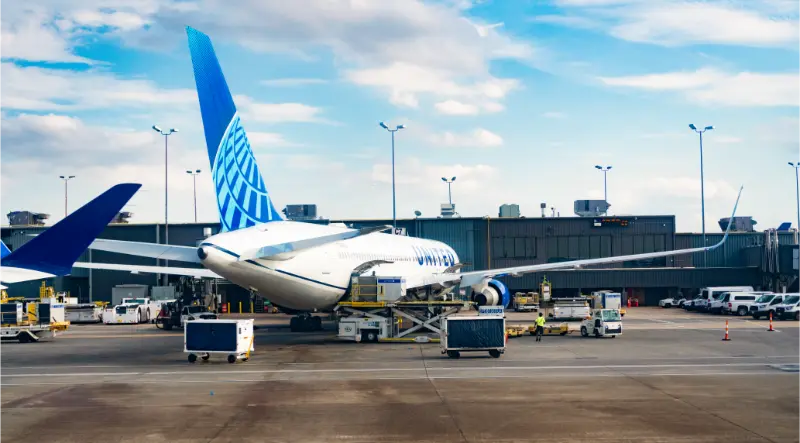
Avoid itineraries that require a tight transfer between DCA, IAD and BWI. These are separate airports across a large metropolitan region, and traffic or rail disruptions can turn a theoretical connection into a missed flight.
Which transfer works best by destination
Downtown / Penn Quarter
DCA is easiest; IAD remains straightforward via Silver Line plus a possible transfer. BWI requires more planning.
Dupont Circle
DCA requires a transfer to the Red Line; IAD uses Silver Line plus a transfer. Compare total rail time with a taxi if you arrive very late.
Capitol Hill / Union Station area
DCA is straightforward by Metro; BWI can make sense because intercity rail serves Union Station after the airport shuttle connection. The exact schedule matters.
Northern Virginia
IAD may be more convenient than DCA for some suburbs despite being farther from downtown. Choose the airport relative to the actual hotel, not the words “Washington DC” on the booking page.
Arriving after an international flight
If you are arriving from outside the United States, do not build the transfer around the scheduled landing time. Immigration, baggage delivery and customs can add substantial variation. Keep the first evening simple, avoid a non-refundable dinner immediately after arrival and save the hotel address offline before the flight.
If you have a connecting domestic flight after U.S. immigration, follow your airline’s instructions for baggage re-check and security. The transfer to the city begins only after that process is complete. A plan that works perfectly for a domestic arrival may be too tight after an international arrival.
Luggage, children and accessibility
Families should value directness. DCA is often easiest simply because the rail trip is short. At IAD, the indoor walk to the Silver Line station is manageable with wheeled luggage but still takes several minutes. At BWI, count the shuttle transfer as a real step rather than pretending the rail station is inside the terminal.
DCA and IAD publish accessible paths to their Metro stations. Travelers with mobility needs should check elevators at both airport and destination stations and allow extra time for a platform change.
Taxi and rideshare: when paying more is worth it
DCA is so close to central Washington that Metro often beats a car on simplicity. At IAD, Silver Line rail removes much of the uncertainty of highway traffic. At BWI, a taxi or rideshare to central DC can be expensive because of the distance.

For a family or group, car service can still make sense, particularly with a late arrival or multiple bags. Price it against the combined rail tickets and the difficulty of the final transfer to the hotel rather than comparing only the headline fare.
Rental cars and the first-night problem
I would not rent a car automatically on arrival if the first several days are in a dense city. Airport rental facilities can add time, hotel parking can be expensive and city driving creates work at the point of the trip when jet lag is highest. A common strategy is to use public transport or a taxi into the city, then collect the rental car on the morning you actually leave for the road-trip portion.
The reverse is also useful: return the car before the final city nights when possible. You avoid paying to store a vehicle you are not using and reduce the risk of a traffic delay on departure day.
Common airport-transfer mistakes
- Booking BWI because the fare is lower without calculating the ground transfer.
- Assuming Dulles still requires an airport express bus; the Silver Line now reaches the airport directly.
- Scheduling an airport change between DCA, IAD and BWI with little margin.
- Choosing a taxi from IAD during peak traffic without comparing Metro travel time.
- Forgetting that Terminal 1 at DCA uses a different connection from the Metro station than Terminal 2.
Where to stay for an easier arrival
If arrival logistics matter, compare hotels on a map before booking. Look at the exact station, terminal-transfer route or pickup access rather than relying on a neighborhood name alone. Two hotels marketed as “downtown” can produce very different airport journeys.
Build this airport transfer into the rest of the trip
The airport transfer should connect naturally with our Washington Metro guide, our Washington DC itinerary, our Baltimore guide. If you are continuing to another city or starting a road trip, avoid stacking the longest drive immediately after an overnight flight. One night in the arrival city can be cheaper than a tired driving mistake.
What to re-check in 2026
Airport pickup zones, construction, fare products and transit service can change with little notice. Use the Washington-area Airports official transportation page a day or two before travel and again after landing if you see temporary signage. Airport staff directions take priority over an old screenshot or a blog post.
Final advice
For most first-time visitors, the best DCA/IAD/BWI transfer is the one with the fewest fragile steps. A direct rail ride can beat a car in traffic, while a taxi can be excellent value for a family with four suitcases. Choose the option that remains simple even if the flight lands 45 minutes late.
A few details that make the trip easier
Before leaving for Washington DC Airports Guide, I save three things offline: the hotel address, the first important transport route and a screenshot of the official service-alert page. That may sound basic, but it is exactly when a phone has no signal, an airport Wi-Fi login fails or a station entrance is temporarily closed that those three pieces of information become useful.

I also separate “must be on time” journeys from flexible sightseeing journeys. Airport departures, timed museum entries and reserved tours get a generous buffer. Restaurants, neighborhood walks and shopping do not. This prevents the whole vacation from being run according to the same conservative timetable while still protecting the parts that are expensive to miss.
For couples and families, decide in advance who holds the backup payment card and who has copies of the reservations. If the main phone battery fails, the group should still be able to reach the hotel and show a booking confirmation. In large American cities, this small amount of redundancy is more useful than carrying a thick folder of printed material.
Finally, judge transport by total effort rather than minutes alone. A route with one direct train and a ten-minute walk can be easier than a nominally faster route with two transfers, elevators and an uncertain final bus. The same principle applies to accommodation: a central room that costs slightly more can be better value if it removes multiple paid rides every day.
How to keep the itinerary flexible
Do not lock every meal and attraction to a fixed clock time. Public transportation is most useful when it gives you options, and that flexibility disappears if every delay creates a chain reaction. I prefer one timed commitment in the morning and, at most, one in the late afternoon or evening. Everything else can be organized by neighborhood around those anchors.
Weather also changes the best route. In summer, heat and thunderstorms can make a transfer with more air-conditioned time preferable to a long exposed walk. In winter cities, wind and snow can make an underground or direct route worth a few extra minutes. The fastest route on an app is not always the route that feels best in real conditions.
If a major line is disrupted, resist the instinct to improvise through three unfamiliar transfers. Compare a direct bus, a short rideshare to a working station, or simply changing the order of the day. A vacation itinerary has more flexibility than a commuter schedule, and using that flexibility is often the smartest response to service problems.