

Where you stay in Daytona Beach changes the trip more than the hotel star rating. I choose the area first and the property second, because location determines how much time disappears into driving, parking, waiting for transport and returning after dinner. For a short first visit, I would usually pay a little more for the district that simplifies the largest share of the itinerary.
The best areas to stay in Daytona Beach
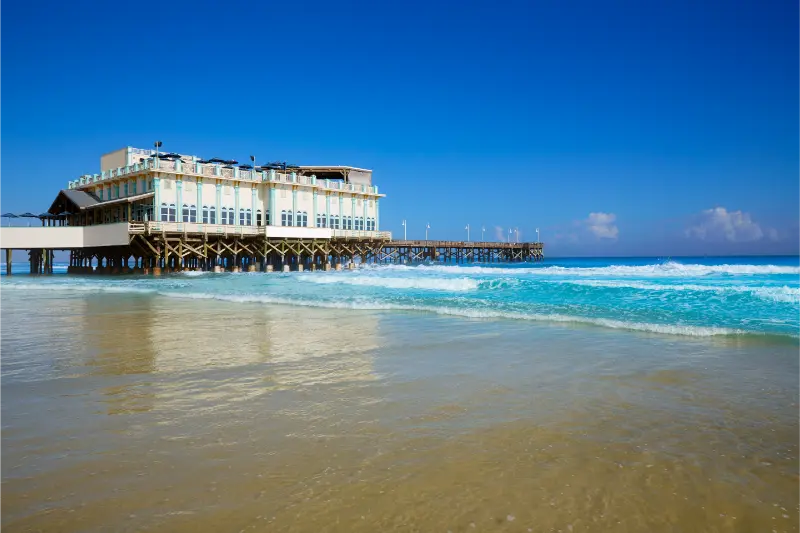
Beachside and Ocean Walk
Best for: first-time beach trips, nightlife and walking to the ocean
This is the classic visitor base near the beach, Boardwalk, pier area and Ocean Walk. It is the easiest choice when the Atlantic is the main reason for the trip and you want restaurants and evening activity close by.
Trade-off: Rates and traffic can jump during major events, and reaching mainland attractions means crossing a bridge.
Downtown and Beach Street
Best for: riverfront walks, local dining and a less resort-focused stay
Downtown sits on the mainland along the Halifax River and offers a different feel from the oceanfront. It works well for travelers who want local restaurants, riverfront access and an easier base for mainland errands.
Trade-off: You are not directly on the ocean, so beach days require a bridge crossing.
Daytona Beach Shores
Best for: quieter oceanfront stays, couples and families
South of the busiest central beach blocks, Daytona Beach Shores offers long beachfront stretches and many condo-style or resort properties. It can feel calmer while keeping the ocean at the door.
Trade-off: Dining and nightlife are more spread out, so a car or rideshare can be more useful.
Ormond Beach
Best for: a quieter beach atmosphere and northern Volusia exploration
Ormond Beach is a strong alternative for travelers who want a more relaxed base north of central Daytona while remaining close enough for Speedway or Boardwalk visits.

Trade-off: It is less convenient for repeated Downtown Daytona or Speedway trips without a car.
Speedway / ONE DAYTONA / DAB area
Best for: motorsports, events, airport convenience and easy road access
This mainland area is the practical choice for race weekends, short business trips and early flights. Hotels near International Speedway Boulevard can also simplify interstate access.
Trade-off: It is not the best base for a classic walk-out-the-door beach vacation.
Which area should you choose?
- Beachside and Ocean Walk: first-time beach trips, nightlife and walking to the ocean.
- Downtown and Beach Street: riverfront walks, local dining and a less resort-focused stay.
- Daytona Beach Shores: quieter oceanfront stays, couples and families.
- Ormond Beach: a quieter beach atmosphere and northern Volusia exploration.
- Speedway / ONE DAYTONA / DAB area: motorsports, events, airport convenience and easy road access.
Staying without a car
A car-free stay is easiest in the most compact central district. I read the Daytona Beach public transportation guide before booking because a hotel that is technically on a bus route may still be inconvenient if service is infrequent or the evening walk is poor.
For a no-car trip, I prioritize a short walk to breakfast, dinner and at least one major activity. That reduces the number of daily journeys and makes occasional rideshare spending much easier to justify.
Staying with a rental car
A car is useful when the itinerary combines Daytona with Ormond Beach, Ponce Inlet, New Smyrna Beach or several Atlantic Coast stops. With a car, outer districts become more realistic, but parking can change the economics. I add nightly parking, valet tips and the time spent entering or leaving the garage before comparing a suburban rate with a central hotel.
Airport convenience and DAB
The DAB airport guide explains the current airport transfer choices. An airport-area hotel is useful for a very early flight or a one-night stop, but I would not make it the default for a multi-night sightseeing trip unless the rest of the itinerary is also nearby.
How much is location worth paying for?
I compare the whole stay rather than one nightly rate. Paying $25 more per night can be sensible if it eliminates two rideshares, daily parking and an hour of travel. The reverse is also true: if every sightseeing day begins by car anyway, free parking and a larger room outside the core can be better value.
Families
Families often benefit from predictable parking, breakfast, a refrigerator and a quieter block more than nightlife. I check the real room configuration, pool hours, elevator access and the walk from the parking area. A central hotel can still be best if it reduces the number of times everyone has to load into a vehicle.
Couples and nightlife
For an evening-focused weekend, I prioritize the district with the restaurants and bars I actually plan to use. Being able to walk back after dinner is worth more than a slightly larger room several miles away. I check recent reviews for street noise before choosing a room on the liveliest block.
Events can change hotel prices completely
Speedweeks, major NASCAR events, Bike Week and large beach events can transform both hotel prices and traffic patterns. Major events can turn a normally affordable district into the most expensive part of the region. I check the event calendar before accepting a non-refundable room, especially when the trip dates are flexible.
Weather and walkability
Weather affects the value of location. A 15-minute walk that looks easy on a map can feel very different in summer heat, heavy rain or a cold front. I prefer a base that gives me a useful indoor fallback—restaurants, cafes, museums or a short ride—rather than a hotel that requires a long exposed walk for every meal.
Safety and the exact block
Neighborhood names are broad and can hide large differences from one block to another. I check the exact hotel entrance, the evening walk, recent guest comments and whether the streets between the hotel and restaurants stay active after dark. That is more useful than treating an entire district as uniformly good or bad.
How I shortlist hotels
- Choose the district that matches most daytime and evening plans.
- Check the total cost after parking and mandatory fees.
- Trace the actual walking route to restaurants and transit.
- Check event dates and cancellation terms.
- Compare room size, breakfast and practical amenities only after the location works.
Booking strategy
Once I have narrowed the trip to one or two areas, I compare live hotel rates on Booking.com. I filter by guest rating, then use the map to compare the exact blocks. For high-demand dates I prefer a flexible rate until flights and the itinerary are stable.
Common accommodation mistakes
- Choosing the cheapest room before checking the location.
- Ignoring parking and destination fees.
- Booking near the airport for a city-focused stay just because the transfer is easy.
- Assuming every property within the same neighborhood has the same walking environment.
- Ignoring event dates that dramatically change traffic and hotel rates.
Where to stay in Daytona Beach: FAQ
What is the best area for a first visit?
For most travelers, Beachside and Ocean Walk is the simplest first choice because it puts the largest share of sightseeing and dining close together. Another district may be better if the trip is centered on a specific beach, university, event or road-trip route.
Should I stay near DAB?
Usually only for a short overnight, very early departure or business trip centered near the airport. For sightseeing, a district with restaurants and attractions is typically more useful.
Is it worth paying more for a central hotel?
Often yes when it removes daily parking and repeated rides. I compare the total trip cost and time, not just the room rate.
Two nights versus a longer stay
For two or three nights, centrality usually wins because every hour matters. On a five- or six-night stay, more space, laundry, easier parking or a neighborhood with better everyday restaurants can justify moving slightly away from the tourist core.
Final advice
I would choose the area in Daytona Beach that reduces the most repeated journeys. The best hotel is not the one with the longest amenity list; it is the one that makes mornings, evenings and airport day easy. Once the district is right, room quality and price become much easier to compare.

A planning method that prevents expensive mistakes
Before I book, I place the hotel, airport, three daytime priorities and two likely dinner areas on one map. Then I test a weekday journey and a weekend or evening journey. This exposes weak points that a hotel search page hides: a bridge crossing, an infrequent route, a long parking exit or a street that is uncomfortable to walk after dark.
I also estimate the number of times the location penalty repeats. A 20-minute extra journey is not just 20 minutes if it happens twice every day for four days. This is why a more expensive central hotel can sometimes be the budget choice, while a quieter outer property can be smarter on a road trip where the car is used all day.
Finally, I keep the first and last day simple. Arrival and departure already include luggage, check-in, unfamiliar streets and time-sensitive transport. A hotel that makes those two days easy gives the itinerary more resilience even if another property looks slightly better on paper.