

Where you stay in Nashville determines whether the city feels compact and effortless or like a sequence of paid rides between disconnected districts. Downtown gives you the simplest first trip, but it is not automatically the right choice for everyone. The Gulch can feel more polished, Midtown works well for nightlife outside Broadway, East Nashville offers a neighborhood atmosphere, Germantown is excellent for food and a quieter evening, and Opryland can make sense when the Grand Ole Opry is a major priority.
The best Nashville neighborhood is therefore not the one with the longest list of attractions. It is the one that matches your evenings, your transport plan and the part of the city you want to experience after the museums close. For a short first visit, I give location more weight than room size because every unnecessary cross-city trip costs both time and money.
The quick answer for first-time visitors
If you are visiting Nashville for two or three nights and want the classic experience, Downtown or SoBro is usually the simplest base. If Broadway is important but you want a more contemporary hotel-and-restaurant environment, The Gulch is a strong compromise. If live music, bars and restaurants matter more than walking to every downtown museum, Midtown can be better value. Families and travelers who sleep early often prefer being one or two districts away from the loudest entertainment blocks.
Before booking, open your map and mark three places you know you will visit. Then check the hotel-to-attraction route at 9 a.m. and again at 11 p.m. A hotel can look central during the day but become inconvenient after a show when transit frequency drops and rideshare demand spikes.
Downtown Nashville and Lower Broadway
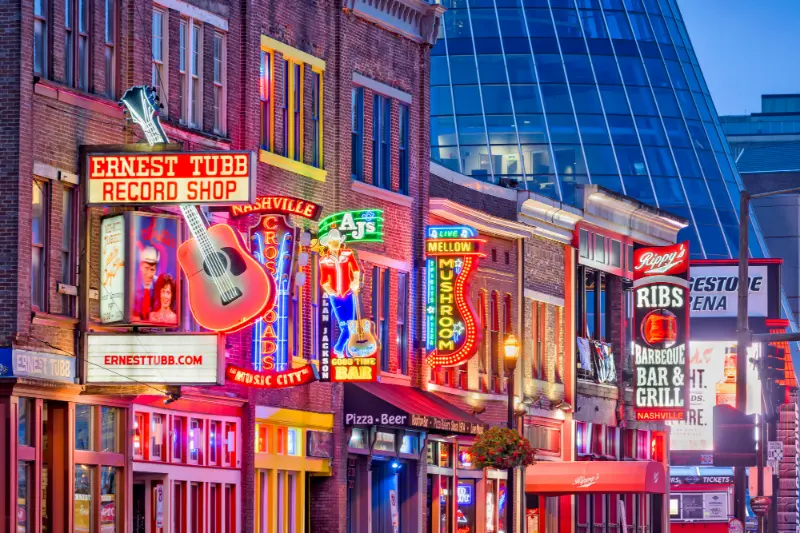
Downtown is the most efficient base for a first visit centered on the Country Music Hall of Fame, Ryman Auditorium, National Museum of African American Music, Bridgestone Arena, the riverfront and Broadway. You can walk to a large share of the classic sights, and WeGo Central is nearby for buses to other parts of the city.
Best for: first-time visitors, short stays, travelers without a car and anyone who wants nightlife immediately outside the hotel. Main trade-offs: higher room rates during events, street noise, expensive parking and a tourist-heavy atmosphere. If sleep matters, do not assume “Downtown” automatically means quiet; check the exact block and recent reviews for nightlife noise.
SoBro: central but slightly removed from the busiest blocks
SoBro—the area south of Broadway around the convention center and Country Music Hall of Fame—often gives first-time visitors the same practical advantages as Downtown with a slightly different evening feel. You remain walkable to the main attractions without necessarily being above the loudest honky-tonks.
This is one of my favorite compromises for couples and families who want centrality but do not need to hear Broadway from the room. Event nights can still be busy because Bridgestone Arena and the convention center generate crowds, so the exact hotel position remains important.
The Gulch
The Gulch feels newer, more polished and more restaurant-focused than the historic core. It is close enough to Downtown that active travelers can walk, although summer heat, hills and luggage can make the distance feel longer than it looks. Rideshare trips are short, and the neighborhood has enough food and evening activity that you do not always need to return to Broadway.
Best for: couples, stylish city breaks, restaurants and travelers who want a central base without sleeping directly in the Broadway nightlife zone. Main trade-offs: hotel prices can be high, and the neighborhood can feel more contemporary than “old Nashville.”
Midtown and Music Row
Midtown and the Music Row area work well for travelers who want Nashville nightlife without making Broadway the center of every evening. Bars, restaurants, music businesses and the Vanderbilt area create a more local rhythm. You will use buses or rideshare more often for Downtown, but you gain a district where dinner and drinks can happen near the hotel.

Best for: repeat visitors, nightlife, music-industry atmosphere and travelers who prefer a neighborhood evening. Main trade-offs: the famous downtown museums are not on your doorstep, and Music Row itself is more business district than open-air attraction. Choose the hotel for its exact surroundings, not because “Music Row” sounds automatically scenic.
Germantown
Germantown sits north of Downtown and is one of Nashville’s strongest food-focused areas. Historic architecture, restaurants and a calmer residential feel make it attractive to couples and longer-stay visitors. It is close enough to central Nashville for short rides and some walks, but it feels noticeably separate from Broadway.
Best for: food, quieter evenings, couples and travelers who like residential character. Main trade-offs: fewer major tourist sights immediately outside the hotel and more dependence on transit or rideshare for the classic downtown list.
East Nashville
East Nashville is broad rather than one compact visitor zone. Parts of Five Points and nearby streets have restaurants, bars, coffee shops and independent businesses, but distances within “East Nashville” can be larger than a booking map suggests. This area is best for travelers who choose a specific micro-location and are comfortable using rideshare or buses.
Best for: neighborhood atmosphere, independent dining, repeat visitors and people who do not need to walk to Broadway. Main trade-offs: transport back to central sights requires planning, and hotel supply is more scattered than Downtown.
Opryland and Music Valley
Opryland is a completely different Nashville stay. The Grand Ole Opry, Opry Mills and large resort properties dominate the area. It can be ideal if those are major priorities or if you want a self-contained resort experience, but it is not a substitute for Downtown if your daily itinerary revolves around Broadway and the central museums.
WeGo Route 34 serves the Opry Mills area, but a visitor staying here should still compare transit and rideshare time to Downtown. Best for: Grand Ole Opry-focused trips, resort stays, conferences and travelers who prefer to be outside the central nightlife district. Main trade-off: repeated journeys into Downtown.
Near Vanderbilt, West End and Hillsboro Village
The Vanderbilt/West End area can be a practical middle ground for longer stays, university visits and travelers who want restaurants and everyday services near the hotel. Hillsboro Village adds a walkable pocket with cafes and local businesses. You are not in the tourist center, but major bus corridors and short rides make Downtown reachable.
This is often a better choice than a remote suburban hotel when you want a lower-key neighborhood but still plan to sightsee every day. Compare the final walk to the bus stop and the late-evening return before booking.
Should you stay near the airport?
Airport hotels can be useful for a very late arrival, an early departure or a one-night transit stop. For a normal Nashville vacation, I would not choose the airport simply because the room is cheaper. Route 18 gives the airport a useful connection to Downtown, but spending valuable vacation mornings commuting from an airport corridor is rarely worth a modest nightly saving.
Best areas by travel style
- First visit, 2–3 nights: Downtown or SoBro.
- Couples: The Gulch, SoBro or Germantown depending on nightlife preference.
- Families: SoBro, a quieter Downtown block, Germantown or selected West End properties.
- Nightlife beyond Broadway: Midtown/Music Row or East Nashville.
- Grand Ole Opry priority: Opryland/Music Valley.
- No rental car: Downtown, SoBro or The Gulch usually minimize transport friction.
- Tennessee road trip: spend the city nights centrally, then collect the car when you leave.
What hotel price comparisons often hide
Compare the final nightly total, not the first number shown in search results. Downtown properties may add expensive parking if you bring a car, while some hotels elsewhere can require two or three paid rides every day. A $40 nightly saving can disappear quickly if you spend $25 each way on transport after concerts.
Also check the cancellation deadline, deposit or incidental hold and whether breakfast is included. Nashville has major event weekends when hotel rates move dramatically. I prefer a refundable reservation when possible, then re-check prices as the trip approaches rather than locking a poor location solely because it was the first acceptable rate I saw.
Noise matters more in Nashville than in many city breaks
A hotel two blocks from Broadway can have a completely different sleep environment from a hotel directly above nightlife. Read recent reviews for repeated comments about bass, street noise, elevators and hallway traffic. Do not overreact to one complaint, but if dozens of recent guests mention the same issue, treat it as part of the location.
For families with young children, I would rather stay slightly farther from Broadway and take one short ride than spend three nights fighting noise. For a group that came specifically for nightlife, the opposite decision may be correct.
How transport should influence the booking
Use our Nashville public transportation guide before choosing the hotel. If the property is outside the walking core, check the actual route to Downtown and the realistic return after your evening plans. For airport arrival, our BNA Airport guide explains Route 18, taxis and rideshare.

A simple booking method that works
- Choose the two neighborhoods that best match your trip style.
- Open current Nashville hotel availability and shortlist two or three properties in each area.
- Check the exact map pin, not only the marketing neighborhood label.
- Route the hotel to your first morning attraction and your likely late-night return.
- Add parking or transport costs to the room total before deciding.
Common mistakes
- Booking the cheapest “Nashville” hotel without noticing it is far from the visitor core.
- Choosing Broadway for a family trip without checking noise reports.
- Choosing Opryland because you plan one Opry show, then commuting Downtown every other day.
- Paying for downtown parking when the rental car is not needed until the road-trip portion.
- Assuming East Nashville or Music Row are single compact districts where every hotel has the same surroundings.
How I would choose between Downtown and The Gulch
If two comparable hotels cost the same, I would choose Downtown for a first visit built around museums and Broadway, and The Gulch for a couple that expects to spend more time at restaurants and wants a slightly calmer return after nightlife. The physical distance is small, but the evening experience is different. Downtown maximizes tourist efficiency; The Gulch gives you a district that feels more self-contained for dining.
For travelers with mobility concerns, the deciding factor should be the exact hotel entrance, sidewalk gradient and distance to the places you will use every day. A fashionable neighborhood name is much less important than a reliable five-minute route to breakfast, transportation and evening food.
One-night, weekend and five-night stays
A one-night stop rewards maximum centrality: sleep Downtown or SoBro and avoid spending half the visit in vehicles. On a weekend, The Gulch and Germantown become more competitive because you have enough time to experience their restaurants. At five nights or more, Midtown and East Nashville can make sense because the neighborhood itself becomes part of the vacation rather than merely a place to sleep.
Length of stay is therefore one of the most underrated hotel criteria. The shorter the visit, the more I am willing to pay for a location that removes transportation decisions.
Final advice
For most first-time visitors, the safest strategy is to pay for a location that protects your limited time. Downtown and SoBro win on sightseeing efficiency; The Gulch offers a stylish compromise; Midtown, Germantown and East Nashville reward travelers who care more about neighborhood evenings than walking to every landmark. Opryland is excellent for a specific kind of trip but should be chosen deliberately, not because it is a famous Nashville name.
Once the hotel is chosen, build the itinerary around that base using our 3-day Nashville guide. A good neighborhood does not merely reduce transportation—it changes how easily you can return for a break, go out after dinner and enjoy the city without watching the clock.