

Choosing where to stay for Badlands National Park changes the trip more than many first-time visitors expect. The park is easy to reach from Interstate 90, but the main viewpoints, hiking area, Sage Creek wildlife zone and Black Hills attractions are spread across a wide region. Staying in the wrong place can turn a sunrise plan into a very early drive or add two extra hours to an already long day.
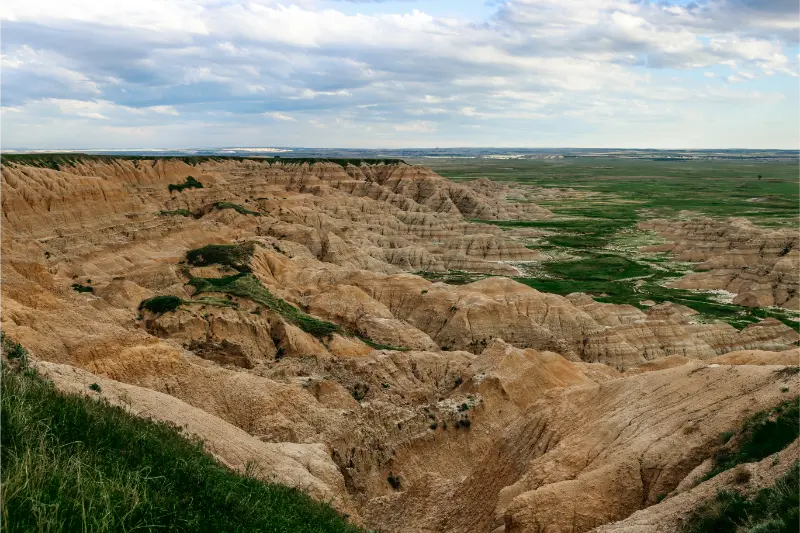
For most travelers, the decision comes down to four bases: Wall for I-90 convenience and the western park entrance, Interior/Cedar Pass for the closest access to the eastern trail area, camping inside or near the park for sunrise and night skies, or Rapid City for the widest hotel and restaurant choice when Badlands is part of a larger Black Hills trip.
Best overall for a first visit: Wall
Wall is the most convenient hotel base for many road trippers. It sits just off I-90 near Exit 110 and is only a short drive from the Pinnacles Entrance. This makes it easy to reach western Loop Road viewpoints, Pinnacles and the junction for Sage Creek Rim Road.
Wall also has far more services than you might expect from a small town because it handles a steady stream of national park and interstate traffic. You will find fuel, restaurants and lodging without driving back to Rapid City.
Compare current rates on Booking.com for Wall. During summer and busy road-trip periods, reserve ahead because the total room supply is still limited compared with a city.
Who should choose Wall?
Choose Wall if you want a comfortable hotel, easy I-90 access and a good base for Sage Creek or sunset at western overlooks. It is also practical if you are continuing west to Rapid City and the Black Hills the next morning.
The drawback is that the Door/Window trailhead and Ben Reifel Visitor Center are farther east along the Loop Road. That is not a major problem on a scenic day, but it matters if you want to be at Door Trail at first light.
Interior and Cedar Pass: best for trail access
Interior is a tiny gateway south of the eastern North Unit. The Cedar Pass area is even closer to the visitor center and trailheads. If your priority is hiking Door, Window or Castle early in the morning, this is the strongest location.
You trade service variety for proximity. Dining, shopping and hotel options are much more limited than in Rapid City. That can be a positive if you want a quiet park-focused trip, but plan meals and fuel rather than assuming you can improvise late at night.
Cedar Pass Lodge and campground
The Cedar Pass area provides the closest developed overnight experience to the park’s main eastern attractions. Cedar Pass Campground is open year-round with more limited winter availability. Campfires are not allowed, although certain camp stoves and contained charcoal grills are permitted under park rules.
Staying here makes sunrise easy and lets you attend seasonal night-sky or ranger programs without a long drive afterward. The tradeoff is that you are paying for location and accepting a simpler range of services.
Sage Creek Campground: best for primitive camping and wildlife
Sage Creek Campground is free, first-come first-served and has 22 sites. It sits on unpaved Sage Creek Rim Road, where bison and prairie dogs are frequently seen. This is the most atmospheric option for travelers who are comfortable with primitive camping.
Road conditions are the main limitation. Sage Creek Rim Road can close after rain or snow. If storms are forecast, do not make the campground your only possible plan. Arrive with enough daylight to assess conditions and use an alternative if necessary.
Rapid City: best for a larger South Dakota trip
Rapid City is the best base if you want a broad hotel selection, many restaurants and easy access to both Badlands and the Black Hills. It is not the closest choice: Badlands is about 75 miles east of Rapid City, so a park day includes substantial driving.
The advantage is efficiency across a multi-day itinerary. You can use one hotel for Badlands, Mount Rushmore, Custer State Park and other Black Hills attractions instead of changing accommodation every night. Compare Rapid City hotels if this is your plan.
Who should not stay in Rapid City?
If sunrise, sunset and night-sky photography are your main goals, the round-trip drive becomes tiring. You may finish a sunset after dark, drive more than an hour and then wake before dawn to return. In that case, spend at least one night in Wall or near Cedar Pass.
One-night itinerary: where should you sleep?
If you have only one night, choose based on travel direction. Driving west toward the Black Hills after Badlands? Stay in Wall or Rapid City. Approaching from the east and wanting sunrise in the park? Interior/Cedar Pass is better. Entering late from Rapid City and leaving east the next morning? Wall can minimize backtracking.
Two-night itinerary
For a two-day Badlands trip, I would usually spend both nights in Wall for hotel convenience or both nights near Cedar Pass for park immersion. Moving hotels after one night saves little time and creates extra packing.
My two-day Badlands itinerary works from either base.
Where to stay for wildlife
If wildlife is the priority, Wall gives easy access to the western entrance and Sage Creek junction. Sage Creek Campground puts you directly in the prairie environment. Cedar Pass is farther from Sage Creek but is still workable if you are willing to drive the Loop Road early.
Where to stay for hiking
Door, Window and Castle trailheads are on the eastern side, so Interior/Cedar Pass is the most efficient base. In 2026 Notch Trail is closed until further notice, making the open eastern trails even more important. See my Badlands hiking guide for current options.
Where to stay for stargazing
Badlands became an International Dark Sky Park in July 2026. Staying inside or close to the park gives you the strongest opportunity to experience truly dark conditions and seasonal ranger-led astronomy programs without a long night drive.
If you stay in Wall, you can still return for night skies, but be careful about wildlife on dark roads and fatigue after late programs.
Camping versus hotel
Camping saves drive time and creates a stronger connection with the park, but weather is more important. Summer thunderstorms, strong wind, heat and cold nights can all affect comfort. Hotels provide air conditioning, showers and predictable shelter, which may be worth the extra drive for families or travelers on a long road trip.
RV considerations
Cedar Pass has developed camping options, while Sage Creek is more primitive. Large RV travelers should review current campground rules and road conditions rather than assuming every site or gravel section is suitable. The paved Loop Road itself accommodates normal vehicles, but Sage Creek can be rough after storms.
Food and fuel strategy
Wall has the easiest combination of food and fuel near the western park. Rapid City has the largest selection. Interior has basic services but fewer choices. Fill the tank before long scenic drives and carry water plus snacks in the car.
Badlands is not a place where I would rely on cell service to locate the nearest open restaurant late in the evening.
Combining Badlands with Mount Rushmore and Custer State Park
If you are doing a classic South Dakota circuit, a common pattern is Badlands first, then Rapid City/Black Hills. Staying in Wall after a Badlands day shortens the evening, and moving to the Black Hills the next morning is easy. Alternatively, use Rapid City as one base if you strongly prefer not to change hotels.
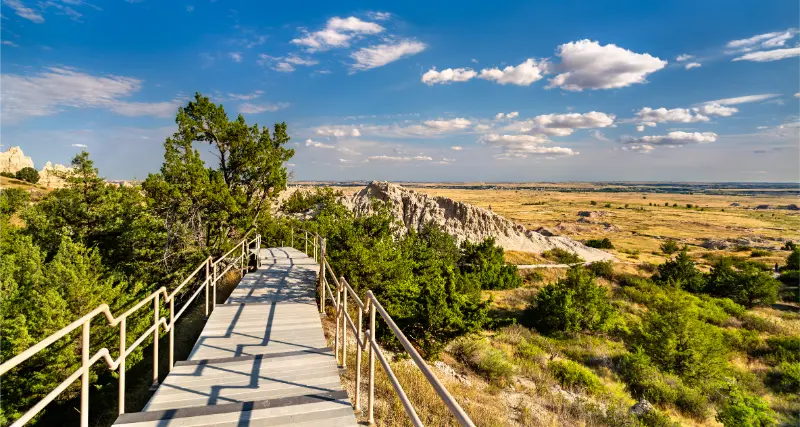
Use my Mount Rushmore and Badlands road trip and five-day Black Hills plan to compare the two approaches.
My recommendation by traveler type
- First-time road trip: Wall.
- Hiker or sunrise photographer: Cedar Pass/Interior.
- Primitive camper and wildlife watcher: Sage Creek when the road is open.
- Family wanting restaurants and hotel choice: Rapid City or Wall.
- Black Hills-focused trip with one Badlands day: Rapid City.
There is no single “best” base. The best choice is the one that removes unnecessary driving from the experience you care about most. For Badlands, location matters because the park is at its best early, late and after dark, exactly when long drives are least appealing.
Practical 2026 planning details
Badlands National Park is open 24 hours a day throughout the year, but visitor-center hours and ranger programs are seasonal. In 2026 the Ben Reifel Visitor Center used longer summer hours from May 4 through September 26 and shorter winter-season hours afterward. The park may temporarily close roads during severe weather, especially when snow, ice or heavy rain makes surfaces unsafe.
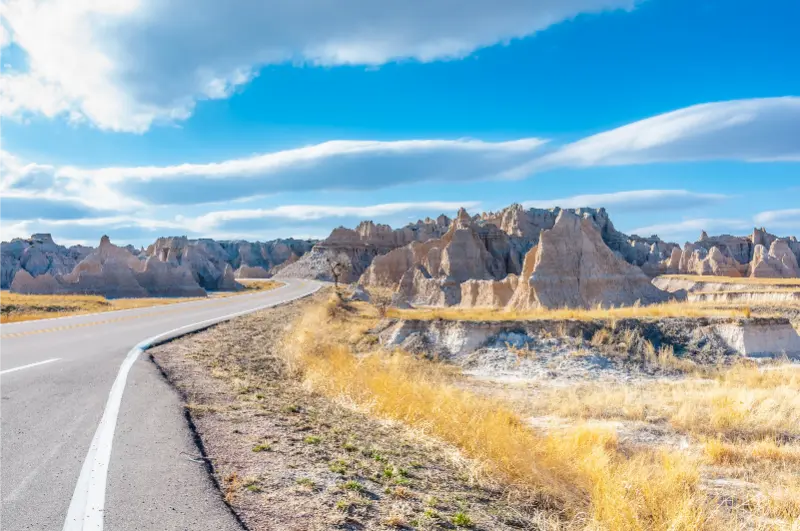
The standard seven-day entrance fee is $30 for a private vehicle, $25 for a motorcycle and $15 per person for visitors entering on foot or bicycle. Badlands does not accept cash at its entrance stations. If you already hold a valid America the Beautiful pass, you can use it for standard park entry.
Cell coverage is inconsistent across the park. Download maps before arriving and keep a paper map in the vehicle. Public Wi-Fi is available at Ben Reifel Visitor Center, but it should not be treated as a substitute for offline navigation.
Water, sun protection and weather awareness are essential even on short outings. Summer heat can be intense, thunderstorms can develop rapidly and winter wind can make conditions much colder than the temperature alone suggests. Check the official current conditions page on the morning of your visit.