

Where you stay around Mount Rainier can matter more than the hotel itself because there is no road that lets you quickly cut across the center of the park. Paradise, Longmire, White River and the southeast side sit on different corridors around a massive mountain. A room that looks close on a map can add hours of driving if it serves the wrong entrance.
For 2026, access conditions make location even more important. Sunrise Road is closed to vehicles because of wildfire impacts, Ohanapecosh facilities are closed for construction, and normal Carbon River/Mowich access from SR 165 is blocked by the Fairfax Bridge closure. Choose a base for the areas you can actually visit.
| Best inside-park seasonal stay | Paradise Inn |
|---|---|
| Best inside-park year-round stay | National Park Inn at Longmire |
| Best outside base for Paradise | Ashford |
| Best outside base for southeast side | Packwood |
| Northeast base in a normal season | Enumclaw / Crystal Mountain area |
| Best for urban amenities | Tacoma or Seattle, but with longer drives |
Paradise Inn: stay beside the high country
Paradise Inn is the most immersive lodging choice because it places you at the trailhead zone after day visitors leave and before they arrive. The historic inn usually operates from mid-May to early October. For 2026 it is scheduled through October 5. Rooms can book far ahead, and the rustic historic character is part of the experience rather than a promise of modern resort amenities.
The biggest advantage is time. You can walk outside for early light, start Skyline before the main parking rush and return to the room without descending the mountain. The tradeoff is seasonality, price and limited alternatives if weather hides the mountain for your entire stay.
National Park Inn at Longmire
National Park Inn is the only lodging inside the park that operates year-round. NPS lists 25 guest rooms, a dining room and general store. Longmire is lower than Paradise and has year-round road access under normal conditions, making it especially useful for winter visitors and travelers who prefer forest walks and history.
Staying at Longmire still leaves a drive to Paradise, but it avoids the entrance commute from Ashford and gives you an immediate fallback when high-elevation weather is poor.
Ashford: best all-around base for Paradise
Ashford lies outside the Nisqually Entrance and is the most practical outside base for travelers focused on Paradise and Longmire. The area has cabins, motels, vacation rentals, restaurants and activity providers. Staying outside the gate also makes it easier to choose different price points and stock groceries before entering the park.
The downside is that entrance lines and Paradise parking still affect you. Leave early on clear summer days. A room near the gate does not reserve a parking space at the trailhead.
Packwood: best for the southeast side
Packwood is a strong base for Highway 123, Stevens Canyon and the Ohanapecosh side. In 2026 the campground and visitor center at Ohanapecosh are closed, but Packwood remains useful for open trails and for travelers continuing toward White Pass or Yakima. It also offers more everyday services than a remote in-park stay.
If Paradise is your only goal, Ashford is usually more direct. If your itinerary splits between Paradise and the southeast, compare actual road times for your travel dates rather than choosing by mileage alone.
Enumclaw and Crystal Mountain area
In a normal season, this side makes sense for Sunrise and the White River corridor. The 2026 Sunrise vehicle closure reduces that advantage. White River Road and campground reopened in September, but Sunrise Road remains closed to vehicles. Travelers should not book a northeast base specifically for Sunrise unless current conditions show the corridor open for the dates of their trip.
Tacoma and Seattle
City lodging gives you airport access, dining and a huge hotel selection, but Mount Rainier becomes a long day trip. Seattle works for travelers who want one park day inside a broader city vacation. Tacoma is somewhat closer to the southwest approach. Neither is ideal if your priority is sunrise hiking starts or multiple consecutive park days.
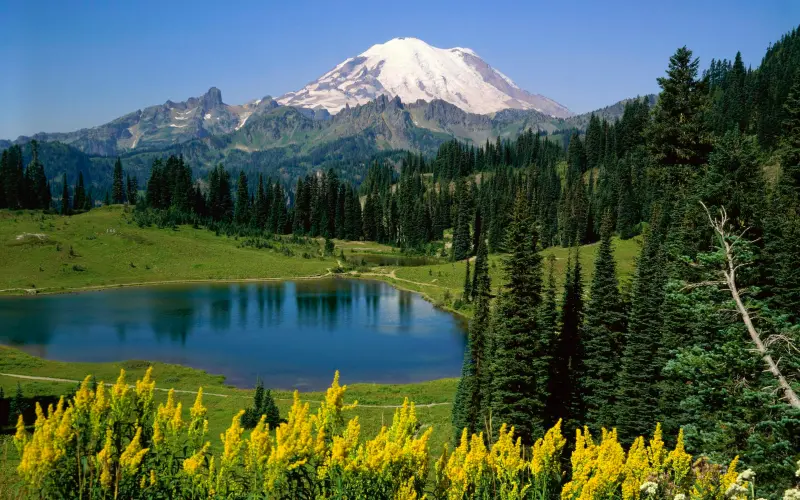
If you are making the city-to-park trip, use our Mount Rainier day trip from Seattle guide to keep the itinerary realistic.
Camping instead of lodging
Cougar Rock and White River are the main in-park car-camping options operating in 2026. Ohanapecosh is closed for rehabilitation. Camping can put you closer to trailheads at a lower nightly cost, but it adds weather exposure, gear logistics and food-storage responsibilities.
One base or two?
For a two-night trip focused on Paradise and Longmire, one base near the Nisqually side is simplest. For three or four nights that include the southeast or northeast, a split stay can reduce repeated driving. The risk is losing time to hotel checkout and repacking. Split only when the second base clearly improves access to a major part of the itinerary.
How early to book
Inside-park rooms and popular cabins can fill months ahead for summer weekends and wildflower season. Shoulder-season travel offers more flexibility, but weather becomes less predictable. Book cancellable options when possible if your main goal depends on a road that may not yet be open.
Choosing lodging for families
Families often benefit from a kitchenette, fridge and separate sleeping space more than from a scenic lobby. Ashford and Packwood rentals can simplify breakfast and early departures. Inside the park, the ability to stop driving can be more valuable than extra room. Decide which convenience solves your family’s actual stress point.
Choosing lodging for hikers
Hikers should optimize for trailhead start time. A pre-dawn drive around the mountain is poor preparation for a long hike. Paradise hikers benefit most from the Nisqually corridor; White River-area hikers should follow current northeast access; backcountry itineraries may require a completely different staging point.
Winter lodging
National Park Inn and communities outside the Nisqually Entrance are the main anchors for winter visits. Paradise road access depends on daily winter operations and weather. Carry tire chains when required and never book a winter plan that depends on the road being open at a specific hour without checking same-day status.
Final advice
Choose lodging by corridor first, then by price and amenities. Mount Rainier is too large for the phrase “near the park” to be specific enough. In 2026, match your base to open roads and realistic trailheads, and you will spend more of the trip outside the car.
Related Mount Rainier guides
More lodging decision factors
Look at check-in and breakfast hours before booking. A property that does not serve breakfast until late may be inconvenient for hikers trying to reach Paradise early. A simple refrigerator and coffee maker can be more valuable than a large restaurant for a trail-focused trip.
Ask whether your lodging has reliable Wi-Fi if you need to check road alerts in the morning. Cellular coverage around the park is inconsistent, so downloading maps at night can prevent problems after you leave the property.
If you rent an electric vehicle, confirm charging options along your exact route and at the property. Paradise and Longmire may have seasonal charging options through park concessions, but availability and access codes can change. Do not arrive with a critically low battery expecting an open charger.
For a split stay, place the longer driving day between easier activities. Changing hotels after a strenuous hike creates unnecessary fatigue. Pack one small overnight bag so you do not reorganize the entire vehicle at each stop.
Practical checklist before you go
- Check the official NPS alerts, road status and weather on the morning of your visit.
- Download maps before entering areas with weak mobile coverage and carry the ten essentials for hikes.
- Start popular trailheads early, park only in legal spaces and keep a backup activity in the same road corridor.
- Carry water, food, sun protection and a warm waterproof layer even when the lowland forecast looks mild.
- Respect wildlife distance, stay on established trails and follow every fire, construction and emergency closure.
Mount Rainier changes quickly because elevation, snow, wildfire, construction and weather affect different sides of the mountain in different ways. A plan that works on one date may need adjustment the next day. Treat current official information as part of the itinerary, not as a final check after every other decision is fixed.
Build at least thirty to sixty minutes of unscheduled time into a mountain day. Entrance traffic, a wildlife sighting, a short road control or a full parking lot can all change the schedule. That buffer also gives you room to stop safely for a viewpoint instead of making rushed decisions because the itinerary is already late.
Tell someone outside your group where you plan to hike and when you expect to return, especially on longer trails. Mobile coverage is unreliable in several parts of the park. A downloaded map is useful, but it does not replace route awareness, weather judgment or the ability to turn around before conditions become unsafe.
Finally, match the objective to the least experienced person in the group. Mount Rainier rewards conservative decisions because the same trail can shift from dry summer walking to snow, fog, wind or heavy rain in a short period. Finishing a shorter route comfortably is better than forcing a famous itinerary because it appeared on a must-do list.
Before leaving the trailhead, make one final equipment check: water, food, insulation, rain protection, navigation and a charged phone or emergency device. Small omissions become larger problems once the group is several miles from the car, especially when temperatures fall or a route takes longer than expected.
When you return, check the next day’s official status again rather than assuming conditions are unchanged. Fire boundaries, construction controls, campground availability and mountain weather can all move quickly. This habit is especially important on multi-day trips that switch between Paradise, Longmire, White River and the southeast side.