

Where you stay in Savannah changes how much of the trip is spent exploring versus moving around. Savannah rewards a central base more than many U.S. cities because so much of the experience is the walk between squares, shaded streets, restaurants and the river. The best area is therefore not simply the cheapest hotel zone; it is the place that matches how much history, nightlife, beach time and driving you want.
Quick comparison
| Area | Best for | Main trade-off |
| Historic District | First visits and walking | Higher prices on busy weekends |
| River Street / Plant Riverside | Nightlife and river atmosphere | Noise and steep connections to upper streets |
| Starland District | Food, creative scene, repeat visitors | Farther from the classic northern squares |
| Midtown | Value and easier driving | Less tourist atmosphere |
| Tybee Island | Beach-focused trips | Separate from Savannah sightseeing |
Historic District
Best for: first-time visitors, architecture, museums and a mostly car-free trip.
This is my default area for a first Savannah visit. Staying between Forsyth Park and the river puts the squares, historic homes, museums, restaurants and many tours within walking distance. You can use the free DOT shuttle to shorten longer walks and the ferry for the riverfront.
Trade-off: Rates can rise sharply around festivals, weddings and popular weekends, and parking can add to the total cost.
River Street and Plant Riverside
Best for: nightlife, restaurants, river views and visitors who want energy outside the hotel door.
The riverfront feels more animated than the quieter residential squares. It is convenient for restaurants, bars, river cruises and the free Savannah Belles Ferry. Plant Riverside has expanded the western end of the visitor riverfront and created another cluster of dining and entertainment.
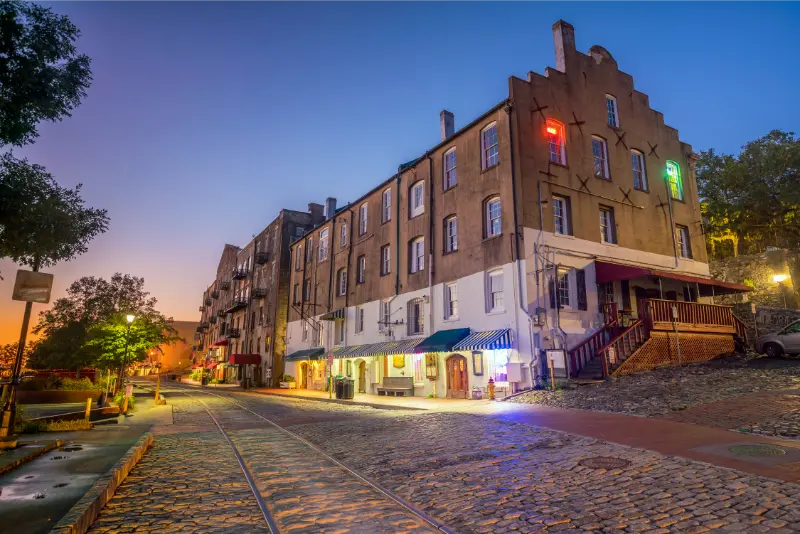
Trade-off: Noise can be noticeable, and the elevation change between River Street and the upper historic streets matters for travelers with mobility concerns.
Starland District
Best for: repeat visitors, independent restaurants, cafes, art and a more local-feeling stay.
Starland sits south of the traditional tourist core and has become one of the city’s most interesting dining and creative districts. It works well for travelers who have already seen the classic squares or who want evenings centered on neighborhood restaurants rather than River Street.
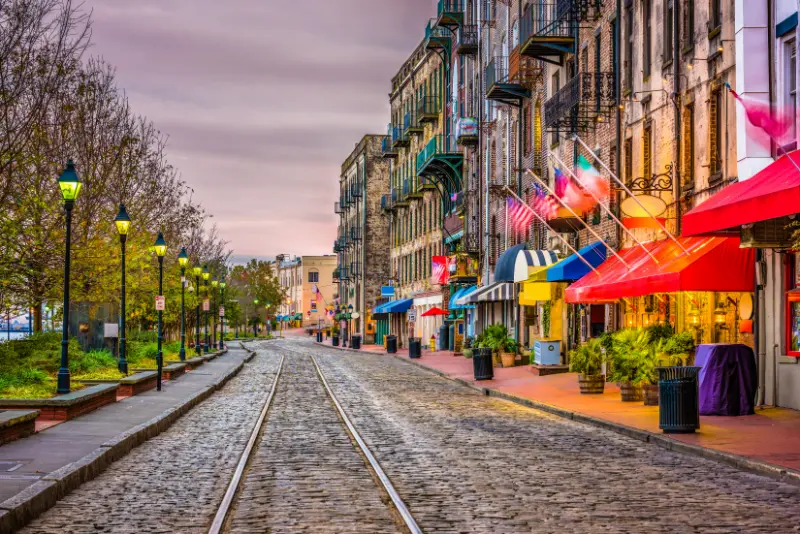
Trade-off: You will walk farther or use transit/rideshare more often for the northern Historic District.
Midtown Savannah
Best for: drivers, longer stays and travelers looking for better value.
Midtown offers easier access to shopping, everyday services and road connections. It can work well when Savannah is one stop on a larger road trip and you do not need to step directly into the postcard version of the city each morning.
Trade-off: You lose the ability to wander the main historic sights immediately after breakfast or dinner.
Tybee Island
Best for: beach time, families who want the ocean, and trips where Savannah is a day excursion rather than the main focus.
Tybee is a separate experience from central Savannah. Staying on the island makes sunrise, beach time and a slower coastal rhythm easy, while Savannah becomes the excursion. This is a good choice when the beach is the priority, not a cheaper substitute for a Historic District hotel.
Trade-off: You need to plan transportation into Savannah and should not expect the downtown CAT/DOT network to function as a simple beach shuttle.
My default choice for a first visit
For a first trip of two to four nights, I would choose the Historic District unless beach time dominates the itinerary. It maximizes the part of Savannah that is best experienced on foot and minimizes the need for a car.
How I compare hotel prices
I compare the total trip cost, not only the nightly room rate. Parking, rideshares, resort or destination fees, breakfast and the time lost commuting can erase a small hotel saving. A more central room can be the better value when it removes a rental car or several paid transfers.
I also compare refundable and prepaid rates. For trips several months away, I often prefer a refundable booking first, then recheck prices later. Event weekends can move rates sharply, so flexibility has real value.
You can compare current hotel options in Savannah. I would filter by map location before sorting by price, because hotel labels sometimes use a famous district name even when the property sits well outside the walkable core.
Transportation should influence the hotel decision
If you plan to travel without a car, check the Savannah public transportation guide before booking. I look at the walk to the stop, evening frequency and whether the route actually serves the places on my itinerary. A hotel one block from a useful line can be much more convenient than a cheaper room that requires a transfer for every trip.
For the first and last day, my SAV airport guide explains the realistic transfer choices. An airport hotel can solve one specific problem, but it usually should not dictate the entire stay unless flights are the main reason for the location.
Best area for families
With children, I prioritize easy meals, short walks, a grocery or pharmacy nearby and the ability to return to the room during the afternoon. A quiet block just outside the busiest nightlife zone can work better than the absolute center. I also check the walking route itself: a short distance on a pleasant sidewalk is different from the same distance across a highway interchange.
Best area for nightlife and restaurants
For an evening-focused trip, staying near the restaurant and bar district can be worth a higher room rate because it removes the late-night transportation problem. I still check recent hotel reviews for street noise and ask for a room away from the busiest frontage if sleep is a priority.
Best area if you have a rental car
Drivers should look beyond “free parking.” I check whether the property has in-and-out privileges, whether garages fill during events and whether street parking rules change overnight. In a compact historic district, paying for one convenient garage can be easier than moving the car several times a day.
Event weekends and seasonality
Hotel strategy changes during festivals, sports weekends, college events and peak seasonal periods. I check the local event calendar before assuming a rate is normal. If the central area is unusually expensive, staying one district away can be sensible, but only after confirming the return journey at night.
Mistakes I would avoid
- Booking by price before checking the exact map location.
- Assuming every property using the downtown name is genuinely walkable.
- Ignoring parking and destination fees until checkout.
- Choosing an airport hotel for a sightseeing trip simply because it is cheaper.
- Splitting a short stay between multiple hotels without a strong reason.
- Forgetting to check major events that can change both prices and traffic.
Where to stay in Savannah: FAQ
What is the best area for a first visit?
For most first-time visitors, the district with the highest concentration of sights, restaurants and useful transportation is the safest default. A different area makes sense when the trip has a clear priority such as beach time, nightlife, university visits or an early flight.
Should I stay near the airport?
Usually only for a late arrival, early departure or one-night stop. A central or characterful neighborhood is normally better for a multi-night leisure trip.
Is a car necessary?
Not always. A well-located hotel can make a short visit mostly walkable, with transit or occasional rideshare for longer trips. A car becomes more useful when the itinerary spreads into suburban or regional destinations.
Bottom line
The best place to stay in Savannah is the area that matches the actual itinerary, not the one with the most famous name. Choose the district first, then compare hotels inside it. That simple order usually saves more time and money than chasing the lowest room rate across the entire metro area.
A practical planning note for first-time visitors
I save the current operator page, the hotel address and one backup transportation option in the same note on my phone. This small habit matters more than collecting dozens of route screenshots. If a service is delayed, I can quickly decide whether to wait, walk or switch to a ride without rebuilding the day from scratch.
I also leave more margin on the first day than on later days. Airports, unfamiliar stops and hotel check-in create extra friction, while the city becomes much easier once you understand the street pattern and where the useful stops actually are. A flexible first afternoon makes the rest of the trip smoother.
A practical planning note for first-time visitors
I save the current operator page, the hotel address and one backup transportation option in the same note on my phone. This small habit matters more than collecting dozens of route screenshots. If a service is delayed, I can quickly decide whether to wait, walk or switch to a ride without rebuilding the day from scratch.
I also leave more margin on the first day than on later days. Airports, unfamiliar stops and hotel check-in create extra friction, while the city becomes much easier once you understand the street pattern and where the useful stops actually are. A flexible first afternoon makes the rest of the trip smoother.