

Mount Rainier dominates the skyline on a clear day, but visiting the park is less simple than driving to one viewpoint. Roads enter different sides of the mountain, parking fills quickly at Paradise and Sunrise, snow can linger well into summer and construction can change familiar routes. The good news for 2026 is that the park is not using a timed-entry reservation system. The trade-off is that visitors need to manage parking and arrival time carefully during busy periods.
If this destination is part of a longer trip, I would first decide what role it plays: a headline stop, a recovery stop between longer drives, or a base for several day trips. That decision controls how many nights you need and prevents the itinerary from becoming a sequence of check-ins. For broader trip design, the USA itinerary guide is a useful starting point.
How many days do you need?
Three days is ideal: one day for Paradise, one for Sunrise and one for waterfalls, forest or a weather backup. Two days works if you stay close to the park and focus on the two main developed areas. Four days is useful for hikers or photographers who want flexibility when the mountain is hidden by clouds.
I would count full sightseeing days rather than hotel nights. An arrival after a long flight is not a full day, and a departure morning with a long drive to the airport should not carry a major reservation. This distinction is especially important in national parks and road-trip destinations where weather, parking or seasonal operations can slow the schedule.
Where to stay
- Ashford: convenient for the Nisqually entrance and Paradise.
- Packwood: useful for the southeast side and as a base between Paradise, Ohanapecosh-area access and other mountain roads.
- Crystal Mountain/Enumclaw area: practical for the northeast approach and Sunrise when seasonal roads are open.
Accommodation should be chosen by morning logistics, not only by price. A room that saves money but adds an hour of driving at the beginning and end of every day can be poor value. Compare the final nightly price, parking, destination fees, breakfast, cancellation policy and the time needed to reach the first activity. The USA accommodation guide explains the main lodging formats.
Getting around
A car is the practical choice because the park’s major regions are separated by mountain roads. Do not assume Paradise and Sunrise can be combined efficiently in one day. Summer parking often fills in the middle of the day, and the park recommends earlier or later visits when possible. Fuel before entering and keep the day flexible because weather can reduce visibility rapidly.
If you are renting a car, photograph the vehicle at pickup, understand the fuel policy and confirm how tolls or unpaved-road restrictions are handled. Keep the contract accessible offline. The USA road trip guide covers rental-car, toll and parking basics in more detail.
What to see and do
Paradise
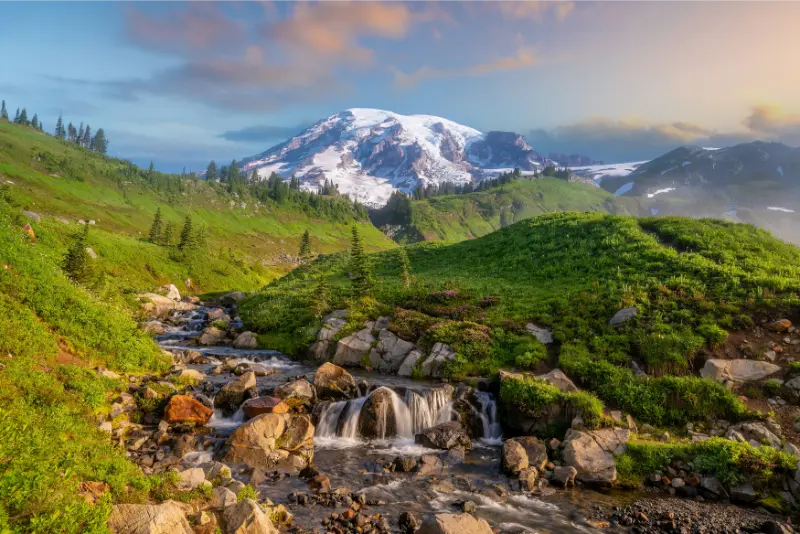
Paradise is the classic first-time destination, with wildflower meadows in summer, snowfields and close mountain views. The Skyline Trail is famous but strenuous, and snow may remain on portions of the route. Start early and choose a shorter meadow walk if cloud, heat or snow makes the full loop unsuitable.
Sunrise
Sunrise is the highest point in the park reached by vehicle and offers excellent views of Rainier and the surrounding Cascades. The access road is seasonal and closes in winter. Sunrise can be less convenient from Ashford, so choose lodging with your itinerary in mind.
Grove of the Patriarchs area and southeast forest
The southeast side provides old-growth forest and river scenery, but construction and closures have affected Ohanapecosh facilities. In 2026 the Ohanapecosh campground remains closed for a major project and some access patterns are altered. Check the park before relying on an older guidebook.
Narada Falls and Christine Falls
These waterfalls are easy scenic stops along the road toward Paradise. Parking is limited and roads can be busy, so I would stop only when a safe space is available. They work best as additions to a Paradise day, not separate destinations.
Tipsoo Lake and Chinook Pass
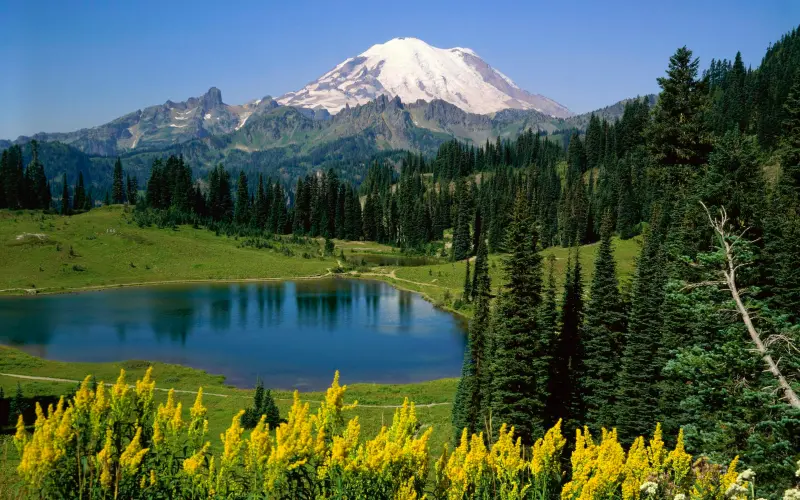
Tipsoo Lake and the Chinook Pass area provide alpine scenery near the eastern side, with excellent short walks when snow has melted. Seasonal road opening determines access, and parking can be crowded on clear summer weekends.
Wildflower season
Summer wildflowers are a major attraction at Paradise and Sunrise, but peak timing changes each year with snowmelt. Stay on established trails even when flowers appear just a few steps away; meadow damage can last for years.
Cloud watching and backup plans
The mountain can disappear behind clouds for hours or days. A successful trip should include forest, waterfalls and lower-elevation walks that remain enjoyable without a summit view. This is one reason three days is much better than a single fixed afternoon.
2026 reservations, permits and rules to know
Mount Rainier National Park will not require timed-entry reservations anywhere in the park in 2026. The NPS recommends visiting before 7 a.m. or after 4 p.m. during busy periods, using weekdays when possible and having alternative areas if parking is full. Ohanapecosh campground is closed during the 2026 construction season. Check the official 2026 Mount Rainier access announcement and current conditions before travel.
I save the official rule page offline a few days before travel and check it again the evening before the visit. National parks, tribal parks and high-demand attractions can change access because of construction, storms, wildfire, staffing or crowd levels. A reservation confirmation also does not necessarily replace an entrance pass, parking fee or identification requirement.
A realistic itinerary
- Day 1 – Paradise: Enter early from the southwest, stop at selected waterfalls and spend most of the day around Paradise. Choose the Skyline Trail or a shorter meadow route based on snow and weather.
- Day 2 – Sunrise: Drive to Sunrise when the seasonal road is open, hike a moderate ridge or meadow trail and use late afternoon for Tipsoo Lake or Chinook Pass.
- Day 3 – Forest and weather backup: Use the final day for lower-elevation forest, waterfalls or any major area hidden by weather on the first two days. Keep departure timing conservative if returning to Seattle for a flight.
Keep one important experience per day as the priority and let secondary stops remain optional. If the main hike, scenic drive or reservation takes longer than expected, you can drop a minor stop without turning the whole day into a race.
Best time to visit
July through September offers the most reliable high-elevation access, but snow can linger into July. Wildflower timing varies every year. Autumn brings crisp air and color but shorter days and early snow. Winter turns the park into a snow destination with limited road access and very different safety requirements.
For a nationwide comparison of seasons, school-holiday pressure and regional weather, see the month-by-month USA guide. Local conditions always matter more than national averages, so check weather, road status and alerts for the exact destination in the final week.
Budget and booking strategy
Lodging close to park entrances can be expensive in summer but saves long drives from Tacoma or Seattle. Food inside the park is limited, so carry meals and water. If you plan Olympic, Rainier and other federal sites, compare current pass options before paying separate entrance fees.
My preferred booking order is transport first, then the hardest-to-replace lodging, then limited-capacity activities, and finally flexible attractions. Keep a contingency for parking, tips, local taxes, baggage, fuel and food-price variation. The USA travel costs guide has a broader budgeting framework.
Visiting with children
Paradise and Sunrise both offer shorter walks that can work with children when conditions are dry. Snow, steep drop-offs and wildlife require supervision. Avoid choosing a long summit-view trail simply because it is famous; a shorter meadow walk can be a better family memory.
With a family, I would shorten driving days and protect meal times rather than adding one more attraction. The USA with kids guide covers car seats, hotel choices, long drives and other practical issues that affect family travel across the country.
Common mistakes to avoid
- Assuming no timed entry means parking will always be available.
- Planning Paradise and Sunrise as quick stops in the same afternoon.
- Ignoring lingering snow on summer trails.
- Using old information about Ohanapecosh during the 2026 construction project.
- Scheduling only one weather-dependent day for mountain views.
Another common mistake is relying on an old itinerary without checking current opening hours. In the United States, seasonal operations can change dramatically: a road that is normal in summer may be closed in winter, and a trail or parking area may use reservations during only part of the year. Recheck the first activity of every day before leaving your hotel.
How to combine this stop with a longer USA trip
Mount Rainier is one of the easiest national parks to combine with Seattle. A longer Washington loop can add Olympic National Park, while a southbound road trip can continue toward Portland and the Columbia River Gorge.
When joining destinations, compare driving time with the cost of a short flight. Two places that appear close on a national map can still require most of a day in transit. I would rather remove one weak stop and spend an extra night in a strong destination than spend the vacation repeatedly packing bags.
Practical packing and safety notes
Carry a charged phone, portable battery, refillable water bottle and an offline copy of accommodation addresses and confirmations. Outdoor destinations also justify a small first-aid kit, sun protection and layers. Do not rely on mobile coverage for trail navigation or reservations. In busy visitor areas, keep passports and valuables secured and avoid leaving bags visible in parked vehicles.
For any hike, beach, river or mountain activity, make same-day conditions part of the decision. Heat, surf, lightning, snow, smoke, flash floods and wildlife can turn a normally simple activity into a poor choice. Turning around early is good trip management. Replace the activity with a viewpoint, visitor center, town stop or meal and keep the larger itinerary intact.
Related USA travel guides
- Seattle and Pacific Northwest guide
- Olympic National Park guide
- Oregon road trip
- National parks planning guide
Final planning advice
About a week before departure, I review the trip in chronological order: airport arrival, first hotel, each intercity transfer, timed reservations, rental-car pickup or return and the final airport journey. I save confirmation numbers offline and note cancellation deadlines. Then I stop adding attractions. The goal of a good itinerary is not to prove how much you can fit into a day; it is to make the important experiences easy to enjoy.
I also look at the final hour of every day. Knowing how you will return to the hotel after sunset, where the car is parked, whether public transport is still running and where you can get a simple late meal removes a surprising amount of stress. That small piece of planning is especially useful after national-park hikes and long road-trip days.