

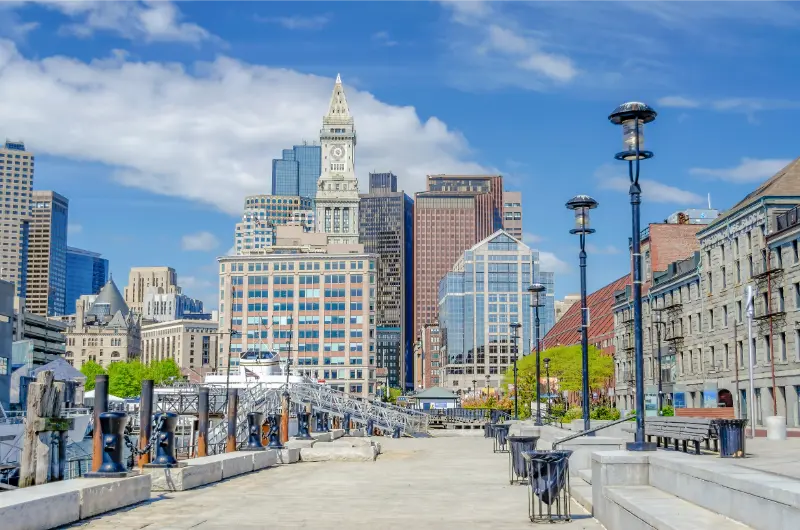
Boston’s waterfront is not one attraction but a chain of neighborhoods, parks, piers, museums and working harbor views. The Harborwalk is described by Boston Harbor Now as a near-continuous 43-mile linear park along the shoreline, but visitors do not need to walk anything close to 43 miles. The useful question is which two- to four-mile section best matches your day.
For a first trip, I prefer the central route from the North End and Christopher Columbus Park through Long Wharf toward the Seaport. It connects naturally with the Freedom Trail, ferries and evening dining. Use Boston Harbor Now’s Harborwalk information for current public-access details and the interactive waterfront map.
| Overall Harborwalk | Near-continuous 43-mile shoreline network |
| Best first-time section | North End / Long Wharf to Seaport |
| Typical time | 2–5 hours depending on stops |
| Best season | Spring through autumn; winter can be windy |
| Good add-ons | Aquarium, harbor cruise, Tea Party museum, Fort Point |
Start in the North End or at Long Wharf
Christopher Columbus Waterfront Park is a relaxed transition from the North End to the harbor. From there, Long Wharf becomes the transport and sightseeing hub. Ferries, harbor cruises and the New England Aquarium area create more pedestrian traffic, but they also make the water feel central to the city rather than decorative.
If you just finished the Freedom Trail, the waterfront is a good place to stop walking historic interiors and change pace. You can sit, watch ferries and decide whether you want a museum, a boat trip or simply a longer walk south.
Aquarium and central wharves
The New England Aquarium can consume several hours, so do not add it casually to a long outdoor route. If marine life is a priority, make it the anchor attraction and treat the Harborwalk as the before-and-after experience. If you are not entering, the surrounding wharves still provide useful harbor views and transport connections.
Fort Point and the Seaport
Walking south brings you toward Fort Point and the Seaport, where the waterfront feels more contemporary. Historic warehouse architecture, newer towers, public spaces and cultural institutions sit close together. This section is useful if you want to understand how Boston’s shoreline continues to change rather than seeing only the colonial core.
Boston Tea Party Ships & Museum area
The Tea Party museum is a ticketed, theatrical experience rather than a conventional quiet gallery. It suits families and visitors who enjoy participatory interpretation. If that style is not for you, the surrounding bridges and Fort Point Channel still make the walk worthwhile without admission.
Institute of Contemporary Art and harbor views
The ICA is a strong cultural stop if contemporary art interests you, and its Seaport location means you can pair it with waterfront time without crossing the city. Check current exhibitions and hours before building the day around it because temporary shows affect how long you may want to spend inside.
How far should you actually walk?
For most first-time visitors, two or three miles along the central harbor is enough. The goal is not to prove you completed a waterfront distance; it is to connect neighborhoods and enjoy the harbor. If you have already walked the Freedom Trail in the morning, keep the afternoon route shorter and use transit back from the Seaport.
Harbor cruises versus Harbor Islands
A sightseeing cruise keeps you on the water and returns you to the same general area, making it easy to fit into a city day. A Harbor Islands trip is a half-day or full-day commitment with ferry schedules, trails and seasonal operations. Use the Boston Harbor Islands guide if you want Spectacle or Georges Island rather than a conventional cruise.
Best time for the waterfront
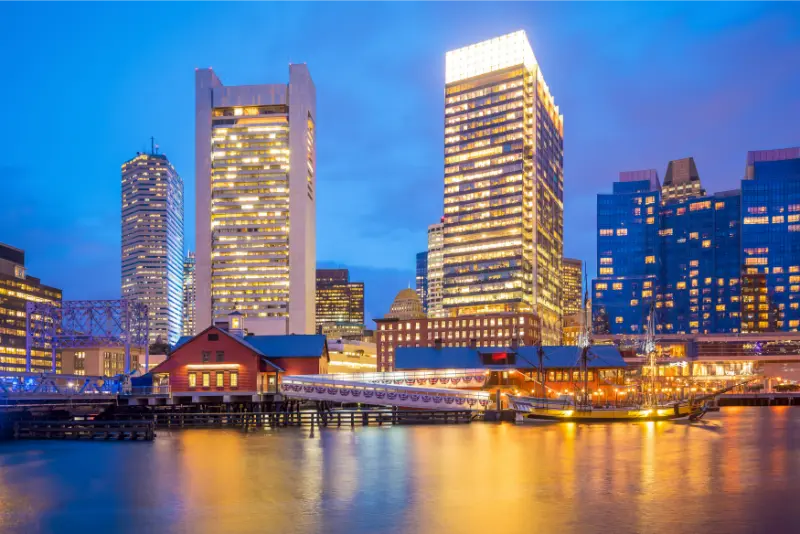
Morning is calmer around Long Wharf and works well for ferries. Late afternoon and early evening are better for changing light, dinner and city views across the water. Midday can be hot and exposed in summer because shade is inconsistent. In winter, wind off the harbor can make the temperature feel much colder than it does in Back Bay.
2026 construction and access reality
The Harborwalk is continually improved and extended, which means a route that looks continuous on an older map can encounter a temporary closure or construction detour. In 2026, several waterfront improvement projects are active in different neighborhoods. Check the current Harborwalk map rather than relying on a route saved months earlier.
Getting there without a car
Central waterfront sections are easy from Aquarium, Haymarket and South Station areas depending on where you begin. The Boston transit guide explains the subway network. Driving is rarely helpful for a one-way waterfront walk because you would need to return to the same garage afterward.
Where to stay
The North End and Downtown are best for old-Boston atmosphere and easy Freedom Trail access. Seaport hotels tend to be newer and can work well for airport-oriented trips or convention travel. Compare the trade-offs in Boston neighborhood guide before checking Boston accommodation.
A first-time waterfront route
- Start at Christopher Columbus Waterfront Park.
- Walk through Long Wharf and the Aquarium area.
- Continue toward Rowes Wharf and Fort Point Channel.
- Cross into the Seaport for lunch or a museum.
- Finish near Fan Pier or the ICA and return by transit rather than retracing every step.
How to budget time, not just money
The expensive mistake in Boston’s waterfront is often not the ticket price but the time lost crossing the city repeatedly. Group each day by neighborhood, use transit for the long jump and walk once you arrive. A hotel that costs slightly more but removes two transfers every morning can improve a short trip more than adding another paid attraction.
I also leave at least one unscheduled hour in the afternoon. That buffer absorbs a late lunch, a museum that deserves more time, a sudden rain shower or a neighborhood you decide you want to explore. Without a buffer, every small delay forces you to cut something later.
Accessibility and mobility
Boston mixes modern attractions with old streets, steep grades and historic buildings. If step-free access matters, check the official accessibility page for each attraction and the current transit elevator status before travel. “Walkable” is useful shorthand, but it should never be treated as a guarantee that every route is level or barrier-free.
Seasonal planning
Spring and autumn bring comfortable walking weather but also variable temperatures and busy event weekends. Summer adds long daylight and harbor activities, while winter rewards museum-focused trips and lower outdoor crowds but can introduce snow, wind and shorter days. Match the itinerary to the season rather than trying to follow the same schedule in every month.
A practical final checklist
- Save hotel and attraction addresses offline.
- Check the weather before locking the outdoor sequence.
- Reserve only the highest-demand timed attractions.
- Use public transportation for central sightseeing when practical.
- Leave room for one unplanned neighborhood or food stop.
Planning the morning
Start with the part of the day that is least flexible: an opening time, a tour, or the outdoor section that benefits most from good weather. Boston is easier when the first two hours have a clear purpose and the afternoon remains adjustable. Save the exact address of the first stop offline and know which subway exit puts you on the correct side of a large intersection.
Planning the afternoon
After lunch, reduce rather than increase complexity. One neighborhood plus one attraction is usually enough. If you are behind schedule, remove the least important stop instead of shortening every remaining visit. That protects the quality of the day and prevents the final hours from becoming a sequence of rushed entrances.
Evening strategy
Boston evenings can be relaxed without a formal attraction. A neighborhood meal, a short waterfront walk, a baseball game or a return through illuminated historic streets can be more satisfying than adding another museum. Check the final subway or commuter-rail options if you are staying outside the core, and keep a rideshare backup for very late returns.
Using official information
For any attraction with tickets, seasonal access or security screening, verify the official page again within 24–48 hours of the visit. Construction, private events and staffing changes can affect opening hours even when an older guide is otherwise accurate. Screenshot confirmations and keep the attraction address with the ticket so you are not searching for it on the street.
International visitor note
Visitors arriving from outside the United States should remember that displayed prices may not always include every tax or service charge, restaurant tipping is customary, and mobile data may be essential for transit and ticketing. A small power bank is useful on long walking days because navigation, photographs and mobile tickets can drain a phone quickly.
Combining Boston with New England
If Boston is the first stop on a broader New England trip, do not collect a rental car until the city portion is finished unless you have a specific need for it. Central parking is expensive and the car adds little to the core itinerary. Pick it up when you are ready to leave for places such as Maine, New Hampshire, Vermont, Cape Cod or the inland Massachusetts countryside.
Final planning notes
Build the trip around what matters most to you rather than around a generic list of famous places. Boston is compact enough to change direction during the day, but its old streets, busy transit, timed attractions and weather can still punish an itinerary with no margin. Keep a small buffer, confirm the last important opening time, and allow yourself to skip a stop when the neighborhood you are already in deserves more time. That flexibility is usually what separates a pleasant city break from a checklist.