

Detroit is a city that makes more sense when you look at both its industrial scale and its cultural influence. Cars are part of the story, but so are Motown, African American history, architecture, art, sports and neighborhoods that have reinvented themselves in different ways. A first visit should move beyond outdated stereotypes and focus on what is actually happening in the city now.
Four days gives Detroit enough space to include Downtown, Midtown, the riverfront and at least one major automobile-related museum. It can also anchor a Great Lakes itinerary with Cleveland, Chicago or northern Michigan, rather than functioning only as an airport stop.
Planning this trip at a glance
- Ideal first stay: 3 to 4 days
- Best for: music, architecture, art, automotive history and sports
- Car needed?: helpful for outer attractions such as The Henry Ford; not essential every central day
- Best bases: Downtown, Midtown or Corktown
- Airport: Detroit Metropolitan Wayne County Airport (DTW)
Detroit covers a large physical area. Central districts can be combined efficiently, but some major attractions are in Dearborn or other suburbs, so transport planning matters more than the city-center map suggests.
How many days do you need?
Two days gives you Downtown, Motown and one museum, but it forces hard choices. Three days is comfortable for the core, while four days lets you add The Henry Ford/Greenfield Village or a deeper neighborhood day. If cars and industrial history are major interests, even five days can be justified.
Do not put every major museum on consecutive mornings. Detroit Institute of Arts, Motown and The Henry Ford each tell very different stories and are more rewarding with time between them.
Best time to visit
Late spring through early autumn is easiest for riverfront walks, outdoor events and day trips. Summer can be humid, while autumn brings comfortable temperatures. Winter is cold but can work well for museum-focused trips, sports and lower hotel demand.
Large sporting events, conventions and festivals can make downtown hotels much more expensive. Check calendars before settling on a weekend.
Where to stay
Downtown is the simplest base for first-time visitors who want sports, riverfront access and easy transport. Midtown is better for the Detroit Institute of Arts, cultural institutions and a neighborhood feel. Corktown suits travelers prioritizing restaurants and historic character.
Parking is common but not automatically free. If you plan only one suburban day, consider using rideshare for the rest rather than paying a rental-car fee plus overnight parking for four nights.
Getting around
Central Detroit has the QLINE streetcar corridor and People Mover, plus buses and rideshare. Service patterns and hours can change, so check official local transport information before arrival. A car becomes more useful for Dearborn and destinations outside the central corridor.
If Detroit is part of a road trip, remember that Michigan distances can become large quickly once you head north. Our USA driving guide is useful before building a Great Lakes loop.

Best things to do in Detroit
Visit the Motown Museum
Hitsville U.S.A. is small in physical scale but enormous in cultural importance. Timed tours can sell out, so reserve early and give the story your full attention rather than treating it as a quick photo stop between downtown sights.
Spend several hours at the Detroit Institute of Arts
The DIA is one of the strongest art museums in the Midwest. Its collection and Diego Rivera murals justify a substantial visit, and Midtown gives you plenty to do before or after without driving across the city.
Walk the riverfront
The Detroit RiverWalk provides open space, skyline views and a direct visual connection with Windsor, Canada. It is an easy way to understand Detroit’s geography and works especially well in the late afternoon.
Explore downtown architecture
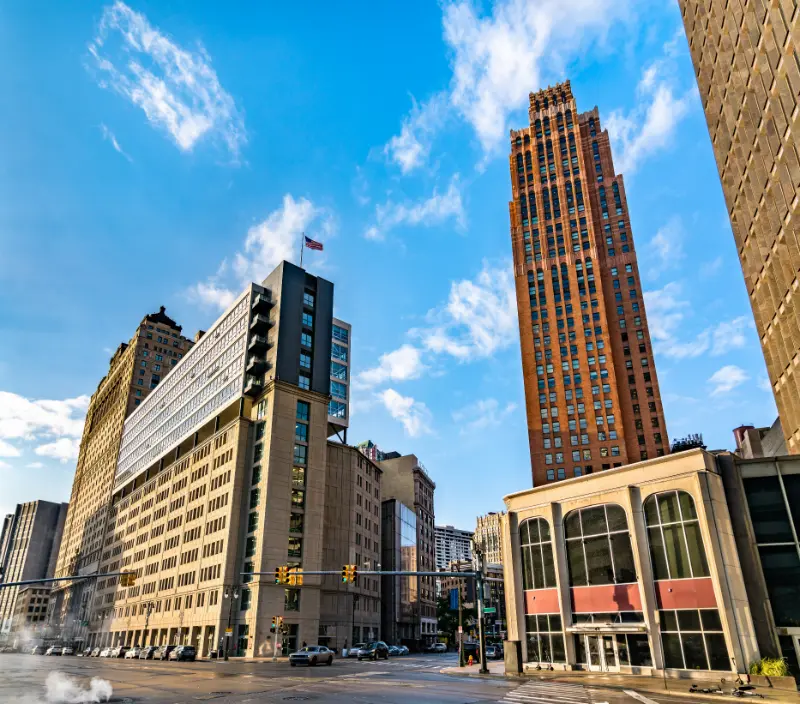
Guardian Building, historic skyscrapers and renovated public spaces show a different side of Detroit than automotive imagery. Look up, enter public lobbies where permitted and give architecture real time.
Spend time in Eastern Market
Eastern Market combines food, murals and market culture. Saturdays are especially lively, but check current market days. Use the district as a neighborhood experience rather than only a place to buy food.
Visit The Henry Ford in Dearborn
The Henry Ford complex can fill most of a day between the museum and Greenfield Village. It covers American innovation far beyond automobiles. Choose what to see in advance because trying to rush both major components can be exhausting.
Explore Corktown
Corktown offers historic streets, restaurants and newer development close to downtown. It works well for an evening when you want to stay outside the stadium-and-office core.
Add one sports or performance night
Detroit’s major sports venues are concentrated centrally, and music remains essential to the city’s identity. Check schedules before travel; an evening event can change the entire feel of a trip without consuming sightseeing hours.
Where to eat and what to try
Detroit-style pizza is the obvious local specialty, and trying it in its home city is worthwhile. But also leave room for Middle Eastern food in Dearborn, soul food, Eastern Market businesses and newer restaurants in Midtown, Corktown and downtown.
The Dearborn area has one of the country’s most significant Arab American communities and an exceptional food scene. If you already plan The Henry Ford, combine the day with a meal there rather than rushing directly back downtown.
A realistic 4-day Detroit itinerary
- Day 1 – Downtown and riverfront: Explore architecture, Campus Martius and the RiverWalk, then add a sports or performance night if available.
- Day 2 – Midtown and Motown: Visit the Detroit Institute of Arts, tour the Motown Museum and have dinner in Midtown or nearby.
- Day 3 – Dearborn: Devote the day to The Henry Ford/Greenfield Village and an Arab American food stop.
- Day 4 – Eastern Market and Corktown: Explore markets and murals, spend time in Corktown and return to a favorite central area.
If The Henry Ford is your top priority, confirm operating days before assigning it to Day 3. Large museums and seasonal sites can have different schedules.
Budget, reservations and practical planning
Downtown is easier to explore than Detroit’s reputation for sprawl suggests, but do not assume a single transit mode reaches every attraction conveniently. Mix walking, local transit and rideshare based on the day.
If you plan to cross into Canada, treat it as an international border crossing with the required passport and entry documentation. Do not casually add Windsor to the afternoon without confirming the rules that apply to your nationality and rental car.
For accommodation costs and common U.S. hotel fees, read our USA accommodation guide before booking.
Mistakes I would avoid
- Reducing Detroit to car history: music, art and architecture are equally important.
- Staying far from the places you want to see: metro distances are large.
- Trying to rush The Henry Ford: it can consume a full day.
- Ignoring Dearborn food: it adds a major cultural dimension.
- Planning a Canada side trip without border checks: documentation rules matter.
How to fit this into a bigger USA trip
Detroit pairs logically with Cleveland or Chicago for a Great Lakes city itinerary. It can also be the start or end of a Michigan road trip toward Ann Arbor, lake towns or the Upper Peninsula.

If you continue toward Chicago, our Chicago guide helps build the next urban stop without duplicating themes.
Extra advice for international visitors
International visitors should allow extra time after landing at DTW before collecting a rental car, especially after an overnight flight. Detroit roads are broad and highway interchanges can feel fast if you are not used to U.S. driving.
If crossing to Canada, confirm immigration and rental-car requirements separately from U.S. entry rules. Our essential USA travel tips covers the baseline U.S. side of the journey.
Family, accessibility and pace
Families can balance museums with riverfront time, markets and Greenfield Village. The Henry Ford complex can be a long day, so choose priorities rather than expecting children to maintain adult museum pace from opening to closing.
Major museums publish accessibility guidance, while historic districts and older buildings vary. Plan transport between districts carefully for anyone who cannot comfortably walk long urban blocks.
One more planning principle
On a first visit, leave at least one two-hour block unreserved. Travel days rarely unfold exactly as a spreadsheet predicts: weather changes, a museum takes longer than expected, lunch becomes memorable or a neighborhood deserves another walk. That buffer is not wasted time; it is what keeps a trip from feeling like a sequence of appointments.
Use advance booking for the experiences that genuinely require it, then protect flexibility around them. This approach also makes it easier to respond to closures, traffic and fatigue without feeling that the entire day has failed.
Keeping the day realistic
A useful rule is to plan one major attraction before lunch and one neighborhood or flexible activity afterward. That leaves room for transport delays, changing weather and the simple fact that meals and museums often take longer than expected. A slightly shorter list usually produces a better first impression than rushing through more places.
Final thoughts
Detroit is a city to approach with curiosity rather than assumptions. Put Motown beside the DIA, the riverfront beside automotive history, and downtown beside Dearborn and Corktown. Four days reveal a destination with far more cultural range than the stereotypes suggest.