

Everglades National Park can be excellent with children because some of its strongest experiences require very little hiking. A family can watch alligators from the Anhinga Trail boardwalk, ride the Shark Valley tram, explore a tropical hammock, take a boat trip from Flamingo and learn why water shapes the landscape without asking young travelers to climb a mountain. The challenge is not distance; it is heat, sun, insects, wildlife boundaries and long drives between park areas.
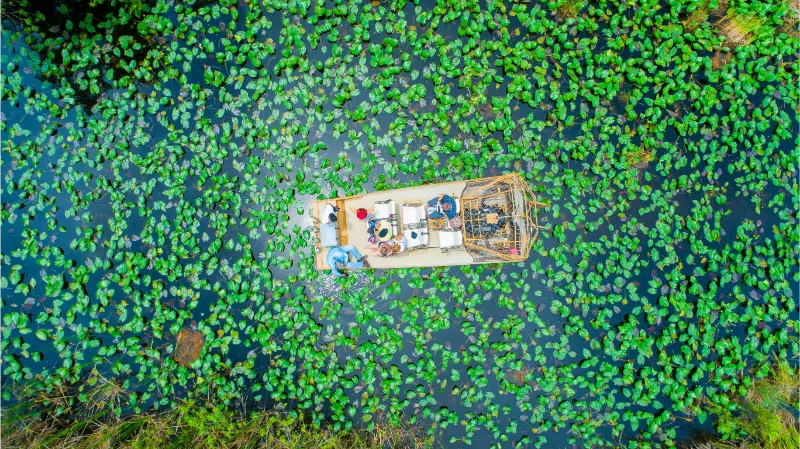
The best family plan keeps activities short and specific. One wildlife walk, one ride or boat experience and one picnic stop often creates a better day than six trailheads.
| Best easy walk | Anhinga Trail, 0.8 mile and wheelchair accessible |
| Best short forest walk | Gumbo Limbo Trail, 0.4 mile |
| Best no-hike experience | Shark Valley narrated tram |
| Best water experience | Flamingo boat tour |
| Main family risks | Heat, dehydration, mosquitoes and approaching wildlife |
A one-day family itinerary from Homestead
Start at Royal Palm. Walk the Anhinga Trail slowly and let children use binoculars to find turtles, birds and alligators. Add Gumbo Limbo if attention remains. Continue to the newly renovated Pa-hay-okee Overlook for a very short view over the River of Grass, then picnic before driving farther south.
For the afternoon, either turn back after Mahogany Hammock or continue to Flamingo for a reserved boat tour. Families with preschoolers may have a better day ending earlier. Families with older children who enjoy wildlife can handle the full road to Florida Bay.
A one-day family itinerary at Shark Valley
Reserve the narrated tram rather than expecting children to bicycle 15 exposed miles. Arrive early because parking fills. Walk Bobcat Boardwalk before or after the tram if energy remains. The tram format is helpful because the guide provides a story and structure while everyone stays together.
Why the Anhinga Trail works so well with kids
The route is short enough that you can turn around without “failing” a hike, yet wildlife is often visible from the boardwalk. Children learn quickly that the trail itself is the boundary. Make a simple challenge: count birds, find a turtle, identify an anhinga drying its wings. Do not promise an alligator; let any sighting be a reward.
Wildlife rule number one: distance
NPS recommends at least 15 feet from alligators and crocodiles, and more if an animal reacts. With small children, I would keep an even larger margin. Never let a child pose beside a basking alligator, even if other families do it. Shorelines and marina edges require hand-holding or very close supervision.
Wildlife rule number two: never feed
Feeding wild animals is illegal and changes their behavior. Children can understand a simple explanation: food makes wildlife come too close to people, which can hurt both animals and visitors. This is especially important around birds that may approach picnic areas.
Strollers and accessibility
Anhinga and Gumbo Limbo are paved/boardwalk routes and wheelchair accessible, making them stroller-friendly in practical terms. Pa-hay-okee is also accessible after its 2026 renovation. Surfaces can still be wet or crowded, and heat from exposed pavement matters. A baby carrier can be useful for short transitions, but it increases heat load on both adult and child.
Heat changes the schedule
In warm months, plan the active part of the day early. Use air-conditioned car time strategically rather than seeing it as wasted time. Carry cold water and electrolyte options, dress children in lightweight sun-protective clothing and take symptoms such as unusual fatigue, headache or confusion seriously. The Everglades is not the place to “push through” heat illness for one more viewpoint.
Mosquito strategy
Wet-season mosquito pressure can be intense. Pack an age-appropriate repellent, long loose clothing and a backup set of clothes. Avoid lingering in shaded vegetation at dusk. If a child reacts badly to bites, a winter or early-spring trip may dramatically improve the experience.
Food and bathroom planning
Use Royal Palm and visitor centers when facilities are available, and do not assume the next stop has a café. Pack lunch, snacks and extra water. Small children become miserable quickly when a 30-minute scenic stop is followed by another long drive with no food. A cooler in the car solves many family problems.
Flamingo with children
The Guy Bradley Visitor Center, marina and boat tours create a strong afternoon destination. A boat ride can be easier than another boardwalk after lunch. Keep children away from marina edges and wildlife, and confirm minimum ages or life-jacket requirements with the concessioner before booking. Our Flamingo guide has the practical details.
Airboats with children
Airboats are loud and fast, which some children love and others strongly dislike. Ask the operator about age rules, hearing protection and boarding before purchase. If you want a quieter wildlife experience, the Shark Valley tram is usually more predictable. Our airboat guide explains the authorized national-park operators.
Junior Ranger and ranger programs
Ask at a visitor center about current Junior Ranger materials and family-friendly ranger programs. A booklet gives children a reason to observe plants, water and wildlife rather than waiting for the next large animal. Program schedules change seasonally, so check the NPS calendar before promising a specific activity.
Dry season versus wet season
The dry season, roughly December through mid-May, is the classic first-visit period. Humidity is lower, mosquitoes are usually less intense, water levels concentrate wildlife and ranger programs are more frequent. It is also the busiest season, so Shark Valley parking, tram tours, Flamingo lodging and popular guided activities benefit from advance planning.
The wet season brings greener landscapes, dramatic clouds and fewer winter crowds, but it also means heat, frequent afternoon storms, higher mosquito activity and changing water conditions. A wet-season itinerary should emphasize early starts, short walks, air-conditioned breaks and flexible outdoor plans. The park remains open, yet visitor-center hours, concession schedules and trail conditions can vary by season, so check the official NPS conditions page shortly before travel rather than relying on an old screenshot.
Entrance fees and reservations in 2026
Everglades National Park does not use a timed-entry reservation system for ordinary sightseeing. The standard private-vehicle entrance pass is $35 and is valid for seven consecutive days, and the park’s fee stations operate cashless. Separate charges apply to tram tours, boat tours, rentals, camping and other concession services. Visitor-specific federal pass rules can change, so international travelers and anyone planning several national parks should check the current NPS fees page before buying a pass.

Safety that changes how you plan the day
The Everglades is flat, but that does not make it risk-free. Heat, humidity, lightning, mosquitoes and long distances between services can turn an easy-looking outing into a tiring one. Carry water even for boardwalks, use sunscreen and insect repellent, and keep a lightweight rain layer in the car during the wet season. NPS safety guidance advises visitors to keep at least 15 feet from alligators and crocodiles and to move farther away if an animal hisses, changes direction or reacts to your presence. Never feed wildlife, never stand between an animal and the water, and keep small children close around shorelines.
Cell coverage is inconsistent away from gateway communities. Download the NPS map, save reservation confirmations and take screenshots of any directions you need before entering remote sections. If you are paddling or taking a longer trail, tell someone your route and expected return time. Summer and early fall require special respect for thunderstorms and oppressive heat; winter is usually easier for active sightseeing but also busier.
Food, fuel and what to keep in the car
Services inside the Everglades are limited compared with a city or theme park. Start with a full fuel tank, carry more drinking water than you expect to need, and bring lunch or substantial snacks even if you plan to buy food later. Flamingo has the strongest cluster of visitor services in the southern park, while Shark Valley is much more limited. A small cooler is useful because the driving distances make spontaneous meal detours inefficient.
I also keep binoculars, a hat, insect repellent, a power bank, a dry bag for electronics, a paper or offline map and an extra change of light clothing in the car. Binoculars are especially valuable here because ethical wildlife viewing often means enjoying an animal from well beyond phone-camera distance.
Where to stay with kids
Homestead is practical for the main park entrance and gives families restaurants, supermarkets and hotel pools without a long Miami commute. Compare family-friendly options on Booking.com. Flamingo Lodge can create a more immersive night inside the park, while Miami makes sense if the Everglades is only one day of a city-and-beach trip.
A two-day family plan
Day one: Royal Palm, Anhinga, Gumbo Limbo, Pa-hay-okee and one afternoon activity at Flamingo. Day two: Shark Valley tram and one optional US 41 stop. Do not add Everglades City unless your children genuinely enjoy boat days and long drives. A third day is better than stretching two.
What I would skip with very young children
I would avoid long exposed bicycle rides, ambitious wilderness paddling and multiple late-night drives. These are excellent adult or older-child activities but can make a first family visit unnecessarily difficult. The Everglades already offers enough accessible wildlife to build a memorable trip without proving endurance.
More family planning
Use our Everglades first-time guide, Anhinga Trail guide and Shark Valley guide to choose stops that match your children’s ages and attention span.
Keeping the day interesting without screens
Give each child a small field notebook and let them record five animals, three plant shapes and one question for a ranger. A simple scavenger list keeps attention on the landscape without encouraging anyone to leave the trail. Avoid making wildlife a competition; seeing fewer animals is not a failed day.
Nap and quiet-time strategy
The drive between Royal Palm and Flamingo can double as rest time for younger children. Plan the most interactive activity before that drive and the boat tour or marina stop afterward. If a child sleeps through an intermediate boardwalk, skip it. The Everglades is better when the family remains regulated and curious.