
Houston has two major airports, and choosing the right transfer starts by knowing which one you are actually using. IAH is north of the city and HOU is southeast, so the same hotel can produce very different travel times. Airport transfers look simple on a map, but luggage, terminal layout, rush-hour traffic and hotel location can completely change which option is best. I would decide the first transfer before boarding the flight, not after reaching baggage claim.
This guide explains how I would travel between George Bush Intercontinental Airport (IAH) and William P. Hobby Airport (HOU) and the main visitor areas of Houston, comparing public transportation, taxi, rideshare and rental car rather than naming one method as automatically best for everyone.
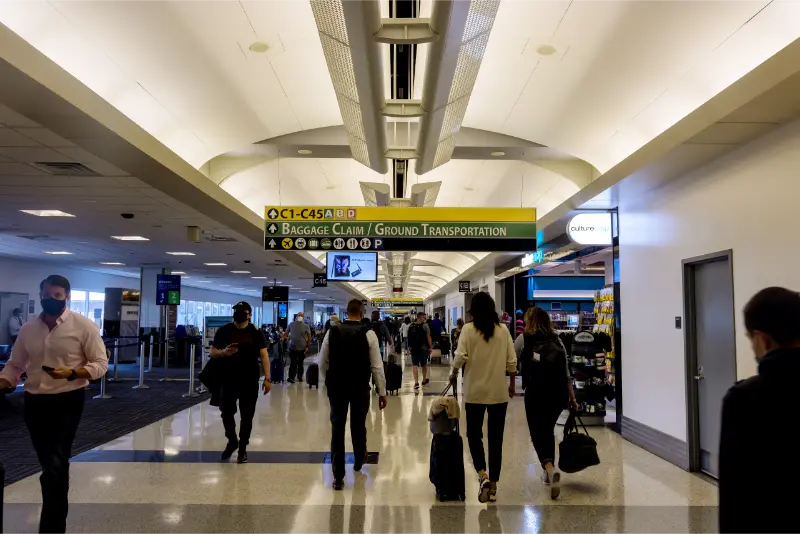
Start with the exact hotel, not just the city name
Two travelers landing on the same flight can have very different best transfers if one hotel is beside a rail station and the other sits several blocks away in a district reached only by bus or car. Put the full hotel address into the journey planner and compare door-to-door travel, including the final walk with luggage.
Main airport transfer options
500 Downtown Direct from IAH
METRO’s 500 Downtown Direct operates nonstop between IAH and downtown Houston for $4.50, with service from Terminal E. It is designed for airport travelers and is faster than a local bus when downtown is the destination.

102 Bush IAH
The 102 is the lower-cost local option from IAH to the Downtown Transit Center. The regular fare is $1.25, but it makes frequent stops and therefore takes longer.
500 Downtown Direct from Hobby
In February 2026 METRO expanded the 500 Downtown Direct to Hobby Airport. It provides a direct downtown option for $4.50 and complements the existing local routes.
Local buses from Hobby
Several local routes serve the Hobby Transit Center for $1.25. They can work well when the hotel lies on the corridor, but a visitor should compare the total transfer count with the direct 500 service.
Taxi, rideshare and rental car
These options are most useful for hotels outside central transit corridors, late arrivals, groups with several bags or trips that immediately continue beyond Houston.
What to know about George Bush Intercontinental Airport (IAH) and William P. Hobby Airport (HOU)
Houston airports are far enough apart that you should never treat them as interchangeable. Confirm IAH versus HOU before booking a hotel, rental car or connecting itinerary. At IAH, the 500 currently boards at Terminal E while the 102 uses Terminal C; at Hobby, public buses use the Hobby Transit Center. Construction and pickup locations can change, so recheck before travel.
Taxi or rideshare?
For two or more travelers with luggage, a direct car can become competitive even when public transport looks much cheaper per person. Compare the quoted price at the time you land, check the official pickup zone and remember that traffic can change the total journey dramatically. Never accept unsolicited rides from someone approaching you inside the terminal.
Rental car: useful or unnecessary?
A rental car makes sense when the airport arrival is the start of a regional road trip, when you are staying far from the core or when several day trips are planned. It can be a liability for a short central stay because hotel parking, garage fees and one-way urban traffic add both cost and stress. If you rent, photograph the vehicle before leaving the lot and confirm toll handling before driving away.
Best transfer by destination
Downtown Houston
The 500 Downtown Direct is the first public option to compare from either major airport.
Museum District / Midtown
A downtown airport bus plus METRORail can work well if luggage is manageable.
The Galleria / Uptown
A direct taxi or rideshare is often simpler because the district is not on METRORail.
Space Center Houston / Clear Lake area
Hobby is geographically more convenient than IAH for many southeast-Houston destinations, but a rental car or direct ride may be more practical than crossing the city by transit.
Late arrivals and early departures
This is where the cheapest option often stops being the best option. Check the actual service at your landing or departure time, not the midday frequency. If the flight arrives after a long international journey, I prefer a transfer with fewer changes even if it costs more. For a very early flight, pre-booking or scheduling a ride can reduce uncertainty.
How much connection time should you protect?
Do not build a non-refundable tour or restaurant reservation immediately after landing. Immigration on an international arrival, baggage delivery, rental-car queues, road congestion and transit disruptions are all variable. The first evening should be the most flexible part of the trip.
Traveling with children
Families should compare the total effort, not just the ticket price. One direct ride can be worth more than a cheap multi-transfer trip when you are carrying a stroller and several bags. If you will need a child restraint in a car, research the legal and operator requirements before landing rather than assuming the service provides one.
Accessibility
Airport public transportation can be accessible, but elevator outages or long walks between terminals and platforms matter. Check the airport and transit accessibility pages shortly before travel, and allow enough time that a lift issue does not threaten a flight.
Money-saving strategy
The biggest saving often comes from choosing a hotel that works well with the airport route and the sightseeing network. Saving a little on the room but paying for repeated long rides can be false economy. Compare current accommodation and then check the transfer from the exact property.
Airport transfer checklist
- Save the hotel address offline.
- Check the terminal and official pickup zone before landing.
- Keep the transit or airport app updated.
- Use only licensed taxis or app-based rides requested through the official process.
- Allow more time during major events and weekday rush hours.
- Keep one backup option in case the preferred service is disrupted.
Official airport information
Terminal construction, pickup zones and ground-transport procedures can change. Before travel, check George Bush Intercontinental Airport (IAH) and William P. Hobby Airport (HOU) official transportation information rather than relying on an old screenshot or social-media post.
Related guides
Final advice
The best Houston airport transfer is the one that still makes sense with your luggage, arrival time and exact hotel. Plan the route before the flight, keep a backup option and protect the first few hours from tight reservations. That small amount of preparation removes one of the most stressful parts of arriving in a large American city.

How I would use this guide on the ground
Before each travel day, check the first route, the final return and one alternative. This takes only a few minutes but prevents a small schedule change from becoming a long detour. Save the key address offline, keep a charged phone and avoid placing the most expensive reservation immediately after a complicated transfer.
A note for international visitors
Visitors arriving from Europe are often surprised by the scale of American cities. A destination that appears to be “in the center” may still be several miles from another central district. Build the itinerary around neighborhoods and corridors rather than assuming that every major attraction can be linked by a short walk.
Events can change normal travel times
Sports, conventions, festivals and concerts can temporarily change road traffic, parking availability and transit crowding. On event days, leave earlier and check service alerts. The same route that feels effortless on a normal afternoon can take much longer when thousands of people leave one venue at the same time.
How I would use this guide on the ground
Before each travel day, check the first route, the final return and one alternative. This takes only a few minutes but prevents a small schedule change from becoming a long detour. Save the key address offline, keep a charged phone and avoid placing the most expensive reservation immediately after a complicated transfer.
A note for international visitors
Visitors arriving from Europe are often surprised by the scale of American cities. A destination that appears to be “in the center” may still be several miles from another central district. Build the itinerary around neighborhoods and corridors rather than assuming that every major attraction can be linked by a short walk.
Events can change normal travel times
Sports, conventions, festivals and concerts can temporarily change road traffic, parking availability and transit crowding. On event days, leave earlier and check service alerts. The same route that feels effortless on a normal afternoon can take much longer when thousands of people leave one venue at the same time.
How I would use this guide on the ground
Before each travel day, check the first route, the final return and one alternative. This takes only a few minutes but prevents a small schedule change from becoming a long detour. Save the key address offline, keep a charged phone and avoid placing the most expensive reservation immediately after a complicated transfer.
A note for international visitors
Visitors arriving from Europe are often surprised by the scale of American cities. A destination that appears to be “in the center” may still be several miles from another central district. Build the itinerary around neighborhoods and corridors rather than assuming that every major attraction can be linked by a short walk.
Events can change normal travel times
Sports, conventions, festivals and concerts can temporarily change road traffic, parking availability and transit crowding. On event days, leave earlier and check service alerts. The same route that feels effortless on a normal afternoon can take much longer when thousands of people leave one venue at the same time.