

Mount Rainier can be an excellent national park for families because children can see glaciers, waterfalls, giant trees and wildlife without completing a strenuous hike. The key is resisting the temptation to build an adult sightseeing schedule and then drag children through it. Weather, parking and mountain roads already add uncertainty; a family itinerary should leave more room, not less.
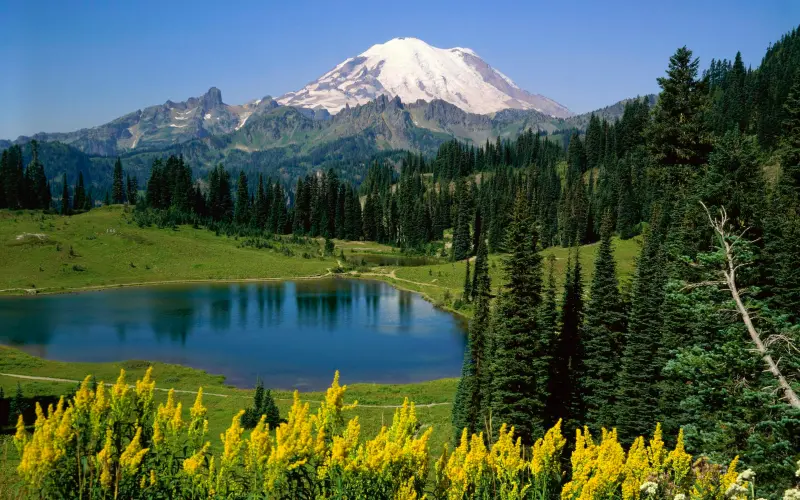
In 2026 there is no timed-entry reservation, which simplifies arrival, but popular parking areas can still fill. Sunrise vehicle access is currently closed because of wildfire impacts, Ohanapecosh facilities are closed for construction, and Grove of the Patriarchs remains closed. That makes Paradise and Longmire especially useful family anchors.
| Best easy mountain walk | Nisqually Vista at Paradise |
|---|---|
| Best easy history/forest walk | Trail of the Shadows at Longmire |
| Best visitor center | Henry M. Jackson Visitor Center at Paradise |
| 2026 timed entry | Not required |
| Main family hazards | Weather, rivers, steep drop-offs, wildlife and parking congestion |
Start with one major area per day
Mount Rainier looks compact on a map, but driving around the mountain takes time. Children usually enjoy the park more when a day has one main base plus a few nearby stops. A Paradise day can include the visitor center, a meadow walk and a waterfall. A Longmire day can mix the museum, Trail of the Shadows and a picnic.
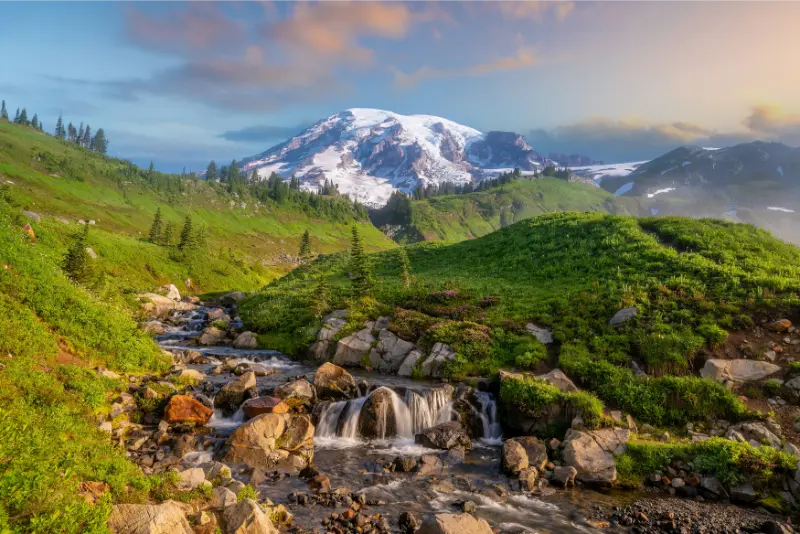
Trying to combine Paradise, Sunrise and multiple entrances in one day turns the trip into car time. In 2026 Sunrise is not even available to vehicles, making a focused itinerary the better choice for both logistics and enjoyment.
Nisqually Vista: a strong first family hike
NPS lists Nisqually Vista as a 1.2-mile loop and notes that it is suitable for families with strollers. It begins at Paradise and provides meadow scenery and glacier views with far less climbing than Skyline. Snow, mud and weather can still change the surface, so stroller suitability is conditional rather than guaranteed every day.
Myrtle Falls with children
The short walk toward Myrtle Falls gives families a taste of the Paradise meadow system. Keep children on the trail even when flowers make off-trail exploration tempting. The rule protects fragile plants and also keeps families away from hidden holes, wet ground and steep edges.
Trail of the Shadows at Longmire
This 0.7-mile loop combines a forest walk with mineral springs and early park history. The side closest to the road is flatter and easier, while the far side has rougher sections. Longmire is lower than Paradise and can be a useful fallback when the high country is foggy or snowy.
Visitor centers and Junior Ranger learning
Stop at an open visitor center or ranger desk early in the trip and ask about Junior Ranger activities, current wildlife sightings and trail conditions. Children often engage more when they have a mission: identify a glacier, find a specific tree species, complete an activity page or listen for marmot whistles.
Programs and desk hours change by season, so do not promise a specific ranger program until you verify the day’s schedule. The educational value of the park does not depend on a formal program; interpretive signs and the NPS app can turn short walks into a scavenger hunt.
Wildlife rules children can remember
Teach one simple rule before leaving the car: wildlife is watched, never touched or fed. Mount Rainier requires at least 50 yards between visitors and wildlife, and bears deserve an even larger buffer of about 300 feet. If an animal approaches, your family moves away rather than trying to get a closer photo.
Rivers and waterfalls
Cold glacier-fed rivers are powerful even when they look shallow. Keep children away from unstable banks and never encourage rock hopping across fast water. At waterfalls, wet rock can be as dangerous as a cliff. Use railings and established viewpoints instead of searching for a private angle.
What to pack for kids
- A warm layer and waterproof shell for every child, even in summer
- Sun hat, sunscreen and sunglasses for exposed meadow areas
- More water and snacks than the advertised walk seems to require
- Dry socks and a spare layer kept in the car
- A small headlamp for each older child if the day could run late
- Offline map or downloaded NPS information
Food and bathroom planning
Do not rely on every park facility being open. Paradise has seasonal food service, but hours shorten in fall. Ohanapecosh facilities are closed in 2026. Pack enough food for delays and use restrooms when you have the opportunity rather than waiting for the next map symbol.
Choosing a family base
Ashford is practical for the Nisqually Entrance, Paradise and Longmire. Packwood works well for the southeast side and Stevens Canyon when roads are open. Staying inside at National Park Inn or Paradise Inn reduces driving but requires advance booking and comes with seasonal constraints. Our lodging guide compares the tradeoffs in detail.
Nap and quiet-time strategy
For young children, the drive between areas can become a useful rest window, but do not plan the entire day around a perfect car nap. A better schedule includes a morning walk, lunch, a flexible middle period and one short late-afternoon stop. That structure also helps adults adapt to parking and weather.
Rainy-day family options
Rain is common enough that it should be part of the plan. Forest walks at Longmire can be beautiful in light rain, while the Paradise visitor center provides indoor interpretation when open. Avoid exposed high trails during severe weather, and remember that clouds can hide the mountain completely without making the whole park a failure.
Winter with children
Longmire remains a useful year-round base, while the road to Paradise operates under winter gate schedules and can close for weather. Snow play and snowshoeing require winter clothing and avalanche awareness. Never let children play on plowed road edges where vehicles and snow-removal equipment operate.
A sample relaxed family day
Arrive early at Paradise, do Nisqually Vista or Myrtle Falls, visit the Jackson Visitor Center, eat lunch, then descend toward Longmire for Trail of the Shadows if energy remains. If parking or clouds make Paradise unattractive, reverse the order and treat the high country as optional. That single decision removes much of the stress families experience in the park.
Final advice
Children do not need the full Skyline Trail to remember Mount Rainier. A marmot, a glacier viewpoint, a waterfall and a ranger badge can be more powerful than a long checklist. Keep distances realistic, protect the meadows, respect wildlife and allow the mountain’s weather to decide the pace.
Related Mount Rainier guides
More family planning ideas
Give children ownership of one decision each day, such as choosing between two easy walks or selecting the picnic stop. This keeps the trip from feeling like a sequence of adult instructions and makes changing plans easier when weather intervenes.
Use short observation games rather than promising wildlife. Count different flower colors from the trail, look for glacier streams or compare tree bark. A guaranteed scavenger hunt is more satisfying than waiting for a bear that may never appear.
Pack a simple reward for the car after hikes, but do not use food to encourage children toward wildlife or unsafe viewpoints. The goal is to connect the reward with finishing the walk, not with getting closer to an animal or edge.
If a child is cold, hungry or frightened, shorten the route immediately. Mountain weather can turn a minor complaint into a real safety problem quickly. The park will still be there for a longer hike on another trip.
Practical checklist before you go
- Check the official NPS alerts, road status and weather on the morning of your visit.
- Download maps before entering areas with weak mobile coverage and carry the ten essentials for hikes.
- Start popular trailheads early, park only in legal spaces and keep a backup activity in the same road corridor.
- Carry water, food, sun protection and a warm waterproof layer even when the lowland forecast looks mild.
- Respect wildlife distance, stay on established trails and follow every fire, construction and emergency closure.
Mount Rainier changes quickly because elevation, snow, wildfire, construction and weather affect different sides of the mountain in different ways. A plan that works on one date may need adjustment the next day. Treat current official information as part of the itinerary, not as a final check after every other decision is fixed.
Build at least thirty to sixty minutes of unscheduled time into a mountain day. Entrance traffic, a wildlife sighting, a short road control or a full parking lot can all change the schedule. That buffer also gives you room to stop safely for a viewpoint instead of making rushed decisions because the itinerary is already late.
Tell someone outside your group where you plan to hike and when you expect to return, especially on longer trails. Mobile coverage is unreliable in several parts of the park. A downloaded map is useful, but it does not replace route awareness, weather judgment or the ability to turn around before conditions become unsafe.
Finally, match the objective to the least experienced person in the group. Mount Rainier rewards conservative decisions because the same trail can shift from dry summer walking to snow, fog, wind or heavy rain in a short period. Finishing a shorter route comfortably is better than forcing a famous itinerary because it appeared on a must-do list.
Before leaving the trailhead, make one final equipment check: water, food, insulation, rain protection, navigation and a charged phone or emergency device. Small omissions become larger problems once the group is several miles from the car, especially when temperatures fall or a route takes longer than expected.
When you return, check the next day’s official status again rather than assuming conditions are unchanged. Fire boundaries, construction controls, campground availability and mountain weather can all move quickly. This habit is especially important on multi-day trips that switch between Paradise, Longmire, White River and the southeast side.