

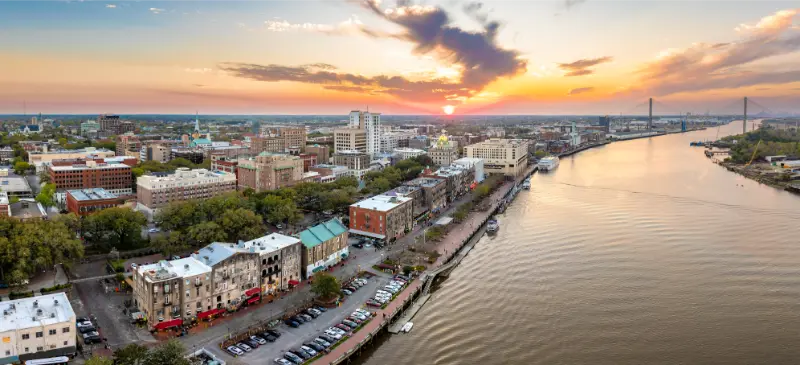
Savannah is one of the easiest American cities to enjoy slowly. The Historic District is arranged around shaded squares, the streets invite walking, and much of the city’s appeal comes from the spaces between major attractions: porches, live oaks, gardens, old houses and the changing atmosphere between morning and evening.

A first visit does not need a huge checklist. Three days is enough to understand the layout, tour one or two historic sites, eat well and spend time on the riverfront without rushing. If you are planning a larger Southern route, this city already appears in our Charleston and Savannah road trip.
Planning this trip at a glance
- Ideal first stay: 3 full days
- Best for: history, architecture, food, couples and walkable city breaks
- Car needed?: no for the Historic District; useful for Tybee Island or regional trips
- Best base: Historic District or nearby areas within walking distance
- Main airport: Savannah/Hilton Head International Airport (SAV)
How to experience the Historic District
Do not plan Savannah square by square as if each one were a separate attraction. Walk a broad route through the Historic District, notice how the squares connect and choose a few houses, museums or churches that genuinely interest you. The urban design itself is the main experience.
Morning is ideal for quiet streets and photographs. Late afternoon is better for shaded walks, and the evening brings a livelier riverfront and restaurant scene.
Where to stay
Staying inside the Historic District reduces transport and makes early-morning walks easy. The trade-off is price and sometimes parking. Hotels near the riverfront are convenient for nightlife but can feel busier. Quieter southern sections of the district suit travelers who value atmosphere over immediate access to bars.
If you are driving, verify valet or garage charges before booking. A central hotel may still be good value if it allows you to leave the car parked for two days.
Getting around Savannah
Walking is the default transport for the central district, but heat and humidity can make midday walking harder than the map suggests. The city also has visitor-oriented transit options that can reduce repeated long walks.
For Tybee Island, plantations or wider coastal Georgia, a car becomes more useful. Keep those excursions separate from the core Historic District days.
Best things to do
Walk the squares
Chippewa, Monterey and Forsyth-area walks are popular, but I would also wander into quieter squares. Savannah is strongest when you stop following a single tourist route.
Choose one historic house or museum
Architecture becomes more meaningful when you enter at least one preserved interior and hear the social history connected to it.
Forsyth Park
Use the park as a pause rather than a quick fountain photo. The surrounding streets are among the city’s most enjoyable walks.
River Street and Plant Riverside
The riverfront is touristy, but the shipping traffic, old warehouses and evening atmosphere make it worth seeing once.
Learn the fuller history
Savannah’s story includes slavery, emancipation, Gullah Geechee culture, civil-rights history and maritime trade. Choose interpretation that goes beyond decorative architecture.
Food, heat and evening atmosphere
Plan one traditional Southern meal, but do not make every meal heavy. Modern restaurants, seafood, bakeries and casual lunch spots create a better rhythm. In hot months, I use the long lunch as a deliberate climate break.
Savannah after dark feels different from the daytime city. A ghost tour can be entertaining, but choose it as storytelling rather than as the only way to learn local history.
A realistic 3-day Savannah itinerary
- Day 1 – Historic District orientation: Walk the central squares, Forsyth Park and surrounding streets, then finish on the riverfront.
- Day 2 – History and neighborhoods: Tour one historic home or museum, add a deeper history stop, then leave the late afternoon open for cafés, shopping or another square walk.
- Day 3 – Choose your extension: Spend a slower morning in Savannah, then visit Tybee Island or another coastal site if weather and transport make sense.
Budget and booking strategy
Savannah hotel rates rise during spring weekends, major events and popular holiday periods. Parking can materially change the nightly total. Restaurant reservations are useful for a few high-demand places, but leave some meals spontaneous.
The official Visit Savannah site is useful for current events and visitor logistics.
Mistakes I would avoid
- Driving between downtown sights: park once and walk when weather allows.
- Scheduling only architecture: include social history and culture.
- Ignoring heat and humidity: protect the hottest part of the day.
- Booking every famous restaurant: the city is more enjoyable with flexibility.
- Treating Tybee Island as a guaranteed beach day: weather and traffic should decide.
How to combine this with a bigger USA trip
The strongest pairing is Charleston. Our Charleston and Savannah road-trip guide gives the full route. Atlanta is another logical connection by road; use our Atlanta guide if you want a larger Georgia itinerary.

With more time, continue north toward Asheville and the Blue Ridge Parkway for a completely different landscape.
Extra practical advice for international visitors
If you are coming from outside the United States, build a little more time into airport arrival, rental-car collection, hotel check-in and long driving days. Sales tax is often added at the register, restaurant tipping is part of the normal budget, and parking can transform the true cost of an apparently inexpensive hotel. Our essential USA travel tips and USA travel-cost guide explain these details in more depth.
I also save offline maps, screenshots of reservations and the exact hotel address before leaving reliable Wi-Fi. In large metro areas, neighborhoods can be far apart even when they look close on a map; in rural areas and national parks, mobile coverage can disappear completely. Treat transfer time as part of the itinerary rather than dead time and avoid scheduling an ambitious drive immediately after a long overnight flight.
Family, accessibility and weather flexibility
A strong itinerary should fit the travelers actually taking the trip. Families usually benefit from fewer daily stops, regular meal breaks and one flexible block each afternoon. Travelers with mobility needs should check the official accessibility information for specific attractions, trails, historic buildings, transit systems and parking areas because conditions can vary even within the same destination.
I also build a weather alternative into every day. A museum, scenic drive, shorter viewpoint, market, aquarium or long lunch can replace an outdoor plan when heat, storms, wildfire smoke, snow or high wind changes the day. That simple backup prevents one weather problem from feeling like a lost vacation day.
What to book in advance
Reserve only the experiences that are difficult to replace: a specific historic-house tour, a popular restaurant or a small-group excursion you care about. Trolley tours and ghost walks are widely available, so compare what each includes rather than buying the first package offered. If the trip falls during a festival or major holiday weekend, book accommodation much earlier than you would for an ordinary city break.
For parking, read the hotel policy carefully. Valet-only properties can add a significant nightly charge, and some historic buildings have limited loading space.
If you have only one day — or four days
With one day, do not attempt Tybee Island. Walk the Historic District from the river toward Forsyth Park, tour one historic site and eat one good Southern meal. With four days, add Tybee or Bonaventure Cemetery, spend more time with Black history and Gullah Geechee context, and use an unhurried morning for cafés and local shops.
Photography and respectful tourism
Savannah is highly photogenic, but remember that many beautiful houses are private homes. Stay off steps and gardens, keep voices down in residential streets and do not block sidewalks for long photo sessions. Cemeteries and historic sites also deserve the same respect you would expect at a memorial or place of worship. The city feels more rewarding when architecture is treated as lived history rather than a backdrop.
Tybee Island: when it makes sense
Tybee Island is close enough to add a beach day, but it should not replace your first full day in Savannah. I would consider Tybee on day three or four, especially in warm weather, and leave early to reduce traffic and parking stress. Beach conditions and parking rules change by season, so check locally before driving out.
If you only have two nights in Savannah, stay in the city instead. The Historic District is the reason most first-time visitors come, and splitting such a short trip between city and beach usually means neither gets enough time.
When to visit Savannah
Spring is beautiful but popular, with blooming gardens, festivals and higher hotel demand. Autumn often brings comfortable walking weather, while winter can be pleasantly quiet. Summer is hot and humid, so I would shift walking to morning and evening and use museums, long lunches or hotel breaks in the afternoon. Whatever the season, check event dates before booking because a major festival can change room rates and restaurant availability across the center.
Final thoughts
Savannah rewards a slower plan. Stay centrally, walk the squares more than once, choose a few historic interiors, eat well and leave time for shade, porches and unplanned streets. Three well-paced days reveal far more than a packed one-day tour ever could.