

Buffalo’s best visitor bases are close enough to combine during the day but different enough that hotel location changes the character of the trip. Downtown is easiest for first-time logistics, Elmwood Village is stronger for restaurants and neighborhood life, Allentown balances centrality with nightlife, and Canalside is ideal for waterfront events.
If this is your first Buffalo trip and you plan to use public transportation, Downtown is the safest all-round choice because Metro Rail, Route 24 airport service and regional buses are easy to reach. Choose Elmwood or Allentown when the evening neighborhood matters more than having every transport option at the door.
The best areas to stay in Buffalo
Downtown Buffalo
Best for first-time visitors, architecture, transit and the easiest airport connection.
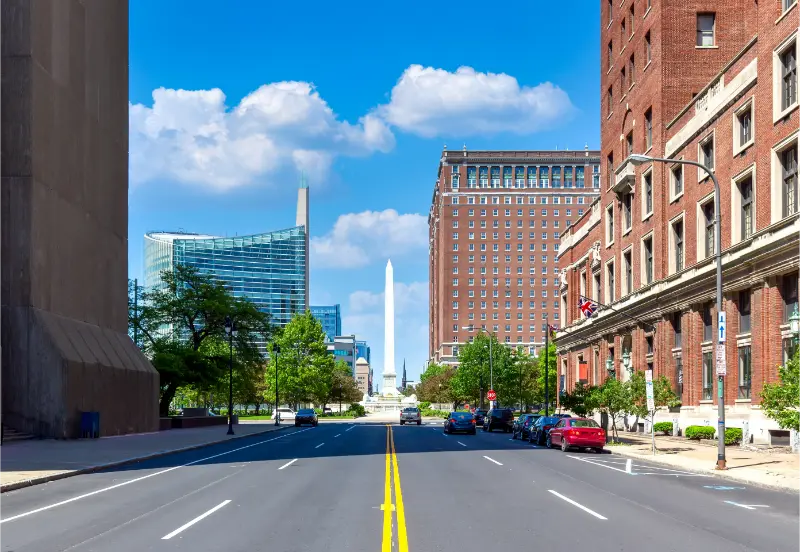
Downtown puts you close to Main Street Metro Rail, Canalside, theaters, Sahlen Field and historic architecture. Route 24 from BUF reaches the central area, and regional buses depart nearby.
Some blocks can feel quiet outside events and office hours. Choose a hotel near the part of Downtown you actually plan to use.
Elmwood Village
Best for restaurants, cafes, local shops and a residential neighborhood atmosphere.
Elmwood Avenue has one of Buffalo’s strongest everyday visitor experiences and provides easy access toward the museum district. It works particularly well for travelers who like to walk to dinner after sightseeing.

There is no Metro Rail station in the heart of the district, so buses or rideshare matter more than Downtown.
Allentown
Best for nightlife, bars, historic streets and a central position between Downtown and Elmwood.
Allentown offers more evening energy and character than many office-district blocks while remaining close to Downtown and the medical campus.
Noise varies by street and weekend. Read recent hotel reviews and map the walk to transit before booking.
Canalside / Waterfront
Best for hockey, waterfront activities and event-focused trips.
You are close to KeyBank Center, the waterfront and the southern end of Metro Rail. Summer evenings can be excellent when events and outdoor activities are running.
The area can feel quieter when there is no event, and restaurant variety is narrower than Elmwood.
Airport / Cheektowaga
Best only for a very early flight, late arrival or one-night connection.
Hotels can offer easier parking and airport logistics, and Route 24 links the airport corridor with Downtown.
You lose the ability to step outside into Buffalo’s strongest neighborhoods and may spend more time commuting than the room saving is worth.
Which area should you choose?
- First trip: Downtown.
- Food and local atmosphere: Elmwood Village.
- Nightlife: Allentown.
- Hockey or waterfront event: Canalside.
- Early flight: Airport / Cheektowaga.
Staying without a car
Downtown is easiest without a car because Metro Rail, buses and airport service converge there. Elmwood and Allentown also work well car-free if you are comfortable using Route 20, walking and occasional rideshare. A Niagara Falls day can be done by regional transit, though a car adds flexibility.
Staying with a rental car
A car becomes useful for suburban Frank Lloyd Wright sites, multiple Niagara-region stops, wineries or a broader road trip. Central hotel parking can add cost, so compare a Downtown garage with a neighborhood hotel that includes parking rather than judging by room rate alone.
Airport convenience
BUF is east of the city in Cheektowaga. Route 24/24L connects the airport with Downtown, making Downtown particularly convenient for budget-minded arrivals. Elmwood Village usually requires a transfer or direct ride, so evaluate luggage and weather before choosing solely on neighborhood atmosphere.
Read our Buffalo Airport guide before choosing an airport hotel simply because it looks convenient on a map.
Public transportation from your hotel
Metro Rail is strongest on the Main Street axis. Route 20 is useful for Elmwood, while Route 24 serves BUF. The practical lesson is that “near transit” means different things in each neighborhood; map the actual hotel to the stop you expect to use.
Our Buffalo public transportation guide explains the routes and fare system in more detail.

How much location is worth paying for
Paying more for Downtown or Elmwood can reduce transportation costs enough to justify the rate difference. In winter, location is also an energy and comfort decision: being three blocks closer to a useful route can matter when snow or wind arrives.
Families
Families often prefer Downtown for Canalside, easy transit and simple logistics, or Elmwood for restaurants and a neighborhood feel. For a Niagara Falls-heavy trip, consider whether a rental car and easy parking matter more than a central address.
Couples and nightlife
Elmwood Village and Allentown are attractive for couples who want restaurants and evening walks. Downtown is more practical for a short first trip, particularly if arriving by public bus from BUF or attending an event at KeyBank Center.
First-time visitors versus repeat visitors
Repeat visitors can base themselves in Elmwood or Allentown after covering Downtown. A second trip is also a good time to prioritize architecture, food or a specific neighborhood over maximum access to the regional network.
Events can completely change hotel prices
Sabres games, concerts and waterfront festivals can make Canalside and Downtown expensive. Bills games affect a different part of the metro area because Highmark Stadium is in Orchard Park, so do not book a Downtown room solely because you assume the stadium is central.
Weather and walkability
Winter is a major hotel-location factor. A beautiful neighborhood base is less useful if every day begins with a long exposed walk in snow. In summer, the waterfront becomes more attractive and walking between Downtown zones is easier.
Safety and choosing the exact block
Use ordinary city awareness and evaluate the exact block at the hours you expect to return. Recent reviews can reveal street noise, parking issues and the practical walk from transit much better than a broad “Downtown” label.
Hotel fees, parking and total trip cost
Check parking, breakfast, cancellation and event-night minimum stays. Downtown garage charges can change the economics of a road trip, while a slightly more expensive car-free hotel may be cheaper overall.
How I would shortlist hotels
- Choose whether transit convenience or neighborhood evenings matter more.
- Map the hotel to Metro Rail or Route 20 rather than relying on a generic central label.
- Check Sabres, Bills and festival calendars.
- Price parking if you will have a car.
- Consider winter walking distance before booking.
Common accommodation mistakes
- Staying near BUF for several sightseeing nights simply because the hotel is cheaper.
- Assuming Elmwood Village is directly on Metro Rail.
- Booking Canalside without checking whether there are events or restaurants that fit your dates.
- Ignoring parking costs on a Niagara road trip.
- Choosing a hotel several exposed blocks from transit for a winter visit.
Booking strategy
Once you have narrowed the trip to one or two neighborhoods, compare live availability on Booking.com. I would filter by guest rating and then inspect the exact street, transit stop, parking policy and cancellation conditions rather than sorting only by nightly price.
Three nights versus a longer stay
The ideal neighborhood can change with trip length. On a two- or three-night visit to Buffalo, I would pay more for a central base that reduces daily travel time because almost every hour matters. On a five- or six-night stay, a slightly less central neighborhood can become more attractive if it offers better restaurants, quieter evenings, laundry facilities, a larger room or a meaningful saving. The key is to calculate the trade-off across the whole stay rather than judging the nightly rate in isolation.
Room features that can matter more than one extra hotel star
For a road trip, secure or reasonably priced parking may be more valuable than a rooftop bar. For families, two real beds, a refrigerator and an easy breakfast routine can matter more than a fashionable lobby. For a summer visit, reliable air-conditioning is essential; for a work-and-travel stay, desk space and dependable Wi-Fi can influence the experience every day. Build the hotel filters around how you will actually use the room.
Check the map at block level before paying
A neighborhood label is only a starting point. Before making a non-refundable reservation, zoom in on the exact property and trace the walk to the transit stop, the attractions you plan to visit and at least a few evening food options. In Buffalo, two hotels marketed under the same broad area name can create very different daily routines. Street crossings, hills, highway barriers and the position of station entrances can all matter more than the straight-line distance shown in a booking result.
A practical final check before a non-refundable rate
- Confirm the total price including destination, resort or parking fees where applicable.
- Read recent guest comments specifically about noise, elevators, parking and room condition rather than relying only on the overall score.
- Check the cancellation deadline in the hotel’s local time zone.
- Verify whether breakfast, parking and Wi-Fi are actually included in the rate you selected.
- Recheck major event dates because a cheaper flexible rate can be more valuable than locking in a high-demand weekend too early.
Final advice
Downtown is the easiest first-time Buffalo base, while Elmwood Village is the best choice when restaurants and neighborhood atmosphere matter more. Allentown works well for nightlife, and Canalside is strongest for event-focused stays.
More planning for this city
This article focuses on one practical part of the trip. For the broader sightseeing plan, neighborhoods, pacing and itinerary ideas, continue with our Buffalo for First-Time Visitors guide. Reading the two together makes it easier to choose the right base, decide whether you need a car and avoid wasting time crossing the city unnecessarily.