

Choosing where to stay in Memphis is mostly about deciding which version of the city you want outside your hotel door. Downtown gives you the easiest first trip for Beale Street, riverfront attractions and civil-rights history. Midtown gives you restaurants, Overton Square and a more residential rhythm. East Memphis can be practical for business or road trips. The Graceland/airport area works for a focused Elvis visit but is less convenient for a broader city break.
Memphis is not so large that a wrong neighborhood ruins the trip, but a poor base can create repeated rides that make a three-day visit feel fragmented. I would therefore choose the neighborhood before choosing the individual hotel. Once the area is right, then compare room quality, price, parking and cancellation terms.
Downtown: the easiest first-time base
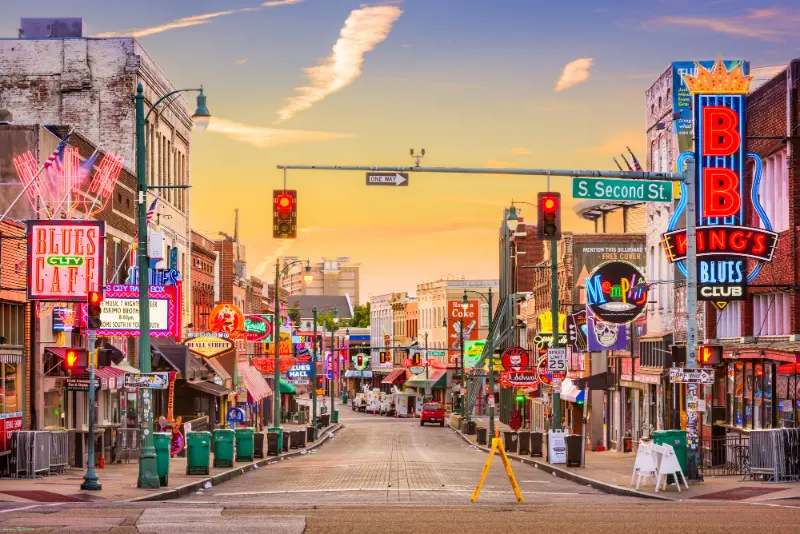
For most first-time visitors, Downtown is the strongest all-round choice. You can walk to or between Beale Street, the Mississippi riverfront, South Main and several museums, while the Main Street Trolley helps reduce repeated walking. The concentration of attractions also means you can return to the hotel during the day without turning the break into a transport project.
Best for: first visits, short stays, travelers without a car and people who want nightlife close by. Main trade-offs: event and weekend rates can be higher, some blocks are much quieter at night than others, and hotels near Beale Street may experience music or street noise.
Beale Street and the Entertainment District
Staying very close to Beale Street is ideal if live music and nightlife are central to the trip. You can walk back after an evening without waiting for a car. The obvious downside is noise and crowd activity. Read recent reviews carefully and decide whether you want to be directly inside the entertainment energy or one or two blocks removed from it.
Families and early sleepers should usually prioritize a nearby but quieter street. A five-minute walk is a small price for better sleep, while nightlife-focused groups may prefer the opposite trade-off.
South Main
South Main has a strong mix of history, architecture, restaurants and easy access to the National Civil Rights Museum. It feels more neighborhood-like than the busiest part of Beale Street while remaining connected to the Downtown visitor core. The trolley is useful, but many central journeys can still be done on foot.
Best for: couples, history-focused visitors, design-minded travelers and people who want centrality without sleeping in the loudest nightlife zone. Main trade-off: depending on the exact block, late-night food and activity can be less intense than around Beale.
Downtown riverfront and Pinch District
The northern part of Downtown, including areas around the convention center, Bass Pro Shops at the Pyramid and the Pinch District, can be useful for specific events or riverfront plans. It is still central, but the experience is different from South Main. Before booking, route the hotel to the three attractions you care about most instead of assuming every “Downtown” address is equally convenient.
Midtown and Overton Square
Midtown is the choice for visitors who want restaurants, bars, live music and a more local evening atmosphere. Overton Square and nearby districts have enough to keep you in the neighborhood after dinner, and you can reach Downtown by bus, rideshare or car.
Best for: repeat visitors, food, nightlife outside Beale Street and travelers staying four nights or more. Main trade-offs: you will not walk to the classic Downtown sights, and late-night public transit can be less convenient than a direct rideshare.
Cooper-Young
Cooper-Young has independent restaurants, bars, shops and a strong neighborhood identity. Hotel inventory is more limited than Downtown, so it is often better suited to travelers choosing smaller properties or vacation rentals. It can be an excellent lifestyle base if you already know you do not need to see Beale Street every evening.
For a first-time international visitor with only two nights, I would still prioritize Downtown. For a longer stay, Cooper-Young can make the city feel much more personal.
East Memphis
East Memphis is practical rather than iconic. It offers hotels, restaurants, suburban-style convenience and easier road access. This can be useful for business trips, families with a car or visitors continuing toward other parts of Tennessee. The downside is that most classic Memphis sightseeing requires a drive or rideshare.

Best for: road trips, business travel, travelers prioritizing parking and larger hotels. Main trade-off: less atmosphere after sightseeing and repeated journeys to Downtown.
Graceland and the airport area
Hotels near Graceland or the airport make sense when Elvis is the overwhelming focus, when you have an early flight or when Memphis is a short stop on a larger road trip. Graceland is south of Downtown and closer to MEM than many visitors realize.
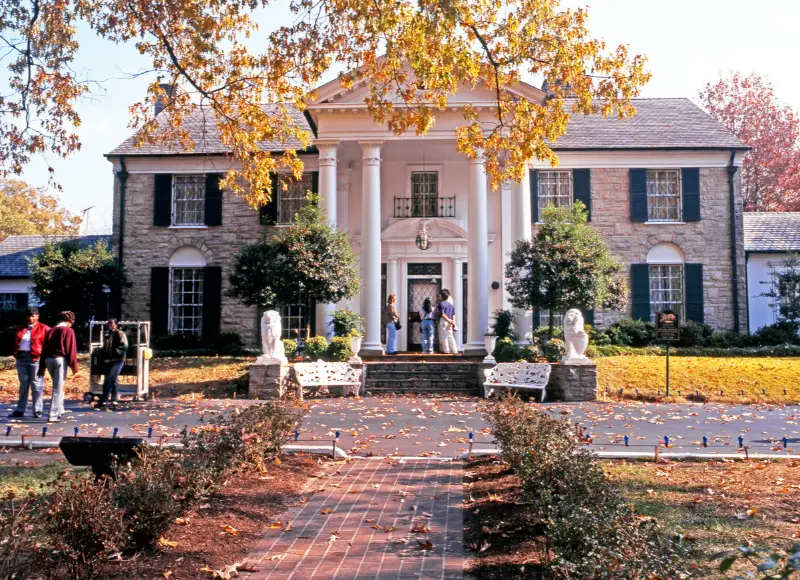
For a broad Memphis trip, however, staying here can create unnecessary commuting for Beale Street, the riverfront, National Civil Rights Museum, Midtown dining and evening music. I would choose this area deliberately, not just because an airport hotel has a lower nightly rate.
Harbor Town and quieter river settings
Travelers seeking a calmer residential environment may look at Harbor Town or other river-adjacent areas. These can be attractive for longer stays, but hotel supply is limited and you will rely more on a car or rideshare. For a first weekend visit, convenience usually beats tranquility unless the accommodation itself is part of the experience.
Best neighborhoods by travel style
- First-time visitor: Downtown or South Main.
- Live music and nightlife: Beale Street area or Midtown/Overton Square.
- History-focused trip: South Main.
- Couples: South Main, Downtown riverfront or Midtown depending on evening style.
- Families: quieter Downtown blocks, East Memphis or selected Midtown properties.
- Elvis-focused trip: Graceland area.
- Road trip with easy parking: East Memphis or a property on the edge of Downtown with reasonable parking.
How public transportation changes the decision
MATA’s current extended Zero Fare Pilot makes transit unusually affordable in 2026, but frequency still matters. Downtown is the strongest choice if you want to minimize dependence on schedules. Read our Memphis public transportation guide before booking outside the center.
For arrivals, our MEM Airport guide explains Route 28, taxis, rideshare and rental cars. If your flight lands outside bus operating hours, a hotel with a cheap room but an expensive airport transfer may not be the bargain it appears to be.
Parking: calculate the real hotel cost
If you have a car, parking can change which neighborhood is best value. Downtown hotels may charge for valet or self-parking, while East Memphis properties often have easier parking. Compare the full trip cost. A central room that costs $35 more per night can still be cheaper than a suburban room plus parking at every attraction and repeated fuel use.
If the car is only needed after Memphis, do not collect it at the airport automatically. It can be simpler to reach Downtown without a car and pick one up later for the regional portion.
Safety and choosing the exact block
Neighborhood labels are broad, and street conditions can change quickly. Look at the exact map pin, recent hotel reviews and the walking route you expect to use after dark. I prefer an active block with restaurants and regular foot traffic over a technically central property surrounded by empty office buildings at night.
This is not about declaring entire neighborhoods “safe” or “unsafe.” Urban conditions are block-specific and time-specific. Use normal city precautions, keep valuables out of sight and use a rideshare for a return that feels awkward or isolated.
Booking strategy
Start by choosing two neighborhoods, then compare current Memphis accommodation. Shortlist properties with free cancellation when possible, check the exact address and calculate your likely transport. Event weekends, festivals and major sports dates can affect availability, so the best strategy is often to reserve a good location early and monitor prices later.
Common mistakes
- Booking an airport hotel for a full city break just because the room rate is lower.
- Choosing Beale Street without checking recent noise reviews.
- Assuming “Downtown” means every attraction is a five-minute walk.
- Ignoring parking when comparing Downtown with East Memphis.
- Choosing a Midtown property without checking the late-night return to Downtown activities.
How many nights change the best neighborhood
With only one night, Downtown is the obvious choice because every transfer consumes a large share of the visit. With three nights, Midtown becomes realistic if you value restaurants and are willing to take a few rides. With five nights or more, the hotel can be chosen for lifestyle rather than pure sightseeing efficiency because you have enough time to explore multiple districts without rushing.
This is also why I would not move hotels inside Memphis unless there is a strong logistical reason. The city is close enough for day-to-day transfers, and changing hotels costs packing time, checkout time and another check-in. One well-chosen base is usually better than chasing a slightly better location for each activity.
Food as a neighborhood decision
Memphis is a city where dinner location matters. If barbecue, soul food and independent restaurants are central to the trip, staying near an evening district can be more valuable than being beside a daytime museum. South Main and Midtown are especially attractive when you want to walk to dinner, while East Memphis works well for travelers who are comfortable driving between restaurant destinations.
I often choose hotels by the last two hours of the day rather than the first two. Most sightseeing has a fixed destination; evenings are when a good neighborhood creates spontaneity.
Final advice
For a first Memphis trip, I would usually stay Downtown, with South Main as a particularly strong compromise between history, restaurants and access to the central sights. Midtown becomes more attractive on longer or repeat visits, while East Memphis and the Graceland/airport area are practical choices for specific itineraries rather than default tourist bases.
Use our 3-day Memphis guide to decide where most of your time will actually be spent. The best hotel is not the one with the fanciest lobby; it is the one that lets you spend more hours experiencing Memphis and fewer hours arranging transportation.