

San Francisco is compact enough that neighborhood choice changes the feel of the trip more than the basic ability to reach attractions. You can cross much of the city by Muni, but hills, evening atmosphere and airport access still matter. A hotel near Union Square creates a different trip from Fisherman’s Wharf, North Beach or the Marina even when the straight-line distances look small.
For a first visit I would choose the neighborhood based on two questions: what do you want outside the hotel door in the evening, and which journeys do you want to make repeatedly? There is no reason to pay waterfront prices if your priorities are restaurants, museums and easy BART access.
Union Square: the classic central base
Union Square remains one of the most practical locations for first-time visitors because it is close to major Muni lines, shopping and the Powell BART station area. It is especially useful for travelers arriving from SFO by BART and those who want a central base rather than a specific neighborhood lifestyle.
The exact block matters. San Francisco changes quickly street by street, and some nearby areas can feel less comfortable to visitors after dark. Read recent hotel reviews about the immediate surroundings and walk you will actually use, not simply the distance to “Union Square.”
Fisherman’s Wharf: easy for families and first-time sightseeing
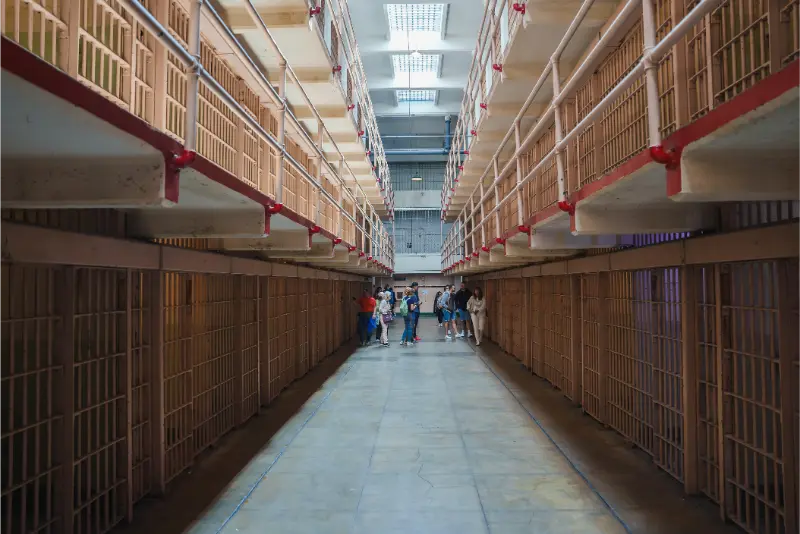
Fisherman’s Wharf is convenient for Pier 39, waterfront attractions, ferries and the classic tourist experience. Families often like the concentration of restaurants and things to do near the hotel. It also makes an early ferry departure easier if Alcatraz is a priority.
The downside is that it can feel touristy and less connected to the everyday neighborhood character many repeat visitors love. Airport access also usually involves BART plus Muni/taxi rather than one direct regional train. If you only have three days and want the iconic waterfront, that trade can still be worth it.
Nob Hill: classic atmosphere and hills
Nob Hill offers historic hotels, views and a classic San Francisco atmosphere. It is close to central neighborhoods but the hills are real. A hotel that appears ten minutes from Union Square can involve a steep climb that feels completely different with luggage.
Cable cars are part of the appeal, but I would not rely on them as the only practical transport because popular services can have queues. Check ordinary Muni routes as well.
Embarcadero: strong for BART, ferries and the waterfront
The Embarcadero is excellent if you value ferry access, the Ferry Building and easy BART connections. It can feel calmer than the busiest Union Square blocks while remaining highly connected. It also works well for travelers taking regional day trips without a car.
Hotels can be expensive, and nightlife is less concentrated than in areas such as North Beach or the Mission. This is a location I choose for transport and waterfront quality rather than for late-night energy.
North Beach: restaurants and neighborhood character
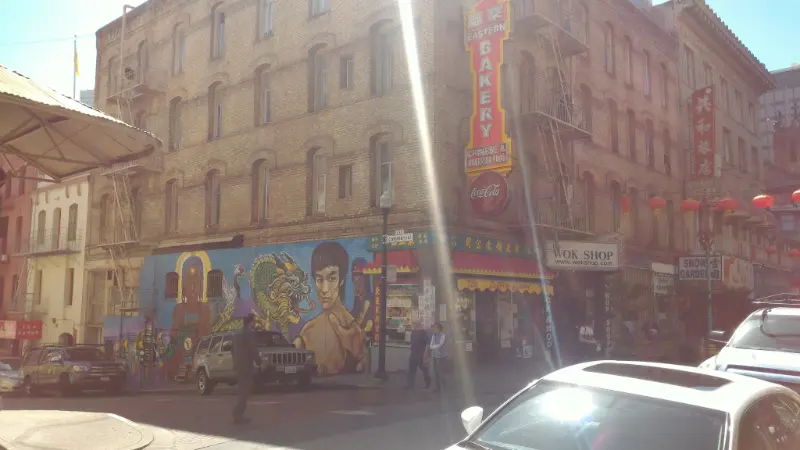
North Beach is one of my favorite areas for visitors who want cafés, restaurants and a walkable evening neighborhood. Chinatown, the waterfront and central sights are close, and the area has a stronger residential/cultural identity than the most tourist-focused hotel zones.
There is no BART station in North Beach, so airport arrival requires an onward connection. For a four- or five-night trip, I would gladly accept that one transfer if the neighborhood fits the way I want to spend evenings.
The Marina and Cow Hollow: attractive, social and west-side oriented
The Marina and Cow Hollow suit travelers who like restaurants, bars, bay views and access toward the Presidio and Golden Gate Bridge. They can be especially attractive for a younger or outdoors-oriented trip.
They are not ideal for BART-based airport access or daily Downtown commuting. Muni buses do the heavy lifting. If your itinerary focuses on the west and north sides of the city, that may be completely fine.
The Mission: food, culture and warmer microclimate
The Mission offers some of the city’s best food, murals and neighborhood energy, with BART stations that make Downtown and airport connections practical. It is a strong choice for repeat visitors and first-timers who care more about local dining than postcard waterfront views.
Again, block-by-block research matters. If your first trip has an early Alcatraz departure and every major sight is on the north side, the Mission may create more transit than you want. Choose it because you want to be there, not just because someone calls it “more local.”
Where I would stay with children
Fisherman’s Wharf is often the easiest answer for families who value nearby attractions and flat waterfront walking. Embarcadero can also work well for transport and space. A central Union Square hotel is practical if you choose the exact block carefully.
Families should also consider room size, breakfast options and whether the hotel has easy luggage access. A charming historic building can be less convenient with a stroller than a modern hotel with larger elevators and simpler pickup access.
Where I would stay without a car
Almost anywhere in these central neighborhoods. In fact, I recommend not keeping a rental car during a normal San Francisco city stay. Parking costs and security concerns can outweigh the convenience. Pick up a car when leaving for Napa, Yosemite, Monterey or the Pacific Coast.
Use our public transportation guide to understand Muni/BART, and the airport guide to test the arrival route.
How to compare real hotel prices
San Francisco room rates can vary sharply. Compare the final price, cancellation terms and parking rather than the headline nightly rate. If you are driving only after the city stay, a hotel without parking can still be the better deal.
You can compare San Francisco accommodation. Use the map view, then test the walking route to the nearest useful transit and read recent comments about noise and the surrounding block.
My first-time ranking by travel style
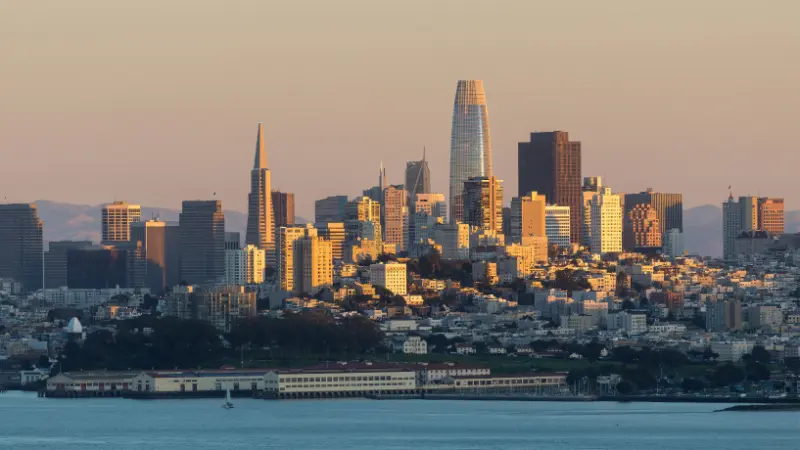
- Best all-round central base: Union Square/central Downtown, carefully chosen.
- Best for iconic waterfront sightseeing and families: Fisherman’s Wharf.
- Best for BART and ferries: Embarcadero.
- Best for restaurants and classic neighborhood evenings: North Beach.
- Best for food and a more local urban experience: the Mission.
- Best for Presidio/Golden Gate access and social atmosphere: Marina/Cow Hollow.
A practical checklist before you book
Before paying for a hotel or airport transfer, put the addresses into a map and test the actual journeys you expect to make. A place that looks centrally located on a booking map can still require a long walk to useful transit, a freeway crossing, a steep hill or an awkward transfer. I also check the first and last realistic transit options for the day, because a route that works beautifully at 2 p.m. may be much less convenient after a late dinner, a show or an early flight.
Save the hotel address, airport terminal, transit map, reservation confirmations and one backup route offline. Keep one payment card separate from the wallet you use during the day, and do not assume every machine or transit agency accepts the same payment method. If a timed attraction, show or theme-park reservation matters, protect that reservation first and build the transport plan around it rather than squeezing it into an unrealistic day.
Finally, re-check the official transit or airport page shortly before travel. Fares, construction, pickup zones, station entrances and service patterns can change. The most useful travel plan is not the one with the most detail months in advance; it is the one that identifies which details are stable and which ones need a final confirmation a few days before arrival.
I also keep the first day deliberately simpler than the middle of the trip. International arrivals can involve immigration, baggage, an unfamiliar airport and jet lag, while domestic travel days can still be disrupted by delays or traffic. Put the most expensive or difficult-to-replace reservation on a day when you are already settled. On departure day, avoid squeezing in a distant attraction unless the transport to the airport is exceptionally predictable. This small amount of buffer is one of the easiest ways to make an ambitious U.S. itinerary feel comfortable rather than fragile.
For families or groups, agree on one meeting point and one backup plan before separating. Large American airports, resorts and transit stations can have multiple exits that look similar on a phone map but are far apart on foot. Share the hotel address and reservation details with every adult, and make sure at least one second person can access tickets and confirmations. That is a small organizational step, but it prevents a dead phone, missed message or wrong pickup zone from turning into a much larger problem.
When comparing two routes, count the hidden effort as well as the minutes. A journey with one direct train and a ten-minute walk may be easier than a slightly faster option with two transfers, elevators, luggage and an uncertain final bus. The same applies to hotels: a room that saves a small amount per night can be poor value if it adds paid rides or repeated cross-city travel. I use transport as part of the accommodation budget, not as a separate afterthought. That produces a more realistic total cost and usually a much more enjoyable trip.
One final habit helps on every city trip: check the next morning before going to bed. Confirm the first route, the opening time of the first attraction and any service alert that could affect it. Ten minutes of preparation at night is usually more useful than an hour of overplanning weeks earlier, because you are working with current conditions and already know how the city feels in practice.
Final advice
San Francisco is small enough that you do not need to obsess over being exactly central. Choose the neighborhood whose evenings you will enjoy, then verify the transit. A great neighborhood can make the hours between attractions feel like part of the trip instead of dead time.