

Yosemite is one of the most famous national parks in the United States, yet first-time visitors often underestimate how much planning it takes to experience it well. Yosemite Valley contains many iconic views, but the park also includes high-country roads, giant sequoias and trail systems spread across a large mountain landscape. In 2026, Yosemite does not require a season-wide vehicle reservation, but that does not remove the need to plan for traffic, parking, lodging and changing road conditions. I would stay at least two nights near or inside the park and use early mornings to protect the most important outdoor time.
2026 vehicle reservations: what changed?
Yosemite National Park announced that it will not require advance vehicle reservations in 2026, including during the main summer season. The park will instead use traffic-management measures when parking areas become congested. This makes spontaneous entry easier than in some previous years, but full lots and temporary traffic diversions can still occur.
Rules can change with conditions or future management decisions, so verify the official Yosemite planning page close to travel. Do not rely on an old article that says a reservation is always required or never required.
How many days do you need?
One day is enough to see several Yosemite Valley viewpoints but not enough for a relaxed first experience. Two full days is a reasonable minimum, while three or four allows one major hike, a high-country or sequoia day and weather flexibility.
If you are driving from San Francisco or Los Angeles, do not treat the transfer as part of a complete Yosemite sightseeing day. Mountain roads and entrance traffic can take longer than expected.
Yosemite Valley: understand the geography first
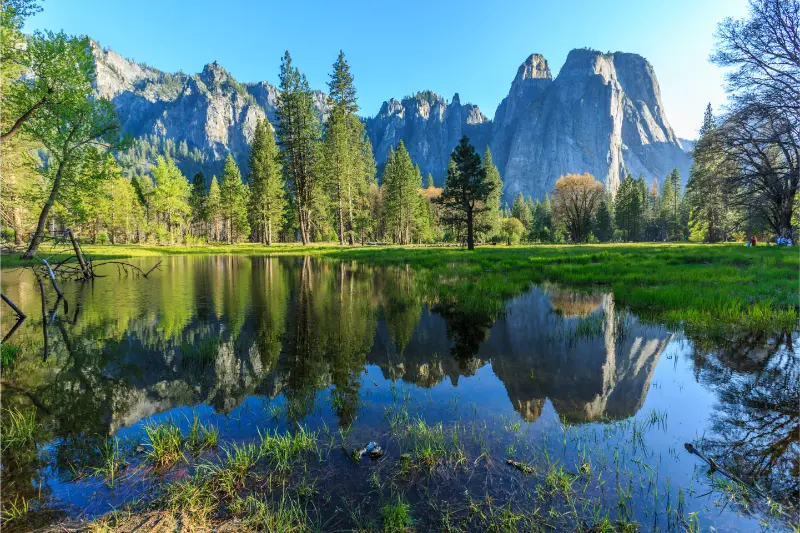
The valley contains Yosemite Falls, El Capitan, Half Dome views, meadow areas, trailheads and visitor services in a relatively compact space. Once parked, walking and shuttle use can be easier than moving the car repeatedly. Parking may fill early during busy periods.
Begin with a simple orientation loop rather than rushing directly to a long hike. Seeing Tunnel View, the valley floor and major waterfalls helps you understand where later trails lead.
Waterfalls change by season
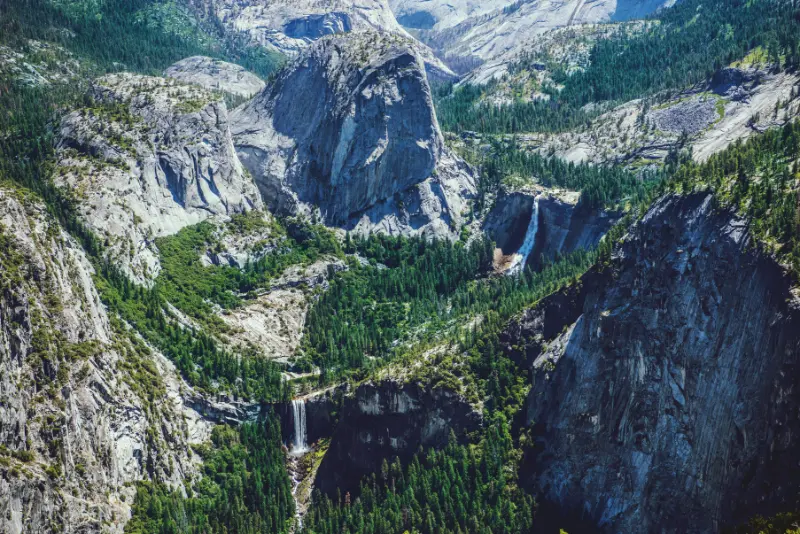
Yosemite waterfalls are generally strongest during spring snowmelt, while some can become much smaller later in the dry season. A trip built entirely around large waterfalls may feel different in late summer or autumn. Winter creates its own conditions with snow and ice.
This seasonal variation is part of Yosemite rather than a reason to avoid later months. Granite cliffs, meadows, high-country scenery and forests remain important even when water levels are lower.
Glacier Point and high-country roads
Glacier Point Road and Tioga Road are seasonal and can remain closed because of snow well beyond the time when lower-elevation California feels like summer. Tioga Road crosses the park’s high country and provides access to Tuolumne Meadows and eastern Sierra connections when open.
Always check current road status before planning a through-route. A closure can add hours of driving around the Sierra Nevada and materially change a California road trip.
Mariposa Grove and giant sequoias
Mariposa Grove offers a different Yosemite experience centered on giant sequoias. Access and shuttle arrangements vary seasonally, and snow can affect trails. It can work well on arrival or departure depending on which entrance you use.
Do not try to combine every valley viewpoint, a long hike, Glacier Point and Mariposa Grove in one day. The park is large enough that a focused plan is more satisfying.
Choosing hikes
Yosemite offers everything from short valley walks to strenuous full-day routes. Choose based on current conditions, elevation gain and your experience, not only on famous photographs. Mist Trail sections can be wet and slippery during strong runoff, while exposed routes become hot later in the season.
Half Dome requires a permit for the cable section and is a serious full-day undertaking. If it is a goal, research the permit process and physical demands separately rather than treating it as an optional addition after breakfast.
Where to stay
Lodging inside Yosemite can reduce driving time but often books far in advance. Gateway communities outside different entrances can provide more choice, but “near Yosemite” can still mean a substantial drive to Yosemite Valley. Always check the actual route and entrance, not only the straight-line distance.
For a short first visit, minimizing morning driving is usually worth paying attention to. The USA accommodation guide explains how to compare location against price and fees.
Camping
Campgrounds are highly competitive in popular seasons and reservation rules vary by campground. Never assume you can arrive and find a legal place to camp. Dispersed camping rules outside the park are also separate from national-park camping regulations.
If camping is central to the trip, use Recreation.gov and official park pages as primary sources. Avoid third-party sellers that imply they control a campground reservation they do not actually manage.
2026 fees for international visitors
National Park Service pricing changed in 2026 for non-U.S. residents. A new nonresident annual pass is available, and additional fees apply at certain major parks. Yosemite visitors coming from outside the United States should check the official NPS nonresident fee page before travel.

If Yosemite is one stop in a national-parks road trip, compare the total cost across all covered parks before deciding whether an annual pass or individual payments make more sense.
Bears, food storage and wildlife
Yosemite has strict food-storage rules because bears can learn to associate vehicles and campsites with food. Follow posted instructions and use required food lockers where applicable. Do not leave scented items accessible in ways that attract wildlife.
Observe all animals from a safe distance. Deer, bears and other wildlife are not photo props, and approaching them can create risk for both visitors and animals.
A first 3-day Yosemite itinerary
- Day 1: Yosemite Valley orientation, short walks and sunset viewpoint
- Day 2: major hike or longer valley exploration
- Day 3: Glacier Point, high country or Mariposa Grove depending on road openings and season
If Tioga Road is open and you are continuing east, use the third day to transition through the high country. If it is closed, do not force the same route; redesign the California itinerary around the open entrances.
Yosemite as part of a California road trip
Yosemite can connect naturally with San Francisco, Sequoia and Kings Canyon, the eastern Sierra or a broader California loop. It is less natural to insert as a casual half-day detour between San Francisco and Los Angeles because the park lies inland and mountain access changes seasonally.
Use the California road trip guide to understand the coast, then decide whether Yosemite deserves a separate inland section of three or more nights.
What I would book first
I would secure Yosemite-area accommodation or campground reservations first, then any permit-dependent hike and the rental car. After that, keep the daily route flexible enough to respond to road status, smoke, storms or crowding.
Yosemite is famous because the landscape is exceptional, not because every visitor follows the same schedule. A first trip can be excellent without Half Dome, without seeing every viewpoint and without collecting every famous photograph.
Related USA travel guides
- California road trip
- San Diego for first-time visitors
- National parks planning guide
- USA road trip guide
Extra practical planning notes
Before entering Yosemite, download the park map, current alerts and any reservations because mobile service is inconsistent. Fill the fuel tank earlier than necessary and carry food and water, particularly if you are entering from a less developed side. Services inside the park are useful but should not be the only backup plan.
Wildfire smoke can affect visibility and air quality in California mountain regions, particularly later in the dry season. Conditions vary by year and day. If smoke becomes significant, follow park and public-health guidance and avoid strenuous activity rather than forcing a hike because it was booked into the itinerary months earlier.
How I would keep this trip realistic
For a Yosemite National Park 2026 itinerary, I would protect at least half a day with no fixed ticket. Travel time, parking, weather and fatigue regularly consume more time than maps suggest. That flexible block can absorb a delay or become the place where you revisit the neighborhood, viewpoint or meal you enjoyed most.
I would also keep reservation numbers, hotel addresses, driving notes and official alert pages in one offline document. This is especially useful in the United States because mobile coverage can change quickly between cities and rural areas. A little organization before departure creates more freedom once the trip begins.
Finally, I would avoid adding a distant attraction only because it is famous. A better itinerary uses geographic logic, shortens unnecessary transfers and creates time for the place itself. The strongest travel memories usually come from a well-paced day, not from the largest possible number of stops.
Before finalizing the day-by-day schedule, I would also check opening days, seasonal hours and the time of the last realistic return to the hotel. Small operational details can matter more than another attraction on the list. Keeping one nearby alternative for each major day makes the itinerary resilient when weather, maintenance or crowds change the original plan.