

The Zion shuttle is not just transportation; during much of the year it is the way you access the main canyon. When the system is operating, private recreational vehicles generally cannot continue up Zion Canyon Scenic Drive beyond Canyon Junction. Visitors who understand the two shuttle lines, where to park and when the last bus leaves can remove most of the logistical stress from a Zion day.
For 2026, Zion Canyon shuttle service began March 7. No ticket, permit or reservation is required to ride, although you still need to pay the park entrance fee. The official 2026 NPS shuttle schedule lists seasonal first and last departures and should be checked again before your trip.
| Shuttle reservation | Not required |
| Cost | No separate shuttle fare; park entrance fee applies |
| Main park line | Zion Canyon Visitor Center to Temple of Sinawava |
| Springdale line | Town stops to Zion Canyon Village/pedestrian entrance |
| Typical canyon frequency | About every 5–10 minutes during scheduled service |
The two shuttle systems are different
The Zion Canyon Line operates inside the park, starting at the Zion Canyon Visitor Center and traveling to major trailheads and attractions. The Springdale Line operates through town and helps visitors reach Zion Canyon Village near the pedestrian entrance. Think of the Springdale bus as the connection to the park and the Zion Canyon bus as the connection to the canyon.
The two systems do not use the same stop numbers, which causes confusion when people say “stop 5” without naming the line. Save the map or take a photograph of the current posted schedule. If you are staying in Springdale, ask the hotel which town stop is closest and how long the walk to it actually takes.
2026 seasonal hours
From March 7 through May 16, the first Zion Canyon bus leaves the visitor center at 7 a.m.; the last bus going up-canyon leaves at 6 p.m., and the last bus out from Temple of Sinawava leaves at 7:15 p.m. From May 17 through September 12, the last departures extend later: 7 p.m. from the visitor center and 8:15 p.m. out from Temple of Sinawava. Fall hours shorten again.
Service pauses during some winter periods and returns for the year-end holiday window. Do not memorize one “Zion shuttle closing time.” The correct time depends on your date. Photograph the day’s schedule at stop 1, especially before a long hike.
The stops that matter most for first-time visitors
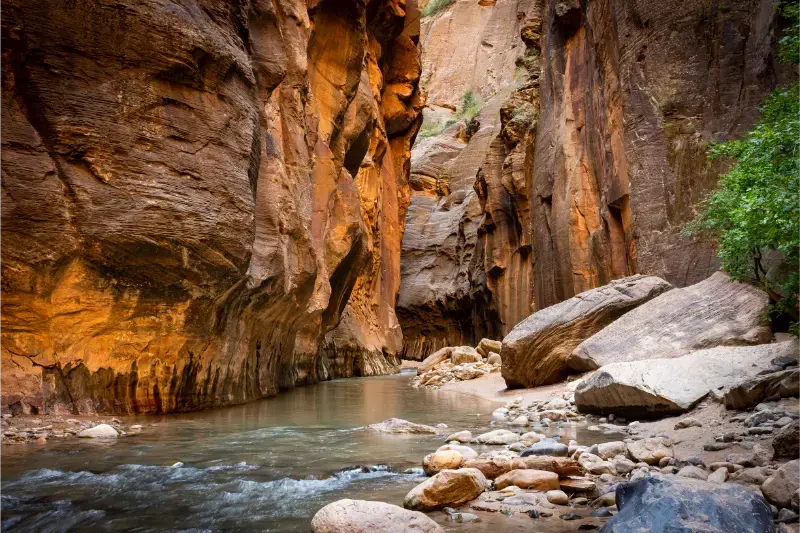
Zion Lodge gives access to the lodge complex and Emerald Pools. The Grotto is the starting point for the West Rim Trail, Scout Lookout and permitted Angels Landing hikes. Big Bend is primarily a scenic stop. Temple of Sinawava is the last stop and the trailhead for Riverside Walk and the bottom-up Narrows. The Human History Museum provides a lower-canyon stop with exhibits and views.

Not every stop needs to become an activity. Riding the bus from one end of the canyon to the other already gives changing views of the walls. A first-time day works better when you choose one major hike and one or two minor stops than when you repeatedly get on and off just because the map shows a numbered circle.
Where to park
The visitor-center lot is convenient but fills early during busy periods. Once it is full, use legal paid parking in Springdale and the town shuttle or walk to the pedestrian entrance. Do not circle the park entrance for an hour waiting for a space to open; the shuttle system exists partly to reduce that congestion.
If you stay near the entrance, you may not need to move the car at all. Our where-to-stay guide identifies areas where walkability can be worth paying a little more for a room. Visitors staying farther away should leave extra time for the drive and parking transition.
How early to arrive for Angels Landing or The Narrows
For Angels Landing, work backward from the start time on your permit. You need time to park, enter the park, wait for a shuttle and ride to The Grotto. Our Angels Landing guide covers the permit itself. Do not arrive at the visitor center at the time printed on the permit.
For The Narrows, earlier is usually more comfortable because you gain cooler temperatures and more daylight. The ride to Temple of Sinawava takes roughly 45 minutes under normal operations. Then you still have the Riverside Walk before entering the water. See our Narrows guide for condition checks.
Last shuttle strategy
The last bus out of the canyon is the time that matters most to hikers. Missing it can turn a long day into an unwanted multi-mile walk. Add the last departure to your phone notes and set an alarm that gives you enough time to reach the correct stop. The shuttle can also fill, so do not plan to step onto the platform at the exact final minute.
If you are hiking late, carry a headlamp even when you expect daylight. Trail delays and injuries happen. The shuttle schedule is not a substitute for conservative turnaround planning.
Bikes, e-bikes and strollers
Bicycles can be used on Zion Canyon Scenic Drive, and the shuttle has limited capacity for bikes. Cyclists must ride single file and pull over to allow shuttle buses to pass when it is safe. Bicycles and pedestrians are not permitted through the Zion–Mount Carmel Tunnel, so an east-side cycling plan requires separate transportation logistics.
Strollers can be brought on the shuttle, but large ones may need to be folded and may be carried on the front rack depending on the bus and current rules. Families should choose a compact setup and avoid blocking aisles. The paved Pa’rus Trail and portions of Riverside Walk are among the easier family options, though “paved” does not mean perfectly flat or fully accessible in every section.
Springdale without parking stress
Springdale’s town shuttle is especially useful when hotels and public parking lie west of the pedestrian entrance. Board in town, get off near Zion Canyon Village, walk through the pedestrian entrance, then connect to the park shuttle at the visitor center. You will still need to show or buy a park pass at entry.

For a fully car-light trip, read our Zion without a car guide. SunTran also operates a regional Zion route linking St. George, Washington, Hurricane, La Verkin, Virgin and Springdale, but schedules should be checked directly before relying on it for a flight or fixed connection.
What happens when the shuttle is not running
When the Zion Canyon shuttle is not operating, the Scenic Drive may open to private vehicles until parking areas fill or traffic controls require changes. Winter driving can be beautiful, but it is not an unlimited-parking season. Trailhead lots are small and closures can occur because of weather or safety work.
Always check the current operating-hours page before assuming you can drive to The Grotto or Temple of Sinawava. A trip based on an old seasonal pattern can fail even if the park itself is open 24 hours a day.
Quick shuttle mistakes to avoid
- Confusing Springdale stop numbers with park stop numbers.
- Arriving at the visitor center at the time printed on an Angels Landing permit.
- Forgetting the last down-canyon departure after a long hike.
- Driving around for visitor-center parking after lots are already full.
- Assuming the same schedule applies in spring, summer, fall and winter.
Frequently asked questions
Do I need a reservation for the Zion shuttle in 2026?
No. There is no shuttle ticket or reservation system in 2026. You need a valid park entrance pass or must pay the entrance fee.
Can I drive my car up Zion Canyon Scenic Drive?
During shuttle operation, recreational private vehicles generally cannot use the upper scenic drive. Outside shuttle periods, private access may be allowed subject to parking and current conditions.
How long is the shuttle ride to Temple of Sinawava?
NPS advises that the one-way ride through Zion Canyon is about 45 minutes, making a full round trip roughly an hour and a half without long stops.
Is the Springdale shuttle the same as the park shuttle?
No. The town line moves people through Springdale to the pedestrian entrance area; the park shuttle begins inside Zion at the visitor center and serves canyon stops.
My practical planning strategy
If you remember only one rule, plan from the trailhead backward. Decide when you want to start hiking, add the canyon bus ride, then add time for parking or the Springdale connection. That approach is more reliable than choosing a hotel departure time first.
The shuttle is part of why Zion Canyon can handle huge visitor numbers without every trailhead becoming a parking lot. Use it deliberately: carry what you need for the day, know your return stop, and give yourself margin before the final bus.
If you are choosing a base for this plan, compare current Springdale availability on Booking.com. Staying close to the pedestrian entrance can reduce early-morning parking pressure and makes a late return from the canyon much simpler.