

Zion is one of the easiest major U.S. national parks to experience without driving once you are based in Springdale. The main canyon is built around shuttle access for much of the year, Springdale has its own town shuttle, and trails begin directly from shuttle stops. The important limitation is that East Zion, Canyon Overlook, Kolob Canyons and some wilderness trailheads sit outside that transit network.

You do not need a reservation or ticket to ride Zion’s park shuttle in 2026. The Springdale line connects town with the pedestrian entrance area, while the Zion Canyon line runs from the visitor center to Temple of Sinawava. The NPS transportation page also notes SunTran regional service linking St. George, Hurricane, La Verkin, Virgin and Springdale.
| Best car-free base | Springdale |
| Main canyon transport | Free park shuttle during operating season |
| Town connection | Springdale shuttle during seasonal service |
| Regional option | SunTran Zion route |
| Main limitation | East Zion, Canyon Overlook and Kolob need separate road transport |
Stay where you can walk to the system
A car-free Zion trip becomes simple if the hotel is near the pedestrian entrance or a reliable Springdale shuttle stop. From there you walk through the entrance, reach the visitor center and board the canyon shuttle. Staying miles west of town without checking bus service can turn a “no-car” plan into repeated rideshares.
Use our Zion lodging guide to compare areas. On Booking.com, map the property rather than trusting marketing phrases such as “near Zion.”
Arriving from St. George
SunTran operates a regional Zion route from the St. George area through Washington, Hurricane, La Verkin and Virgin to Springdale. This can reduce the need for a rental car, particularly for travelers already staying in St. George. Schedules are less frequent than the in-park shuttle, so build the trip around the published timetable.
For flights, never plan a tight connection based on a same-day park bus without a backup. Public transit is excellent for sightseeing but not equivalent to an airport express with departures every few minutes. If your flight is early or late, an overnight in St. George or a prearranged transfer may be safer.
Using the Springdale line
The Springdale shuttle is a town circulator that brings visitors toward Zion Canyon Village and the pedestrian entrance. It reduces paid-parking pressure and lets you stay farther from the gate while still avoiding a car. Frequency and seasonal dates should be checked for your trip.
Do not confuse it with the NPS canyon bus. You will get off in the entrance area, walk into the park and then board the Zion Canyon line at the visitor center. Carry your park pass or be prepared to pay the entrance fee at the pedestrian entrance.
Using the Zion Canyon shuttle
The park line gives car-free access to Zion Lodge, The Grotto, Big Bend and Temple of Sinawava. That means you can reach Emerald Pools, Scout Lookout, permitted Angels Landing and The Narrows without a vehicle. Our Zion shuttle guide lists the 2026 seasonal schedule and practical stop strategy.
Because you cannot leave gear in a parked car between hikes, pack carefully for the whole day. Bring layers, water, lunch, a compact dry bag if hiking The Narrows and any required permit confirmation. Locker options are limited and should not be assumed.
Hikes that work especially well without a car
Pa’rus Trail begins near the visitor center and is an easy evening option. Watchman Trail also starts in the lower canyon. Emerald Pools is reached from Zion Lodge, while Scout Lookout and Angels Landing begin at The Grotto. Riverside Walk and The Narrows start at Temple of Sinawava.
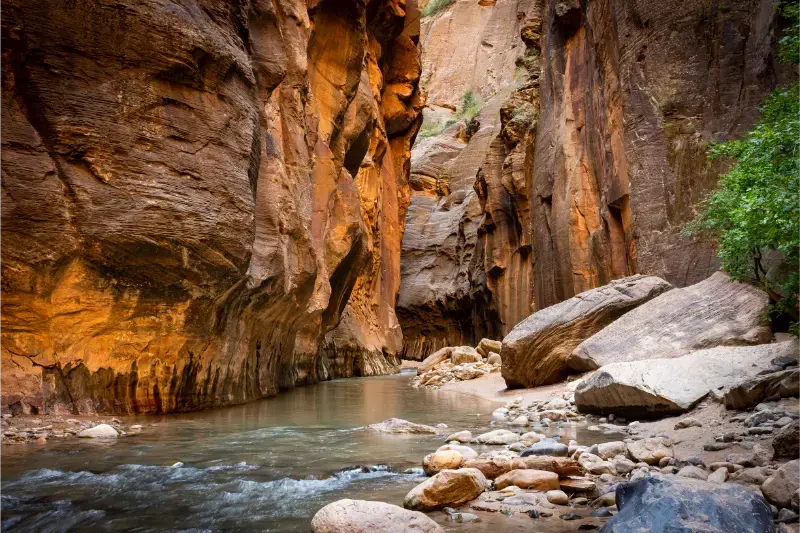
That is enough for a two- or three-day trip without touching a steering wheel. Build one major hike per day and use shorter walks around it. The car-free experience is strongest when you embrace the main canyon instead of trying to imitate a road-trip itinerary.
The areas a car-free plan does not solve
Canyon Overlook lies east of the Zion–Mount Carmel Tunnel and is not served by the main canyon shuttle. Observation Point via East Mesa also requires east-side road access. Kolob Canyons has a separate I-15 entrance. Read our Canyon Overlook guide and Kolob guide before assuming a rideshare will be easy to arrange in remote areas.
Commercial tours and private shuttles can fill these gaps, but availability and pickup arrangements vary. Book through reputable operators and confirm whether park entrance fees, return transportation and trailhead access are included.
Bicycles and e-bikes
Cycling Zion Canyon Scenic Drive is a legitimate alternative to the bus. Bikes must follow park traffic rules, travel single file and pull over when safe to allow shuttles to pass. The canyon grade is manageable for many riders, but heat, distance and shuttle traffic still require attention.
Bicycles and pedestrians are not permitted through the Zion–Mount Carmel Tunnel. That rule prevents a simple bike ride from Springdale to Canyon Overlook. If you rent an e-bike, confirm the class and current park rules with the rental company and NPS guidance.
Food and groceries without a vehicle
Springdale has restaurants and small markets, so a short car-free stay is easy. Prices are generally higher than in Hurricane or St. George. If you have dietary restrictions or need substantial trail food, buy key supplies before arriving or choose lodging with breakfast and a refrigerator.
Inside the park, food options are concentrated around Zion Lodge and visitor facilities rather than every trailhead. Carry lunch on major hiking days so shuttle timing does not force you to abandon a route just to find food.
A realistic two-day car-free itinerary
Day 1: enter early, ride to The Grotto for Scout Lookout or permitted Angels Landing, then stop at Zion Lodge and finish with Pa’rus Trail. Day 2: take one of the first buses to Temple of Sinawava for Riverside Walk and The Narrows if conditions permit. Our Narrows guide explains the river checks.

Add a third day for Emerald Pools, Watchman Trail, a ranger program and a bike ride. If East Zion is essential, use that third day for a guided or prearranged road excursion rather than renting a car for the entire stay.
Car-free Zion essentials
- Choose a hotel by walking distance to an entrance or shuttle stop.
- Download both Springdale and Zion Canyon shuttle schedules.
- Carry the entire day’s food, water and layers.
- Plan separate transport for East Zion or Kolob Canyons.
- Leave a large time buffer for any regional bus connected to a flight.
Frequently asked questions
Can I visit Zion without renting a car?
Yes. A multi-day trip focused on Zion Canyon is very practical without a car if you stay in Springdale and use the town and park shuttles.
Can I reach The Narrows without a car?
Yes. Ride the Zion Canyon shuttle to Temple of Sinawava and walk Riverside Walk to the river entry.
Can I reach Canyon Overlook without a car?
Not on the regular Zion Canyon shuttle. You need separate road transportation, such as a private shuttle, tour or rental vehicle.
Can I get from St. George to Springdale by public transit?
SunTran operates a Zion route connecting St. George and several communities to Springdale. Check the current timetable before building a flight connection around it.
My practical planning strategy
A car-free Zion trip works best when you stop thinking of the missing car as a limitation. The main canyon already prioritizes buses, and many of the park’s defining hikes start at shuttle stops.
Stay in the right part of Springdale, plan one major objective per day and arrange a specific excursion only if East Zion or Kolob is essential. That is usually simpler and cheaper than renting a car that spends most of the trip parked.
A few details that are easy to overlook
Zion rewards conservative time estimates. Distances on a map are short, but a day can include walking from a hotel, waiting for a town shuttle, entering the park, queuing for the canyon bus, riding to a trailhead and then repeating the process in reverse. I budget those transitions explicitly rather than calling them “extra time.” This is especially important on hot days, when ten minutes standing in direct sun can feel more tiring than ten minutes on a shaded trail.
Mobile coverage is inconsistent inside the canyon and on the park’s plateaus. Save maps, permit confirmations, hotel details and transportation schedules offline. Tell someone your planned route if you are hiking away from the busiest corridor. A small battery pack is useful because navigation, photography and digital permits can drain a phone quickly, but electronics should never replace a paper or downloaded map and a realistic turnaround time.
Finally, separate “open” from “appropriate.” A trail can be legally open while heat, wind, mud, river flow or your group’s condition makes another choice better. Zion has enough alternatives that changing plans is rarely a loss. The strongest itineraries use current conditions to decide which experience belongs on which day instead of forcing an activity because it appeared in the original schedule.
I also keep the next meal and the return journey in the plan. Long hikes feel very different when a group has eaten only a snack, and the final shuttle, hotel check-in, rental return or evening drive can create pressure at exactly the wrong time. Carry enough food to make an unexpected delay comfortable, and avoid scheduling a long highway transfer immediately after a strenuous trail unless someone else is rested and ready to drive.
For photography, wildlife and viewpoints, use established pullouts and trail surfaces. Zion’s roadside shoulders and cryptobiotic soils are not overflow parking, and stepping off route for a slightly different camera angle can damage fragile ground. A slower, legal approach usually produces a better visit than trying to reproduce a social-media image from an unsafe or closed location.