

Cleveland is often overlooked by international travelers, yet it combines one of America’s best-known music museums with Lake Erie, major art collections, a historic public market and compact neighborhoods. It is particularly good for a three-day city break because the essential sights are varied without being overwhelming.
I would pair Cleveland with Detroit, Pittsburgh or a wider Great Lakes road trip rather than judge it against New York or Chicago. Its strengths are scale, culture and easy access to the lake, not a huge checklist of world-famous landmarks.
Planning this trip at a glance
- Ideal first stay: 3 days
- Best for: music, museums, markets, sports and Great Lakes travel
- Car needed?: not essential for central days; useful for outer neighborhoods and Cuyahoga Valley
- Best bases: Downtown or Ohio City
- Airport: Cleveland Hopkins International Airport (CLE)
Cleveland is compact enough for a short visit, but the lakefront, University Circle and Ohio City sit in different directions. Group them into separate half-days instead of bouncing across the city.

How many days do you need?
Two days can cover the Rock Hall, downtown and one major museum. Three days lets you add West Side Market, University Circle and a lakefront or neighborhood experience. A fourth day is useful if you want Cuyahoga Valley National Park.
Do not turn the Rock Hall into the entire trip. Cleveland is far more satisfying when music history is balanced with art, food and Lake Erie.
Best time to visit
Late spring through early autumn is easiest for lakefront walks and outdoor events. Summer can be humid but brings baseball and festivals. Autumn is comfortable and can connect with foliage farther inland. Winter is cold, windy and sometimes snowy, but indoor museums keep a short trip viable.
Lake Erie weather can change quickly. Carry an extra layer even when downtown feels warm, especially in shoulder seasons.
Where to stay
Downtown is the simplest base for the Rock Hall, sports and central architecture. Ohio City works well for West Side Market, breweries and a more neighborhood-oriented stay.
If you plan Cuyahoga Valley National Park, a car becomes more useful, but there is no reason to pay for one on every downtown day if your itinerary is compact.
Getting around
Downtown is walkable in sections, and local rail/bus service can connect the airport, downtown and other districts. Check current Greater Cleveland RTA service before arrival. Rideshare is useful between University Circle and neighborhoods when time matters.
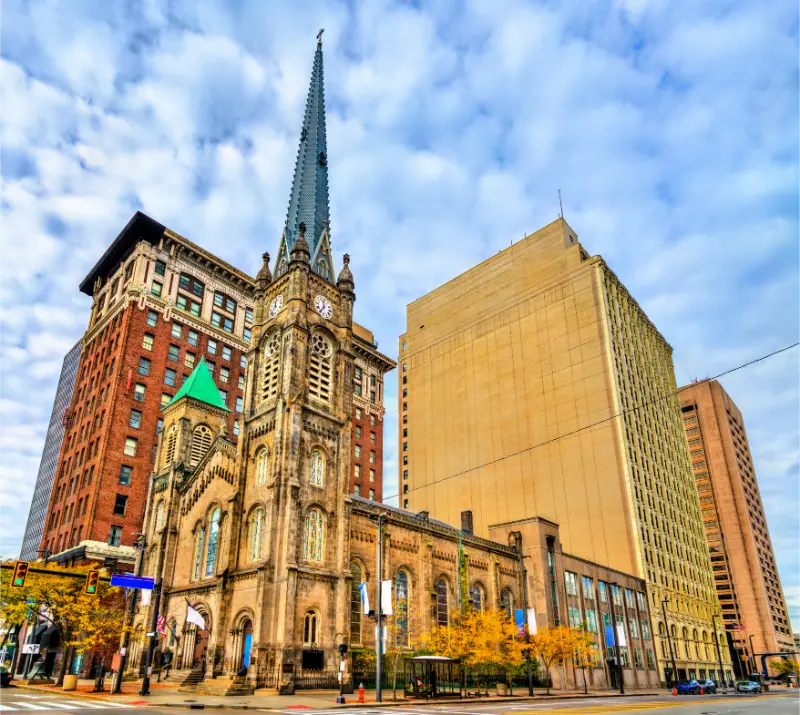
A rental car makes sense for national-park or regional day trips. If Cleveland is one stop in a longer Great Lakes route, collect the vehicle when leaving rather than immediately after landing.
Best things to do in Cleveland
Give the Rock & Roll Hall of Fame enough time
The Rock Hall can easily take half a day for music fans. Buy tickets through the official Rock & Roll Hall of Fame site and check current exhibition or event information. Do not rush through only the biggest names; smaller displays often reveal how genres and scenes connect.
Walk the Lake Erie waterfront
Cleveland’s lake setting is easy to miss if you stay only among downtown buildings. Combine the Rock Hall with waterfront time and consider sunset if weather is good.
Visit the Cleveland Museum of Art
The museum’s broad collection makes University Circle worth a dedicated block of time. Pair it with another nearby institution or a walk around the district rather than returning downtown immediately.
Eat at West Side Market
West Side Market is both an architectural landmark and a practical food stop. Go when vendors are active, walk the surrounding Ohio City streets and avoid treating it as just a five-minute photo stop.
Explore Ohio City
Ohio City works well for food, breweries and neighborhood architecture. It gives a more local counterpoint to downtown and is easy to combine with the market.
See Playhouse Square
The theater district is one of the city’s important cultural areas. Even if you do not attend a performance, walking through the district adds another layer to downtown architecture and nightlife.
Consider Cuyahoga Valley National Park
The national park lies between Cleveland and Akron and offers waterfalls, trails and a green break from the city. It is best treated as a half- or full-day excursion with current NPS information checked before departure.
Add one sports experience
Cleveland sports culture is intense, and downtown venues make a game relatively easy to add. If schedules align, it can provide a more local evening than another restaurant-only night.
Where to eat and what to try
West Side Market is an obvious starting point, but Cleveland food also includes Eastern European traditions, modern American restaurants, breweries and strong neighborhood dining. Ohio City and Tremont are useful areas to explore without crossing the metro repeatedly.

Build at least one meal around something you find locally rather than a national chain. A three-day trip has enough space for one famous stop, one market meal and one neighborhood dinner.
A realistic 3-day Cleveland itinerary
- Day 1 – Downtown and lakefront: Visit the Rock Hall, walk the lakefront and explore downtown/Playhouse Square.
- Day 2 – Ohio City and University Circle: Start at West Side Market, explore Ohio City, then spend the afternoon at the Cleveland Museum of Art and nearby cultural institutions.
- Day 3 – Flexible region day: Choose Cuyahoga Valley National Park, more museums, a sports event or a slower neighborhood and lake day.
If weather is poor, move the art museum and other indoor attractions forward and save the lake or national park for the clearest day.
Budget, reservations and practical planning
Rock Hall and sports tickets can be the two major advance purchases. Check event calendars because downtown hotel demand changes sharply around big games and concerts.
Cuyahoga Valley trail access, road work and seasonal services should be checked on the NPS site before leaving the city. Never rely on an old blog for current closures.
For a broader national-park strategy, read our U.S. national parks planning guide.
Mistakes I would avoid
- Spending the whole trip at the Rock Hall: Cleveland has much more to offer.
- Ignoring Lake Erie weather: conditions can change fast.
- Skipping Ohio City: the market and neighborhood add local character.
- Assuming you need a car downtown: it may be unnecessary.
- Driving to Cuyahoga Valley without checking conditions: seasonal closures happen.
How to fit this into a bigger USA trip
Cleveland combines naturally with Detroit to the west or Pittsburgh to the southeast. The three cities create a strong regional route focused on music, industry, art and food.
If Detroit is next, use our Detroit guide to plan the Great Lakes continuation.
Extra advice for international visitors
International visitors may find Cleveland easier to navigate than larger U.S. cities, but airport and downtown transport should still be checked against arrival time. Do not assume late-night public transport matches daytime frequency.
If you rent a car for a regional loop, review tolls and rental policies in advance. Our USA transport guide helps compare modes.
Family, accessibility and pace
The Rock Hall, science-oriented attractions, parks and markets make Cleveland easy to adapt for families. Avoid making every day museum-heavy; the lakefront and Cuyahoga Valley provide good movement breaks.
Major museums are accessible, but outdoor national-park trails vary widely. Choose viewpoints and walks based on current NPS accessibility descriptions and weather.
One more planning principle
On a first visit, leave at least one two-hour block unreserved. Travel days rarely unfold exactly as a spreadsheet predicts: weather changes, a museum takes longer than expected, lunch becomes memorable or a neighborhood deserves another walk. That buffer is not wasted time; it is what keeps a trip from feeling like a sequence of appointments.
Use advance booking for the experiences that genuinely require it, then protect flexibility around them. This approach also makes it easier to respond to closures, traffic and fatigue without feeling that the entire day has failed.
Keeping the day realistic
A useful rule is to plan one major attraction before lunch and one neighborhood or flexible activity afterward. That leaves room for transport delays, changing weather and the simple fact that meals and museums often take longer than expected. A slightly shorter list usually produces a better first impression than rushing through more places.
Practical timing for a first visit
Start each morning by checking the opening hours and any same-day notices for the attraction that matters most. In American cities and outdoor regions, weather, maintenance, events and staffing can change schedules with little notice. Keeping the first half of the day anchored and the second half flexible makes it much easier to adapt without losing an experience you booked in advance.
It is also worth protecting time for ordinary moments: coffee in a neighborhood, a longer walk, a market stop or an unplanned viewpoint. Those pauses make the itinerary feel like a trip rather than a race, especially when you are visiting from overseas and already managing jet lag, unfamiliar driving or different meal times.
Final thoughts
Cleveland works because a short trip can move from rock history to fine art, markets and Lake Erie without feeling repetitive. Three days is enough to discover why the city deserves more than a quick stop on the way somewhere else.