

Everglades National Park is easiest to understand when you stop treating it as one attraction. The park covers an enormous section of South Florida and has three principal access areas that do not connect to one another inside the park: the Homestead entrance for Royal Palm and Flamingo, Shark Valley on the Tamiami Trail, and the Gulf Coast area at Everglades City. A good three-day plan gives each side enough time instead of wasting hours crossing South Florida at midday.
This itinerary is designed for a first visit with a rental car. It combines the best short wildlife walks, one deeper wetland experience, coastal scenery and enough flexibility for weather. If you only have one or two days, use our first-time Everglades guide to decide which area matters most.
| Day 1 | Royal Palm, Anhinga Trail, scenic stops and Flamingo |
| Day 2 | Shark Valley by tram or bicycle plus Tamiami Trail |
| Day 3 | Everglades City and Ten Thousand Islands, or a paddling alternative |
| Best season | December through April for cooler, drier weather and concentrated wildlife |
| Car needed? | Strongly recommended because the park entrances are widely separated |
Before day one: choose the right base
If your first day starts at the Homestead entrance, sleeping in Homestead or Florida City saves meaningful time. Miami works if the Everglades is part of a city trip, but morning traffic can erase the advantage of a glamorous hotel location. Compare practical options on Booking.com for Homestead. For day three, an overnight in Everglades City can be worthwhile if you want an early Ten Thousand Islands tour.
Day 1 morning: Royal Palm and the Anhinga Trail
Enter from Homestead and begin at Royal Palm. The Anhinga Trail is a 0.8-mile accessible paved-and-boardwalk loop through Taylor Slough and is one of the most reliable first stops for alligators, anhingas, turtles and wading birds, particularly in the dry season. The nearby Gumbo Limbo Trail is only 0.4 mile round trip but feels completely different, passing through a shaded hardwood hammock. Doing both back-to-back shows why the Everglades is more diverse than a single sawgrass marsh.
Arrive early enough that you can walk slowly. Wildlife sightings here are often close to the trail, but close does not mean safe to approach. Give animals space and use the boardwalk as intended. Royal Palm has restrooms, water and ranger information, making it a much better first stop than trying to learn the park layout at a roadside pullout.
Day 1 midday: Pa-hay-okee and Mahogany Hammock
Continue south on the main park road. Pa-hay-okee Overlook reopened in winter 2026 after a full renovation; its short, accessible boardwalk gives one of the clearest elevated views over the River of Grass. Farther south, the 0.5-mile Mahogany Hammock boardwalk enters a dense tropical tree island and passes the largest living mahogany tree in the United States. These stops are short, but they change the rhythm of the day and explain the mosaic of habitats.
Day 1 afternoon: Flamingo and Florida Bay
Flamingo is roughly 38 miles beyond the Homestead entrance and feels like a destination rather than another pullout. The Guy Bradley Visitor Center, marina, boat tours, paddling rentals, restaurant, campground and Flamingo Lodge make it the service hub of the southern park. If conditions and timing work, choose either a narrated Florida Bay trip or a backcountry boat tour; both reveal water environments you cannot understand from the road.
Walk around the marina with patience. Manatees and crocodiles are possible sightings, but never assume they will appear on cue. Eco Pond or the Guy Bradley Trail can be added if weather is comfortable. I would rather spend a calm final hour at Flamingo than rush through three extra trailheads while tired.
Day 2: Shark Valley
Shark Valley deserves most of a day because its famous paved loop is 15 miles. Private vehicles cannot drive the tram road. Your practical choices are a narrated tram tour, a bicycle ride or a shorter walk. The observation tower at the far end gives the broad panorama many first-time visitors imagine when they hear “River of Grass.” Our detailed Shark Valley guide explains the trade-offs.
The parking lot can fill between roughly 10 a.m. and 3 p.m., and NPS warns that access can become one-car-in, one-car-out. If you have a scheduled tram, arrive very early rather than assuming a reservation guarantees easy parking. Ride-hailing is also a poor plan because return service from this remote entrance can be difficult to obtain.
Day 2 afternoon: Tamiami Trail choices
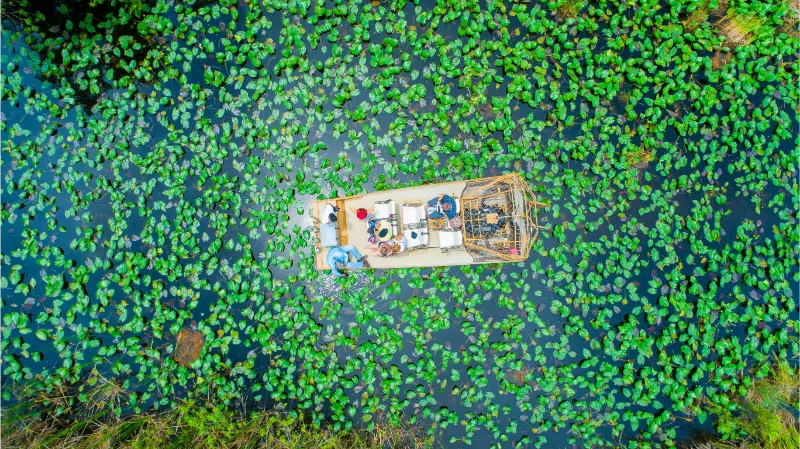
After Shark Valley, you can add an authorized airboat tour along US 41 if that experience matters to you. Three authorized concession businesses operate airboat tours in designated portions of Everglades National Park. Do not confuse these with every roadside airboat attraction in South Florida. Our airboat guide explains where they fit and what they do not replace.
Day 3: Everglades City and the Gulf Coast
Drive to Everglades City for a different version of the park: mangrove islands, open water and the Ten Thousand Islands. The new Marjory Stoneman Douglas Visitor Center opened in 2026, restoring a stronger visitor-services base after years of hurricane damage and temporary facilities. Boat tours depart into the island maze, while paddlers can access wilderness waterways from the Gulf Coast area.
If you are not interested in a motorized boat tour, use day three for a guided paddle from Flamingo or the Gulf Coast. A guided trip is especially valuable if you are new to tidal mangrove navigation. Water routes can be confusing, low water can make sections impassable and afternoon weather matters more on open water than it does on a boardwalk.
An alternative third day for hikers and birders
Instead of crossing to Everglades City, stay on the Homestead-Flamingo corridor and revisit habitats at a slower pace. Start at Anhinga Trail before crowds, stop at Pinelands, Pa-hay-okee and Mahogany Hammock, then continue to Eco Pond and coastal trails near Flamingo. Birders benefit from slower repetition because feeding activity changes with water level, tide, temperature and time of day.
Dry season versus wet season
The dry season, roughly December through mid-May, is the classic first-visit period. Humidity is lower, mosquitoes are usually less intense, water levels concentrate wildlife and ranger programs are more frequent. It is also the busiest season, so Shark Valley parking, tram tours, Flamingo lodging and popular guided activities benefit from advance planning.
The wet season brings greener landscapes, dramatic clouds and fewer winter crowds, but it also means heat, frequent afternoon storms, higher mosquito activity and changing water conditions. A wet-season itinerary should emphasize early starts, short walks, air-conditioned breaks and flexible outdoor plans. The park remains open, yet visitor-center hours, concession schedules and trail conditions can vary by season, so check the official NPS conditions page shortly before travel rather than relying on an old screenshot.
Entrance fees and reservations in 2026
Everglades National Park does not use a timed-entry reservation system for ordinary sightseeing. The standard private-vehicle entrance pass is $35 and is valid for seven consecutive days, and the park’s fee stations operate cashless. Separate charges apply to tram tours, boat tours, rentals, camping and other concession services. Visitor-specific federal pass rules can change, so international travelers and anyone planning several national parks should check the current NPS fees page before buying a pass.
Safety that changes how you plan the day
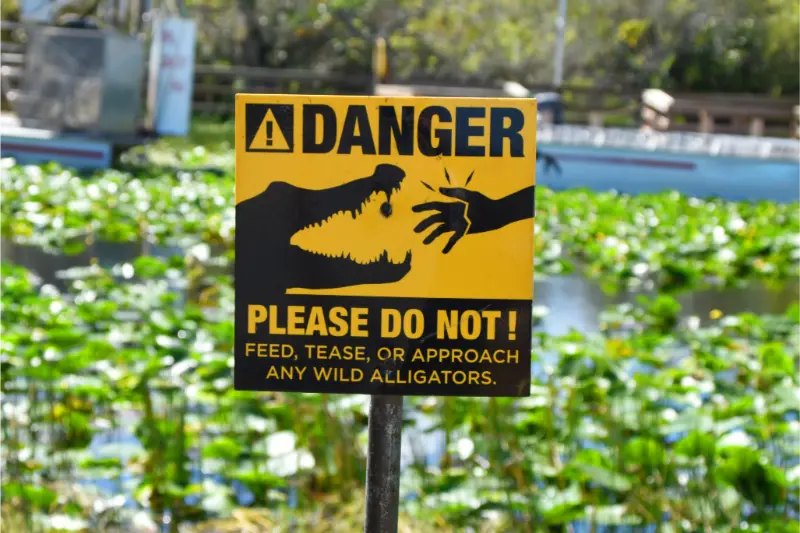
The Everglades is flat, but that does not make it risk-free. Heat, humidity, lightning, mosquitoes and long distances between services can turn an easy-looking outing into a tiring one. Carry water even for boardwalks, use sunscreen and insect repellent, and keep a lightweight rain layer in the car during the wet season. NPS safety guidance advises visitors to keep at least 15 feet from alligators and crocodiles and to move farther away if an animal hisses, changes direction or reacts to your presence. Never feed wildlife, never stand between an animal and the water, and keep small children close around shorelines.
Cell coverage is inconsistent away from gateway communities. Download the NPS map, save reservation confirmations and take screenshots of any directions you need before entering remote sections. If you are paddling or taking a longer trail, tell someone your route and expected return time. Summer and early fall require special respect for thunderstorms and oppressive heat; winter is usually easier for active sightseeing but also busier.
Food, fuel and what to keep in the car
Services inside the Everglades are limited compared with a city or theme park. Start with a full fuel tank, carry more drinking water than you expect to need, and bring lunch or substantial snacks even if you plan to buy food later. Flamingo has the strongest cluster of visitor services in the southern park, while Shark Valley is much more limited. A small cooler is useful because the driving distances make spontaneous meal detours inefficient.
I also keep binoculars, a hat, insect repellent, a power bank, a dry bag for electronics, a paper or offline map and an extra change of light clothing in the car. Binoculars are especially valuable here because ethical wildlife viewing often means enjoying an animal from well beyond phone-camera distance.
How to connect this trip with Miami and the Keys
The Everglades fits naturally between Miami and the Florida Keys, but do not turn it into a rushed roadside stop. Our Florida travel guide and Miami and Florida Keys road-trip itinerary can help place these three days inside a longer South Florida route. If Key Largo or Islamorada is next, Homestead is a practical transition night.
Final planning checklist
Before each morning, check current NPS conditions, weather and visitor-center hours. Confirm tram or boat reservations, charge your phone, download maps, fill the fuel tank and pack water. Decide which single experience is non-negotiable and let the rest remain flexible. In the Everglades, wildlife and weather set the pace; the strongest itinerary respects that instead of trying to force ten attractions into daylight.
When to book the fixed activities
Reserve the activities with limited capacity first: Shark Valley tram, Flamingo boat tour, guided paddle and any in-park lodging. Keep boardwalks and scenic stops flexible around those anchors. That order prevents the itinerary from becoming a chain of reservations with no room for wildlife delays. For winter weekends and holiday periods, booking weeks ahead is sensible; for summer, weather flexibility matters more than locking every hour.
What to do if weather ruins one day
Move the water-based activity to the calmest forecast window and use boardwalks plus visitor centers on the less stable day. Because Shark Valley and Royal Palm are in different access zones, do not swap them casually without checking driving time. A flexible three-day trip should protect at least one morning for wildlife and one half-day for the water.