

Wildlife is the reason many people visit Everglades National Park, yet the best encounters come from understanding habitat rather than chasing a checklist. Alligators favor freshwater environments, American crocodiles are associated more with coastal and brackish water, manatees may appear around marinas and protected waterways, and wading birds shift with water levels and feeding conditions. A two-day visitor who samples Shark Valley, Royal Palm and Flamingo has a much broader chance of seeing different species than someone who waits beside one canal.
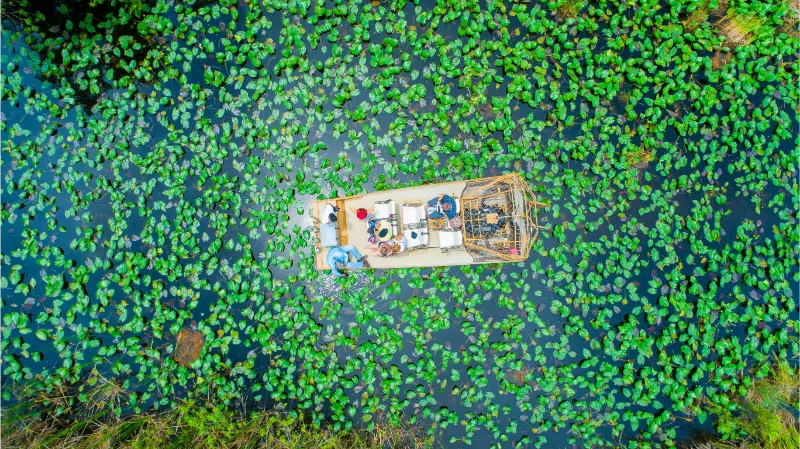
The park supports hundreds of bird species and a remarkable range of reptiles, fish and mammals. Some animals are common and visible; others, including the Florida panther, should never be planned as realistic “must-see” targets. The goal is to read the landscape and enjoy what appears.
| Alligators | Shark Valley, Anhinga Trail and freshwater sloughs |
| American crocodiles | Flamingo and coastal/brackish habitats |
| Wading birds | Royal Palm, Shark Valley, ponds and shallow-water areas |
| Manatees | Possible around Flamingo marina and waterways |
| Best general season | Dry season for concentrated freshwater wildlife |
Alligators: common does not mean tame
American alligators are a defining Everglades species and ecological engineers. Their alligator holes retain water through dry periods and can become refuges for fish, turtles and birds. That same concentration creates excellent wildlife viewing. Shark Valley and the Anhinga Trail are two of the easiest places for visitors to see alligators without leaving developed routes.
NPS advises keeping at least 15 feet away and increasing distance if the animal reacts. Do not stand between an alligator and the water, do not crouch beside one for a selfie and never feed wildlife. Feeding causes animals to associate people with food and can make future encounters more dangerous.
American crocodiles: a South Florida specialty
South Florida is the only place in the United States where alligators and American crocodiles naturally occur together. Crocodiles tend to be lighter, with narrower snouts, and prefer coastal, brackish or saltwater habitats. Flamingo is a logical place to look. They are generally less numerous and more secretive than alligators, so a sighting should be treated as a bonus rather than an expectation.
How to tell alligators and crocodiles apart safely
Use habitat, overall head shape and coloration from a distance. Do not approach an animal to inspect its teeth or snout. Binoculars solve the identification problem better than proximity. If you are uncertain, simply call it a crocodilian and keep watching; correct species identification is never worth reducing your safety margin.
Anhingas, herons, egrets and ibis
The park’s birds often provide more continuous action than large reptiles. Anhingas swim with only the neck above water, then perch with wings spread. Herons and egrets stalk shallow water, while ibis probe muddy edges. During the dry season, concentrated fish can create busy feeding zones. Walk slowly and listen; many sightings happen because you stop rather than because you cover more distance.
Roseate spoonbills and seasonal birding
Roseate spoonbills are a favorite target, but their presence varies by location and water conditions. Coastal and shallow-water habitats are useful places to look. Serious birders should check recent ranger information and local sightings, but avoid crowding roosts or nests. A telephoto lens protects both the bird and the photograph.
Manatees at Flamingo
West Indian manatees may appear near Flamingo marina and protected waters. Watch for a broad back, nostrils breaking the surface or repeated circular ripples. Never attempt to touch, feed or follow a manatee in a boat or paddlecraft. Give it space to choose its path.
Florida panthers: manage expectations
The Florida panther is an iconic endangered mammal, but a visitor should not expect to see one. Panthers range over large territories and typically avoid people. A trip planned around a guaranteed panther sighting is unrealistic. Learn about the species at visitor centers, watch for road-crossing signs and consider any safe wild sighting extraordinarily rare.
Shark Valley for wildlife
The 15-mile Shark Valley loop places you beside freshwater habitats for hours. A tram gives interpretation and a high observation point; a bicycle gives freedom to stop. Early morning combines cooler weather with lower parking pressure. Use our Shark Valley guide for logistics.
Anhinga Trail for close but controlled viewing
The 0.8-mile Anhinga Trail is unusually productive because the boardwalk follows Taylor Slough. During lower water, fish, birds, turtles and alligators can concentrate around the deeper channel. Stay on the boardwalk and let the infrastructure create the safe viewing opportunity. Our Anhinga Trail guide covers timing and accessibility.
Flamingo for coastal species
Flamingo adds Florida Bay, mangroves, crocodiles, manatees and coastal birds. A boat tour expands the search area without turning the day into a wildlife chase. The marina itself can be rewarding when you scan patiently. See our Flamingo guide.
Dry season wildlife patterns
As freshwater levels fall, aquatic animals become concentrated in remaining pools and sloughs, and predators follow. This makes winter and early spring especially productive for visible alligators and birds. The same season attracts more visitors, so arrive early and avoid blocking trails when an animal draws a crowd.
Wet season wildlife patterns
Higher water allows animals to spread across a larger landscape. You may see fewer concentrated feeding scenes, but the park becomes lush and dynamic. Amphibians, insects and dramatic weather become a larger part of the experience. Mosquitoes can be intense, and afternoon storms make exposed wildlife stops less comfortable.
Photographing wildlife ethically
Use focal length instead of your feet. If the animal changes posture, moves away, hisses or repeatedly looks toward you, increase distance. Do not surround wildlife with a group of photographers. Never bait an animal with food or sound. For birds, avoid standing directly under nests or blocking a feeding route.
Children and wildlife
Keep young children physically close near water, docks and trail edges. Teach one simple rule before arrival: animals decide the distance, not us. Binoculars help children feel involved without approaching. The family Everglades guide uses short, structured stops that make this easier.
Dry season versus wet season
The dry season, roughly December through mid-May, is the classic first-visit period. Humidity is lower, mosquitoes are usually less intense, water levels concentrate wildlife and ranger programs are more frequent. It is also the busiest season, so Shark Valley parking, tram tours, Flamingo lodging and popular guided activities benefit from advance planning.
The wet season brings greener landscapes, dramatic clouds and fewer winter crowds, but it also means heat, frequent afternoon storms, higher mosquito activity and changing water conditions. A wet-season itinerary should emphasize early starts, short walks, air-conditioned breaks and flexible outdoor plans. The park remains open, yet visitor-center hours, concession schedules and trail conditions can vary by season, so check the official NPS conditions page shortly before travel rather than relying on an old screenshot.
Entrance fees and reservations in 2026
Everglades National Park does not use a timed-entry reservation system for ordinary sightseeing. The standard private-vehicle entrance pass is $35 and is valid for seven consecutive days, and the park’s fee stations operate cashless. Separate charges apply to tram tours, boat tours, rentals, camping and other concession services. Visitor-specific federal pass rules can change, so international travelers and anyone planning several national parks should check the current NPS fees page before buying a pass.

Safety that changes how you plan the day
The Everglades is flat, but that does not make it risk-free. Heat, humidity, lightning, mosquitoes and long distances between services can turn an easy-looking outing into a tiring one. Carry water even for boardwalks, use sunscreen and insect repellent, and keep a lightweight rain layer in the car during the wet season. NPS safety guidance advises visitors to keep at least 15 feet from alligators and crocodiles and to move farther away if an animal hisses, changes direction or reacts to your presence. Never feed wildlife, never stand between an animal and the water, and keep small children close around shorelines.
Cell coverage is inconsistent away from gateway communities. Download the NPS map, save reservation confirmations and take screenshots of any directions you need before entering remote sections. If you are paddling or taking a longer trail, tell someone your route and expected return time. Summer and early fall require special respect for thunderstorms and oppressive heat; winter is usually easier for active sightseeing but also busier.
Food, fuel and what to keep in the car
Services inside the Everglades are limited compared with a city or theme park. Start with a full fuel tank, carry more drinking water than you expect to need, and bring lunch or substantial snacks even if you plan to buy food later. Flamingo has the strongest cluster of visitor services in the southern park, while Shark Valley is much more limited. A small cooler is useful because the driving distances make spontaneous meal detours inefficient.
I also keep binoculars, a hat, insect repellent, a power bank, a dry bag for electronics, a paper or offline map and an extra change of light clothing in the car. Binoculars are especially valuable here because ethical wildlife viewing often means enjoying an animal from well beyond phone-camera distance.
Where to stay for a wildlife-focused trip
Homestead gives fast access to Royal Palm and Flamingo, while Miami is better for Shark Valley day trips and Everglades City is best for Ten Thousand Islands water experiences. For a two- or three-day wildlife trip, splitting nights can reduce backtracking. Compare practical gateway accommodation on Booking.com.
A realistic wildlife checklist
Choose habitats rather than species: freshwater slough, sawgrass, hardwood hammock, mangrove coast and open bay. Bring binoculars, walk slowly, ask rangers what has been active recently and accept quiet periods. The Everglades is not a zoo with scheduled appearances. That uncertainty is part of what makes a genuine wild encounter memorable.
More planning
Build the wildlife route with our first-time Everglades guide or the three-day itinerary.
Using binoculars well
Eight-power binoculars are a practical all-around choice because they are easier to steady than very high magnification. Scan habitat edges, dead snags, open water and the line where sawgrass meets deeper slough. When you spot movement, keep watching for several minutes; behavior is more interesting than collecting a quick identification.
What to do around a wildlife crowd
Do not assume a cluster of people means it is safe to move closer. Stop behind the group, identify what they are watching and maintain an escape route for both yourself and the animal. On a narrow boardwalk, take your photo and move on so others can view without leaning over railings.