

Kauaʻi feels smaller on a map than it does on a travel day. The island has no road circling the entire coast, and the spectacular Nāpali Coast divides the north and west sides. That means where you stay matters, rain can redirect a day, and driving from Poʻipū to Hāʻena is not a casual commute. A strong first itinerary clusters activities by side of the island and keeps at least one flexible weather day.
For a first trip, I would decide what role this stop plays in the wider itinerary before booking anything: a major destination, a two-night break between longer drives or a base for day trips. That choice determines how much travel time is acceptable. If you are still designing the overall vacation, start with the USA itinerary guide and then fit this destination into the route.
How many days do you need?
Six days is ideal for a first visit. Four or five days can cover the main regions but leaves little room for rain, surf changes or a Nāpali boat cancellation. Seven or eight days is excellent for slower beach time, hiking, a helicopter or boat day and separate stays on the north and south shores.
Count full sightseeing days rather than hotel nights. A late arrival after a transatlantic flight is not a full day, and a departure day with a long drive should not carry the most important reservation. I prefer leaving at least one flexible half day in any outdoor itinerary because weather, parking and road conditions can change faster than expected.
Where to stay
- Poʻipū/Kōloa: sunnier south-shore base with beaches, resorts and easy access toward Waimea Canyon.
- Princeville/Hanalei: best for north-shore scenery and Hāʻena access, but wetter and farther from the west side.
- Kapaʻa/Wailua: central east-side location that can reduce some drives and offers a wide range of restaurants and accommodation.
Choose accommodation according to the first activity of the morning, not only the nightly rate. A cheaper hotel that adds ninety minutes of driving can be worse value after fuel, parking and lost time are included. Compare final prices, resort or destination fees, parking and cancellation terms. The USA accommodation guide explains the main lodging options.
Getting around
A rental car is extremely useful. The road network follows the coast and stops at Hāʻena in the north and Polihale-side areas in the west, so you cannot simply continue around the island. Morning traffic through Kapaʻa can add time. Do not leave luggage visible in the car at beaches or trailheads, and check road and park closures after heavy rain or tropical weather.
If you rent a car, photograph it at pickup, understand the fuel policy and confirm restrictions on unpaved roads. Save the contract and roadside-assistance number offline. For tolls, parking and long-distance driving basics, use the USA road trip guide.
What to see and do
Nāpali Coast
The cliffs of the Nāpali Coast are the island’s signature landscape. You can experience them by authorized boat, helicopter or trail, and each perspective is different. Boat conditions are seasonal and can be rough, while flight operations depend on weather. Build a backup day for any expensive weather-dependent booking.
Hāʻena State Park and Kēʻē Beach
Hāʻena is the road-end access point for Kēʻē Beach and the Kalalau Trail. Non-resident visitors need advance reservations. Parking is limited, and shuttle-plus-entry can be easier than securing a parking slot. Do not drive north assuming you can buy entry at the gate.
Hanakāpīʻai hike
Day hikers can reach Hanakāpīʻai Beach and waterfall with the correct Hāʻena access reservation. The trail can be muddy, steep and slippery, while streams may become dangerous after rain. Hiking beyond Hanakāpīʻai Valley on the Kalalau Trail requires additional permitting.
Waimea Canyon
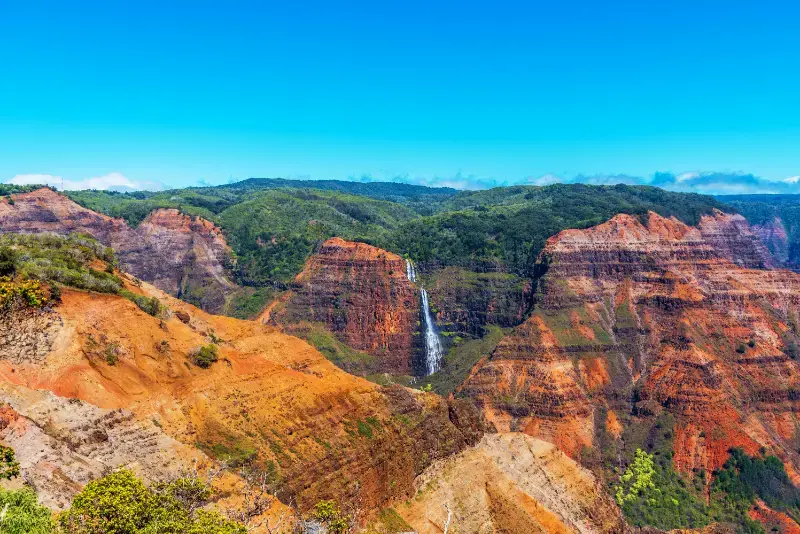
Often called the Grand Canyon of the Pacific, Waimea Canyon offers drive-up viewpoints and trails. Clouds can hide the views later in the day, so an early start is useful. Continue toward Kōkeʻe for higher forest and Nāpali overlooks when roads and weather allow.
Poʻipū and south-shore beaches
The south shore is convenient for swimming and resort days, but ocean conditions change daily. Monk seals and sea turtles may rest on beaches; keep the legally required distance and follow volunteer or lifeguard guidance.
Wailua River and east coast
Kayaking and guided outings on the Wailua River provide a calmer inland contrast to ocean activities. The east side is also a practical area for waterfalls, food stops and flexible weather days.
Respectful island travel
Kauaʻi communities manage heavy visitor pressure on roads, beaches and natural sites. Park legally, avoid trespassing for social-media viewpoints, use reef-safe practices where required and support local businesses without treating residential neighborhoods as attractions.
2026 reservations, permits and rules to know
Hāʻena State Park uses strict visitor limits. Non-Hawaiʻi residents need advance entry reservations, and parking requires its own reservation; shuttle products can include park entry. Reservations are released up to 30 days in advance and often sell quickly. Review the official Hawaiʻi DLNR Hāʻena/Nāpali access page and current park notices before travel. As of September 16, 2026, Hawaiʻi DLNR is reporting temporary closures affecting Kauaʻi state parks after Hurricane Lowell. This is a dated, temporary situation, so check the official park-notices page before travel rather than assuming either closure or reopening from an older article: Hawaiʻi State Parks current notices.
I check the official page again shortly before travel and save reservations offline. A paid booking does not always include entrance fees, parking or permits, and weather can close an attraction even when the reservation remains in your email. When rules differ between federal, state, city and tribal land, treat each authority separately.
A realistic itinerary
- Day 1 – East-side arrival: Pick up the car, settle into your base and use the afternoon for Kapaʻa, Wailua or an easy beach. Avoid a long cross-island reservation immediately after the flight.
- Day 2 – Waimea Canyon and Kōkeʻe: Leave early for west-side viewpoints and a moderate trail. Keep lunch and afternoon flexible because clouds often build over the mountains.
- Day 3 – South shore: Enjoy Poʻipū, Kōloa and a slower beach day, adding a short coastal walk rather than another long drive.
- Day 4 – Nāpali Coast: Use the day for a prebooked boat or flight experience, with a backup activity ready if weather cancels it.
- Day 5 – North shore and Hāʻena: Use your advance reservation or shuttle for Hāʻena and Kēʻē, or hike toward Hanakāpīʻai if conditions and fitness are appropriate.
- Day 6 – Weather buffer: Repeat the coast that had poor weather, take a Wailua River outing or simply enjoy an unstructured final beach day before departure.
Make one experience per day the priority. Everything else should be movable. If a hike, guided tour or scenic drive takes longer than expected, remove a secondary stop rather than rushing the rest of the day. This simple rule makes road trips feel much more like vacations.
Best time to visit
Kauaʻi is visitable year-round, but seasons affect rainfall and ocean conditions. Winter can bring large north-shore surf and wetter weather, while summer often provides calmer north-shore seas. The south shore is generally drier. No month guarantees perfect conditions, so flexible day sequencing is more useful than chasing a single ‘best’ week.
For a nationwide comparison of weather and crowd patterns, see the month-by-month USA guide. Always give local forecasts and official alerts more weight than national seasonal averages.
Budget and booking strategy
Accommodation, rental cars and guided Nāpali experiences are the largest costs. Booking Hāʻena access does not replace other activity costs. Food can be expensive, so mixing restaurants with supermarket breakfasts or picnic lunches helps. Spending more for the right location can save several hours of island driving over a week.
Book the hardest-to-replace element first, then accommodation, then flexible activities. Leave a contingency for parking, tips, local taxes, baggage, fuel and food-price variation. The USA travel costs guide gives a broader framework for estimating a complete vacation.
Visiting with children
Kauaʻi is excellent for families who enjoy beaches and short outdoor adventures, but ocean safety must lead every decision. Choose lifeguarded beaches when possible and never assume calm-looking water is safe. Hāʻena and Waimea Canyon can be enjoyable with children without committing to the hardest trails. For boat trips, check age and seasickness policies before booking.

With children, shorten driving days and protect meal and rest times. One successful trail or beach is better than three rushed stops. The USA with kids guide covers car seats, hotels, long flights and other practical details.
Common mistakes to avoid
- Booking lodging without considering which side of the island you will visit most.
- Driving to Hāʻena without an advance non-resident reservation.
- Scheduling a Nāpali boat trip on the final morning with no weather backup.
- Ignoring lifeguard warnings because the beach looks calm.
- Trying to drive around the island as if the coastal road forms a complete loop.
Another common mistake is saving screenshots of an old blog itinerary while ignoring live conditions. Seasonal roads, wildfire, tropical weather, flash floods, construction and staffing can change what is practical. Recheck the first activity of each day before leaving the hotel.
How to combine this stop with a longer USA trip
Kauaʻi contrasts nicely with Oʻahu or Maui. If you have more than ten days in Hawaiʻi, combining two islands is usually more comfortable than rushing through three. Use the Hawaii first-time visitor guide to decide whether Kauaʻi matches your priorities.
When connecting destinations, compare the real door-to-door time of a drive with the cost of a short flight. On a map the United States can make two places look deceptively close. I would rather remove one weak stop and spend another night somewhere memorable than spend the vacation repeatedly packing bags.
Practical packing and safety notes
Carry a charged phone, portable battery, refillable water bottle and offline copies of hotel addresses and confirmations. Outdoor destinations also justify a basic first-aid kit, sun protection and layers. Do not depend on mobile coverage for trail navigation. In busy visitor areas, secure passports and valuables and avoid leaving bags visible in parked vehicles.
Make same-day conditions part of every outdoor decision. Heat, surf, lightning, snow, smoke, flash floods, volcanic activity and wildlife can turn an ordinary activity into a poor choice. Turning around early is good travel planning. Replace the activity with a viewpoint, visitor center, town walk or meal and keep the larger itinerary intact.
Related USA travel guides
Final planning advice
About a week before departure, review the trip in chronological order: arrival airport, first hotel, intercity transfers, timed reservations, rental-car pickup and return and the final airport journey. Save confirmation numbers offline and note cancellation deadlines. Then stop adding attractions. A good itinerary makes the important experiences easy to enjoy instead of proving how much you can fit into a day.
I also check the last hour of every day. Know where the car will be parked after dark, whether public transport is still running, how long the return drive really takes and where a simple late meal is available. Those small details prevent a beautiful day from ending with unnecessary stress.