

Yosemite Valley is where most first-time visitors meet the park, but the valley works best when you stop thinking of it as a series of parking lots. The floor is only a small part of Yosemite National Park, yet it contains Yosemite Falls, El Capitan, Half Dome viewpoints, the Merced River, meadows, trailheads, museums and most major visitor services. In busy months the winning strategy is simple: arrive early, park once, then walk and use the free shuttle.
The valley is accessible by road all year, though winter storms can require tire chains on approach roads. In busy periods NPS advises day visitors to arrive before 9 a.m. because parking often fills after that. This guide assumes one full day in the valley and can be combined with the three-day Yosemite itinerary if you are staying longer.
| Best first visit | 1 full day in the valley |
| Parking strategy | Arrive early and keep the same space |
| Free shuttle | Valleywide and East Valley routes |
| Easy highlights | Lower Yosemite Fall, Cook’s Meadow, Valley View |
| Best season for waterfalls | Usually spring into early summer, depending on snowpack |
Understand the valley before choosing stops
Yosemite Valley is a glacially carved corridor roughly seven miles long, enclosed by cliffs that rise thousands of feet above the Merced River. The one-way road pattern and limited parking mean that a map can be deceptive: two sights that look close may be easier to connect on foot than by car. Yosemite Village, Yosemite Valley Lodge and Curry Village form the main service hubs.
Before moving, spend five minutes with the official map. Identify your parking area, the nearest shuttle stop and the side of the river you are on. That orientation prevents the classic mistake of taking a shuttle in the wrong direction or walking an extra mile simply because a bridge was missed.
First stop: Lower Yosemite Fall and Cook’s Meadow
Lower Yosemite Fall is one of the easiest major waterfall experiences in the park. The loop is short, paved in substantial sections and close to visitor services. During strong snowmelt the sound and spray are part of the experience; late in the dry season the waterfall can shrink dramatically. Treat that seasonal change as normal rather than assuming the park should look like a May photograph in September.
From the fall area, walk toward Cook’s Meadow for open views of Half Dome, Sentinel Rock and Yosemite Falls. The meadow boardwalk is more rewarding when you slow down and look in several directions instead of chasing a single photo point. Stay on designated surfaces to protect wet meadow habitat.
Yosemite Village: useful, not just functional
Yosemite Village is where I would handle practical needs: visitor information, restrooms, food, water and orientation. It also gives access to cultural resources that many fast itineraries skip. The Yosemite Museum and nearby interpretation can add context about the people and landscape rather than reducing the park to geology and famous viewpoints.
Midday is a good time for these indoor or shaded stops because the valley is busier and hotter. If you have a fixed lunch reservation, build around it; otherwise, I prefer an early or late meal and use the central midday period for a museum, shaded river walk or rest.
El Capitan Meadow and the western valley
El Capitan is visible from many places, but the meadow gives you time to understand its scale. Bring binoculars if you want to look for climbers without disturbing them or approaching the cliff base. Traffic can slow around popular roadside areas, so use only legal pullouts and never stop in a travel lane for a photograph.
The western valley also includes Cathedral Beach, Sentinel Beach and views that feel more open than the busier eastern end. River access varies with water level and season. The Merced can be fast and dangerously cold during snowmelt, so a calm-looking edge should not be interpreted as safe swimming conditions.
Valley View and Tunnel View are different experiences
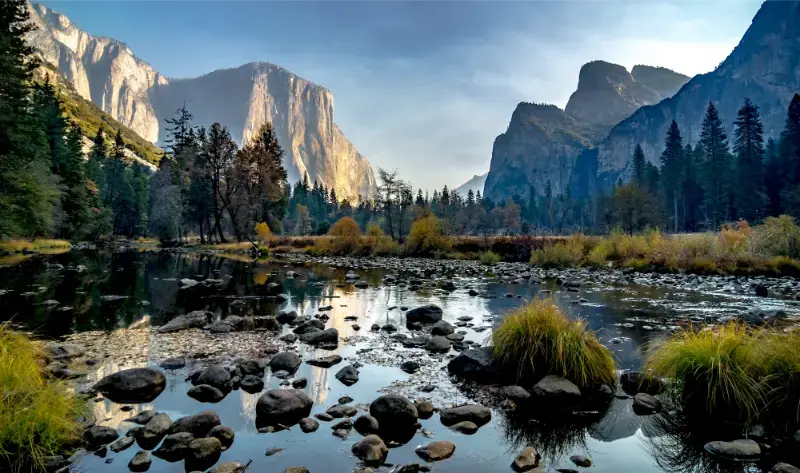
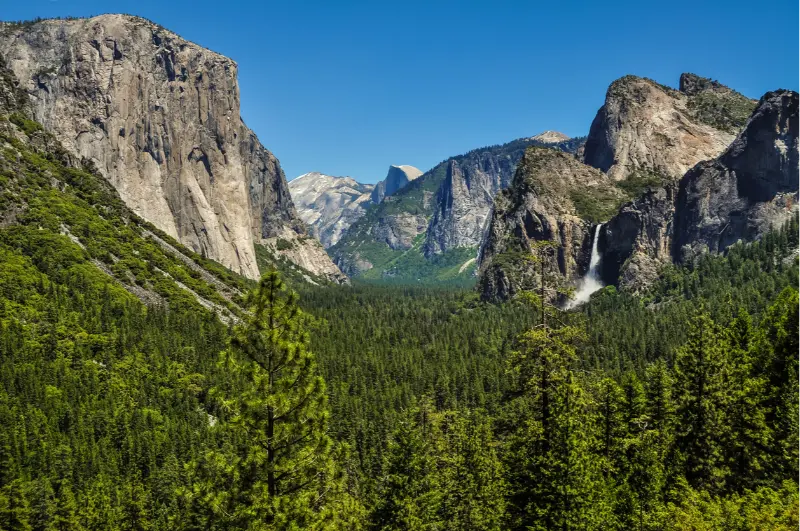
Valley View looks east along the Merced River toward El Capitan and Bridalveil Fall, while Tunnel View gives the classic elevated panorama after you emerge from the Wawona Tunnel. Both are worthwhile, but they are not interchangeable. Valley View fits naturally near the western exit loop; Tunnel View requires the Wawona Road and can become crowded around sunset.
If you have only one day, choose the viewpoint that fits your route rather than driving back and forth. Tunnel View makes particular sense if you enter or leave via Highway 41. Valley View is easier to integrate into a full valley circuit.
Using the free shuttle intelligently
The free Yosemite Valley shuttle is valuable, but it is not a sightseeing tour. Use it to bridge the longer gaps between service hubs and trailheads. As of 2026 the valleywide route and East Valley route operate on different frequencies, so check the current map and stop numbers rather than relying on an older screenshot.
At peak times, walking one or two stops can be faster than waiting for a full bus. This is especially true if the next attraction is less than a mile away on a pleasant path. Mobility needs are different, of course; the shuttle fleet is designed to be accessible, and NPS publishes an accessibility guide for the park.
Parking: the rule that saves the most time
NPS advises visitors planning to drive into Yosemite Valley for the day to arrive before 9 a.m. during busy periods, after which parking is often full. Once you find a legal space, resist the urge to relocate for each attraction. Parking areas near Yosemite Village, Curry Village and Yosemite Falls are connected by shuttle and walking routes.
If you arrive late and encounter congestion, follow staff directions rather than improvising on shoulders or restricted roads. Traffic controls can change with conditions. A legal parking space ten minutes farther from your first stop is better than forty minutes circulating for a theoretically perfect spot.
A one-day Yosemite Valley route
For a balanced day, start with Lower Yosemite Fall and Cook’s Meadow, continue through Yosemite Village, then move toward the eastern valley for Half Dome views and a short walk around Happy Isles or Mirror Lake if conditions and energy allow. After lunch, use the shuttle or walk westward, spend time near El Capitan Meadow, and finish at Valley View or Tunnel View.
This route deliberately avoids a major hike. If the Mist Trail is your priority, make it the morning centerpiece and cut several sightseeing stops. Trying to hike to Nevada Fall and also complete every valley viewpoint usually turns the day into logistics rather than travel.
Bikes, strollers and accessible travel
Yosemite Valley has paved multi-use paths that make bicycles useful for visitors comfortable riding around pedestrians and other cyclists. Bike rentals are seasonal, and helmets, weather and dusk timing matter. Do not ride on trails where bicycles are prohibited simply because a path looks wide enough.
Families with strollers can cover many central areas, though some surfaces and gradients vary. Visitors with mobility needs should consult the official Yosemite accessibility page before travel. The valley shuttle is fully accessible, and accessible parking exists at many major sites, but construction or seasonal conditions can affect specific routes.
A realistic way to organize the day
Start earlier than you think you need to. Use the first morning for places with small parking areas or the walk you care about most, then let the shuttle handle the middle of the day. Save a flexible river, meadow or museum stop for the busiest hours. In late afternoon, move toward the western valley so you are naturally positioned for Valley View or the park exit.
If you are staying in the valley, the day becomes much easier: you can take a long midday break and return when day visitors begin leaving. If you are outside the park, build enough margin for the drive back to your lodging without rushing mountain roads after dark.
What to check before leaving your hotel
Yosemite is a mountain park, so a plan that was perfect when you booked can change because of road work, fire activity, snow, thunderstorms, parking pressure or trail maintenance. I would check the official current-conditions page, save the relevant map offline and confirm the first trailhead or shuttle stop before setting out. That small routine prevents most avoidable problems.
- Valley traffic and parking updates from NPS.
- Current shuttle map and operating hours.
- Waterfall flow and trail conditions if a waterfall walk is central to your day.
- Weather, especially heat, storms, smoke or winter chain requirements.
- Sunset time and the drive back to your accommodation.
Mistakes I would avoid
Moving the car for a half-mile gain
The valley road system and congestion make short car hops inefficient. Walk or use the shuttle once parked.
Judging waterfalls by summer photos
Waterfall flow changes dramatically through the year. Spring snowmelt is usually strongest; late summer can be much drier.
Stopping illegally for El Capitan photos
Use designated pullouts and parking. Roadside sightseeing is not worth creating a traffic or safety hazard.
Skipping the valley because it is “too touristy”
The valley is crowded because the scenery is extraordinary. Good timing and walking can make it feel far calmer than the parking lots suggest.
Ignoring the river
The Merced looks inviting, but current, temperature and depth can be dangerous. Follow warnings and choose safe access points.
Where this fits in a first Yosemite trip
Yosemite Valley should usually be Day 1 of a first trip because it gives you geographic context for Glacier Point, Half Dome and the waterfalls. After this day, add the Glacier Point area or Mariposa Grove rather than spending every day on the valley floor.
Useful links for planning
- NPS Yosemite Valley page
- NPS shuttle and public transportation information
- Yosemite first-time visitor guide
- Yosemite-area accommodation on Booking.com
Final planning notes
The best Yosemite Valley day is not the one with the most stops. It is the one in which parking disappears from your attention after breakfast and you spend the rest of the day on foot, by shuttle and looking up at the walls. Give the valley enough time to change with the light.
If you are visiting at peak season, carry patience as part of the plan. Arrive early, keep one flexible stop, and remember that a meadow walk or a quiet hour beside the river is not “missing” Yosemite—it is one of the reasons to come.